A narcissistic meltdown is an intense emotional reaction experienced by a narcissist when they feel a setback. It can lead to social withdrawal or retaliatory behaviors.
The symptoms of a narcissistic meltdown vary from person to person. Generally, it may include intense emotional reactions and a tendency toward retaliatory behaviors, but it can also lead to depression and social isolation.
A narcissistic meltdown is not a permanent condition once it occurs. The emotional pain usually subsides, and the person returns to their normal state.
In popular culture, people with narcissistic personality disorder are often portrayed as self-confident and indifferent to others.
In reality, people with narcissistic personality disorder are just as emotionally complex as anyone else. They experience a psychological condition that includes formal symptoms such as grandiosity, a lack of empathy, and a constant need for praise and admiration.
While there is no consensus on this, some experts have found that this sense of superiority may help them compensate for low self-esteem and feelings of inadequacy.
However, research in this area is limited, and it is difficult to determine whether this actually applies to all people with a narcissistic personality.
Narcissistic Breakdown: What Is It?
A narcissistic breakdown refers to an emotional reaction that some people with narcissistic personality disorder (NPD) may experience under certain circumstances. It is not a medical condition or a formal diagnosis of the disorder. It may be more common among people with certain types of narcissism.
What Causes a Narcissistic Breakdown?
Mental health experts have observed that sometimes, when a narcissist doesn’t receive the external validation they believe they deserve, it can lead to a high level of stress and distress.
This emotional distress may turn into narcissistic rage, and this rage is the essence of a narcissistic breakdown.
It’s important to remember that we are all different. In this context, not everyone with narcissistic personality disorder behaves or feels in the same way. At the same time, not everyone with narcissistic personality disorder experiences narcissistic breakdowns, and even if they do, they may not behave in the same way.
Related : True Narcissists Aren’t Who You Think They Are
Instead, some theorize that a narcissistic breakdown is a behavioral and emotional reaction to frustration and pain when a person feels they have suffered a setback.
Dr. Alexander Lapa, a psychiatrist at Ocean Recovery Centre in Blackpool, UK, explains that a narcissistic meltdown occurs when someone with narcissistic personality disorder is unable to maintain their self-image of superiority or confidence.
When a narcissist doesn’t receive a constant supply of validation or when someone wounds their self-esteem, their confident and superior facade may crumble.
A narcissistic meltdown might occur because others don’t see the person as they want to be seen, for example. Or perhaps they didn’t receive the promotion they were convinced they deserved. Or maybe their partner left them.
“A meltdown can also arise as a defense mechanism if a person feels their self-image or self-esteem is threatened,” Lapa explains.
For example, they might be exposed for unethical behavior or for engaging in narcissistic manipulation.
Research suggests that people with subtle or fragile narcissism may be more prone to intense emotional distress when they experience a meltdown.
This means they may be more prone to vindictiveness or anger than those with overt narcissism.
Some may find it difficult to empathize with a narcissist if they have experienced manipulative or demeaning behavior.
However, having their superiority or self-image threatened can be an extremely painful experience for someone with narcissistic personality disorder. Their behavior may be an expression of this intense emotional pain.
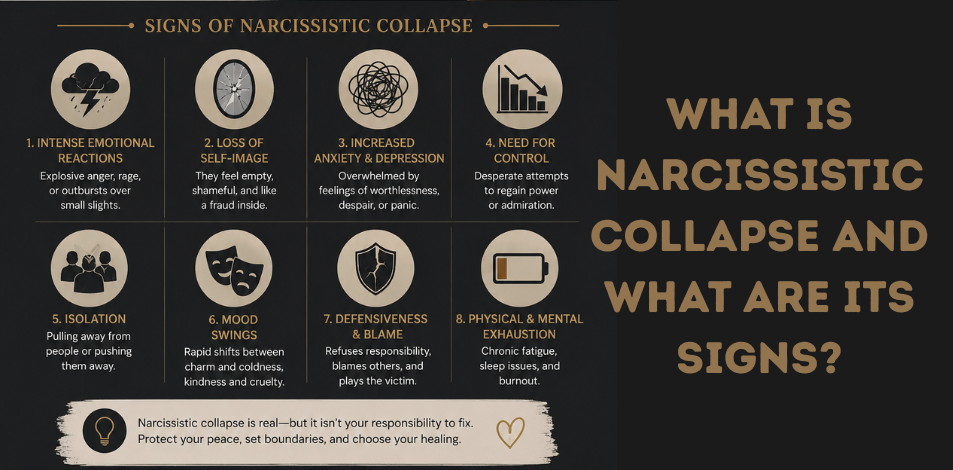
Signs of a Narcissistic Collapse
Not everyone diagnosed with narcissistic personality disorder experiences these symptoms in the same way or with the same intensity. The same is true for a narcissistic collapse.
So how do you know if someone is having a narcissistic collapse?
The answer isn’t straightforward. Some people experiencing a collapse may withdraw into themselves, silently suffering from deep sadness and despair. Others may act impulsively and in ways that are harmful to others.
Laba explains that someone experiencing a narcissistic collapse may engage in behaviors that endanger their own safety or the safety of others. They may engage in, for example:
Gambling
Excessive alcohol consumption
Drug abuse
Reckless driving
Other signs of a narcissistic meltdown include:
Increased irritability
Increased sensitivity
Verbal expression of strong emotions such as hatred
Irregular and atypical behavior
Self-harm
Manipulative tactics such as complete ignoring or suddenly disappearing
Anxiety
Intense temper outbursts
A formal symptom of narcissistic personality disorder is a diminished capacity for empathy. Because of this, a narcissist may not realize that some of their actions or words will hurt others.
According to Lapa, someone experiencing a narcissistic meltdown may feel similar to a depressive episode.
The difference is that a person with narcissistic personality disorder is typically unable to reflect on or understand their role in a situation. This is a common symptom of narcissistic personality disorder. They often lack insight and are unaware that they have the disorder.
Lapa says this can lead the person to “act inappropriately.”
What is narcissistic rage?
According to Lapa, narcissistic rage involves an intense outburst of anger resulting from a person’s feeling that their self-image has been destroyed.
“Narcissistic rage can manifest in a wide range of behaviors, from withdrawal to extreme violence and verbal abuse,” says Lapa.
Most often, narcissistic rage is a strong emotional reaction accompanied by hurtful comments and actions.
Outwardly, the person may appear to be losing control or seeking revenge. Inwardly, they may feel intense pain, vulnerability, and a desperate need to regain control.
Narcissistic rage and violence are not formal symptoms of narcissistic personality disorder, and not everyone with this disorder experiences or behaves this way. Occasionally, narcissistic rage can lead to severe depression.
To summarize
A person with narcissistic personality disorder who questions their sense of superiority may experience a narcissistic meltdown. This is an emotional reaction stemming from pain and vulnerability, and it may lead to social withdrawal or vindictive behavior.
There is still some debate about the reasons for this reaction. Because many people with narcissistic personality disorder are unaware of their symptoms, they may not understand why they are acting this way.
To the person experiencing the meltdown, the individual may appear out of control, extremely angry, and vindictive. In some cases, it may seem as though they are completely withdrawing and ignoring the person.
For the person experiencing the meltdown, it may be accompanied by intense emotional pain and panic, and a desperate need to regain control.
In any case, narcissistic personality disorder is not a personal choice. It is a mental health condition with complex symptoms, including a lack of empathy, introspection, and a strong need for praise and admiration. People with this condition are often unaware of it, which can make it difficult for them to change those attitudes and behaviors.