A healthy, happy, and empowered person doesn’t spring up on its own; rather, it’s the product of consistently meeting its basic needs.
Marlow’s hierarchy of needs covers this fairly well, but the following more precise list provides greater clarity and depth:
Basic Need: Healing the Basic Wound: Love (I am unloved, I am loved), Connection (I am abandoned, I am connected), Resilience (I am weak, I am strong), Significance (I am inadequate, I am adequate), Acceptance (I will be rejected, I am wanted), Legitimacy (I am bad, I am good), Worthiness (I am unworthy, I am worthy), Safety (I am insecure, I am secure), Visibility (I am invisible/unheard, I am visible/heard), Competence (I am stupid, I am capable), Growth (I am stuck, I am evolving), Approval (I am undesirable, I am desired).
As you can see, basic needs are always present, but they are not always met. A basic need may be passively neglected or actively ignored. Both forms of abuse are not only harmful but also make a person vulnerable to future abuse.
When your basic needs are neglected, an unquenchable thirst develops. For example, if one of your parents is preoccupied or lost in their own thoughts, you may feel invisible. You may have been constantly attacked and belittled, which goes against your need to feel empowered. You may not have received the care and support you needed to navigate life, and instead have been restricted and controlled by one of your parents. This goes against and neglects your need to grow, among other things.
If you feel unwanted, invisible, unworthy, and unloved by your parents, you suffer a series of deep, lingering wounds that create a constant thirst to feel wanted, seen, valued, and loved. This makes you highly vulnerable to abuse, because healthy people will grow weary of your unquenchable thirst, and abusers will see an opportunity to lure you in by promising to meet your basic needs.
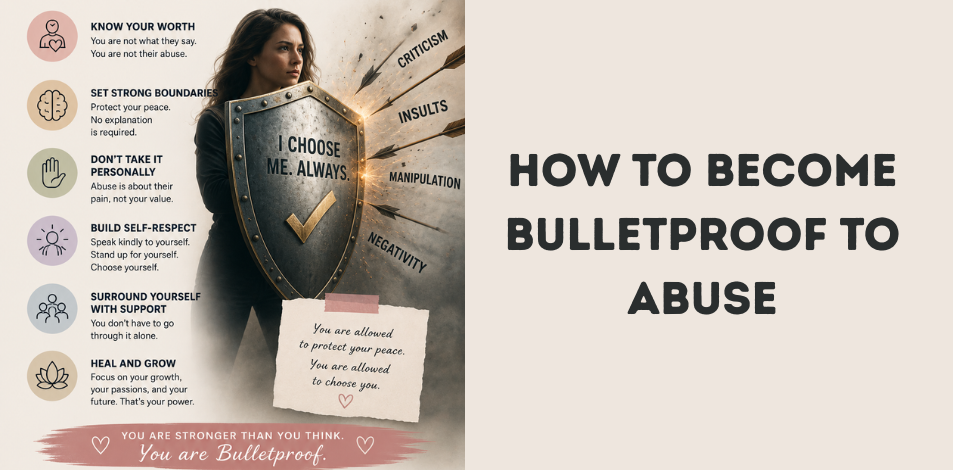
Most people lack sufficient awareness of their deep wounds, let alone their basic needs, and how to fulfill them. To become resilient against abuse, you will need to delve deep into your true self and begin to address these wounded and neglected aspects of yourself.
- Prioritize Your Needs
Time is short, and your resources are limited, especially if you’re feeling overwhelmed. Start by reviewing your list and ranking it from 1 to 12. The item at the top of the list will be your top priority, and you can move on to the others gradually.
- Start Meeting Your Own Needs
Sometimes you might feel like you’re in a chicken-and-egg situation, needing someone else’s love to love yourself. Or you might find it difficult to feel important unless someone encourages you, and so on.
However, because of your urgent need to have your basic needs met, you might come across as demanding or unreasonable, or you might fall prey to abuse.
Related : How To Stop Being Clingy In Relationships
The first important step is simply acknowledging that you have a deep wound, or that you have a strong need to have a basic need met. Just being aware of this is enough to set you on the path to change.
For years, I carried my basic need to feel attractive deep inside. I thought attractiveness was only for women, not men. But as time passed, I began to understand it more broadly, even connecting my basic need to feel attractive to my deep wound of feeling ignored, unimportant, and rejected.
Once I acknowledged and accepted my deep wound, everything changed. I was filled with peace, and my urgency and unhealthy behaviors lessened.
- Distribute Your Basic Needs Among Several People
People who have experienced trauma often tend to idolize and rely on one person to fulfill all their basic needs. We look to them for connection, love, appreciation, validation, security, and much more. Surprisingly, the only people who seem willing to take on this overwhelming and exhausting role are often the abusers.
So, consider how you can distribute your needs. Find someone who is calm, has a stable life, and is willing to meet weekly for coffee. Get involved in groups, such as dance classes, board game nights, poetry readings, or any other activity that meets your basic needs. Be strategic, sense your true self, and use the motivations and feelings that you evoke in planning your week.
- Separate Your Basic Needs from Your Ego
One of the most significant transformations in my life was realizing my need to feel important and then channeling that need into helping others. Documenting and sharing my journey through writing fulfills this need for importance while simultaneously creating opportunities for connection, legitimacy, worthiness, and visibility.
Narcissists seek importance and legitimacy solely to feed their inflated egos. Their egos control their every move, turning them into energy vampires who offer little value in return. Focusing on your basic needs may seem selfish, but doing so in a way that benefits others allows you to reciprocate by meeting the needs of those you love. This is the essence of relationships.
When you can bring your deepest wounds out of the shadows, they transform. When you love yourself enough to prioritize your basic needs, you will grow calmer, more content, and stronger. Most importantly, you will satisfy your hunger, making you more resilient to abuse.