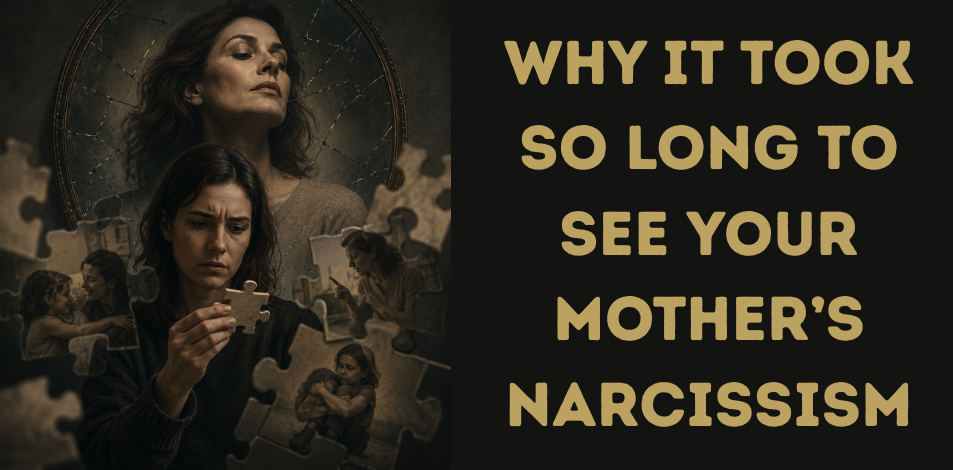
To see your mother as a “narcissist” is incredibly difficult, for reasons that are deeply ingrained in our social structure.
The idea of a mother is that she is a source of security, warmth, acceptance, and renewal. We are supposed to turn to her to regain our balance when life becomes difficult or painful. She is the first person to guide us in our lives during our times of weakness and greatest need.
In short, our survival depended on her. We knew it perfectly. We felt it deep down. This need was incredibly urgent. She was the only person who stood between perfect peace and warmth, or a descent into utter terror. This may seem exaggerated, but for a child, fear is always present, and it is the mother who is supposed to dispel it.
It never occurred to you that your mother might be someone suffering from devastating psychological wounds. All that mattered to you was having a “good” mother to care for you.
Children possess a unique kind of magic in their thinking, and this “ideal mother” is an integral part of their being. In a child’s mind, this image is completely real, and they seek to connect with it through their mother. As a defense mechanism, this seems perfectly logical.
As you grow older, this longing doesn’t simply disappear. It only fades if your mother is able to fulfill her role perfectly. If she can meet your needs and fears and guide you toward maturity, the day will come when you realize that she is human and has her flaws.
With a narcissistic mother, you will never reach that point. Her narcissistic behavior keeps you mired in anxiety and insecurity. The worse the situation becomes, the greater your need for reassurance grows, and the more you cling to the “idea” of your mother. It’s a terrifying situation, where the very person who makes you feel ashamed and insecure is the only one in your mind capable of alleviating those feelings. It’s incredibly exhausting.
This perception is so deeply ingrained that it doesn’t disappear even if we become aware of it. It continues to influence us and cloud our judgment. It keeps us yearning for the day we experience a loving and accepting mother who provides us with the support and space to grow and flourish.
Another factor is that in our society, we are expected to love and respect our mothers unconditionally. This is why we celebrate Mother’s Day. The guilt and shame we feel for our conflicting feelings toward our mothers weigh heavily on us. To see them in any negative light is like entering a dark and forbidden territory. It’s easier to imagine them as the wonderful, caring mother we met at birth. This perception is generally more socially acceptable.
Related : Why It’s So Difficult To Communicate With A Narcissist
We didn’t notice our mothers’ narcissism because, like any rational human being, we desperately longed for the exact opposite. Going against this longing is an incredibly painful experience that erodes our very being. In the past, “the truth” was a terrifying specter, too powerful to confront.
Whatever the reason, you’re now mature enough to see and confront this reality. Now you can begin to see your mother in a more accurate and realistic way and start your healing journey.
You can set boundaries and separate your feelings from her. You can create your own space—physical, mental, and emotional. There are real ways to connect with the “mother” figure in your life, such as through loving friends, therapists, or other mentors.
While seeing your mother with all her flaws, traumas, and struggles can be incredibly painful, it can free you from chasing a mirage and allow you to embrace self-care as a way of life. Most importantly, it can free you from grieving the love, care, and motherhood you never received, bringing you closer to mental health and inner peace.