My 18-year-old daughter fits most of these (narcissistic) descriptions. Over the past year, after her second suicide attempt, I may have been too lenient with her out of fear of losing her. I truly feel I’ve reached a breaking point with her unfair accusations and manipulative behavior, and now I have to accept the idea of losing her somehow to save myself. She lives with me. How can I support her while maintaining safe boundaries? What strategies have worked for others, especially when she wants to pick an argument with me (at 1 a.m.) and starts threatening to move out, sleep in the car, or harm herself?
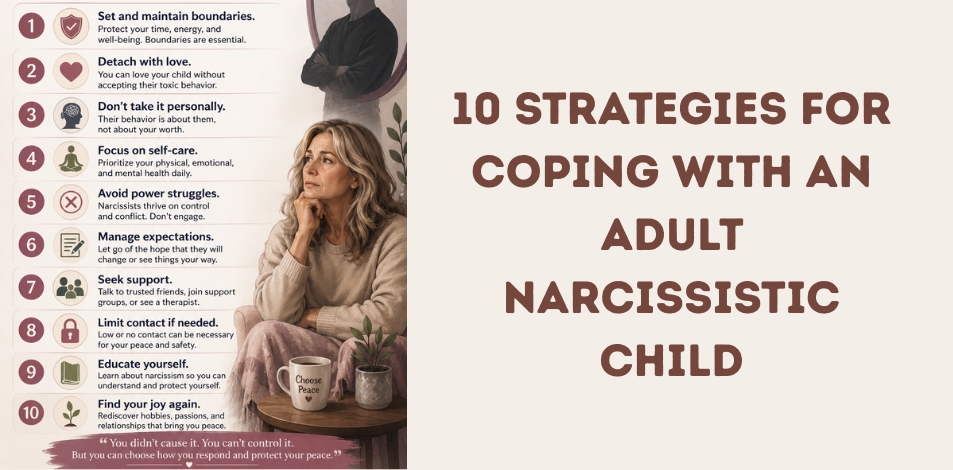
This is an excerpt from a comment on the article “The Narcissistic Abuse Cycle.” The mother is struggling with how to cope with and deal with her narcissistic adult daughter who threatens self-harm. Her fears are entirely justified; narcissists are among the most suicidal people with personality disorders. Here are some strategies she can use to help herself and her child:
Positive affirmations are effective. Narcissists need a daily dose of attention, affection, admiration, and appreciation. By giving them these affirmations, their egos are boosted, their fears are eased, and they feel cared for. Think of this as prevention, not a cure-all.
Take a daily break. Even full-time jobs recommend taking multiple breaks throughout the day to rest, eat, and use the restroom, as this increases productivity. The same should be done at home, especially if the narcissist lives there. Start by adding 15-minute breaks to your morning and evening routines. Find safe, hidden places that give you a chance to think and reflect before responding. A common narcissistic tactic is to create confusion so that others hear only the narcissist’s voice. This break is extremely helpful in counteracting this.
Focus on recovery. The recovery process takes time, patience, and effort. It takes time to invest in addressing the effects of abuse and trauma inflicted by a narcissist, patience to proceed at a pace that allows healing without reliving the trauma, and energy to release pent-up emotions, thoughts, anxieties, fears, and confusion. Some of this work can be done individually, but most of it should take place in a therapeutic setting. This ensures the process is complete and ongoing.
Related : 7 Reasons Why Narcissists Love People P leasers
Seek out other narcissists. Highlight narcissism in other figures, such as politicians, athletes, and artists. Once the seeds of narcissistic disorder are planted, it becomes easier to identify the behavior in the adult child. This is most effective when the narcissist is someone the adult child holds in low regard.
Establish firm rules. In cases of repeated suicide threats, it is essential to seek professional help. An agreement can then be drawn up stipulating immediate hospitalization in the event of a threat. For the narcissist, the embarrassment of hospitalization is usually enough to deter them from threatening again. However, if they do threaten again, the agreement must be enforced immediately and without giving them a second chance.
Consult a family therapist. The best type of therapy involves both the parents and the adult child equally. Siblings can also be included if needed. This allows for a level of accountability for everyone’s behavior, helps resolve conflicts, and provides a safe space to express frustrations.
Use the “burger” technique. One of the best ways to deal with a narcissist is the “burger” technique: praise, confrontation, praise. By placing the confrontation between two praises, the likelihood of it being heard and understood increases significantly. Direct confrontation is never ideal; it makes the narcissist feel attacked and become so defensive that it’s difficult to reason with them.
Do not tolerate any abusive behavior. One of the main reasons for divorce in marriages involving a narcissist is their abusive behavior. There is no excuse for tolerating any kind of abuse. When dealing with narcissists, it is generally advised to distance yourself, end the call, block them if necessary, or contact the police. Tolerance should be reduced to an acceptable level. Dealing with a child narcissist is slightly different, but you should still make it absolutely clear that you will not allow any abusive behavior to continue.
Related : The 5 Most Painful Things a Narcissist Will Do To You
Countering Psychological Manipulation: Psychological manipulation is a common form of psychological abuse used by narcissists. In this case, the narcissist denies reality and paints a completely different picture that seems so real that the other person believes they are losing their mind. To counter this tactic, it is helpful to keep a journal of the facts and events. For example, note that the narcissist became enraged on Thanksgiving Day because of an ungrateful relative. The goal is not to document the wrongdoing, but rather to provide a reference point when the story is distorted and a relative is portrayed as losing their temper and verbally abusing the narcissist.
Don’t Lose Your Identity. Narcissists tend to try to turn those around them into miniature versions of themselves. Their controlling ego dictates that other people’s lives would be better if they were like them. It takes a great deal of self-awareness to maintain one’s dignity in the face of this pressure. While it may be difficult, it is not impossible.
These strategies can help you when living with a narcissist. Whether you’re in a relationship or marriage, setting healthy boundaries and limiting the narcissist’s control over you and others will contribute to creating a safer environment for everyone. Remember, if you’re struggling on your own, there are always resources you can turn to for help, and don’t hesitate to do so when needed.