Key Points
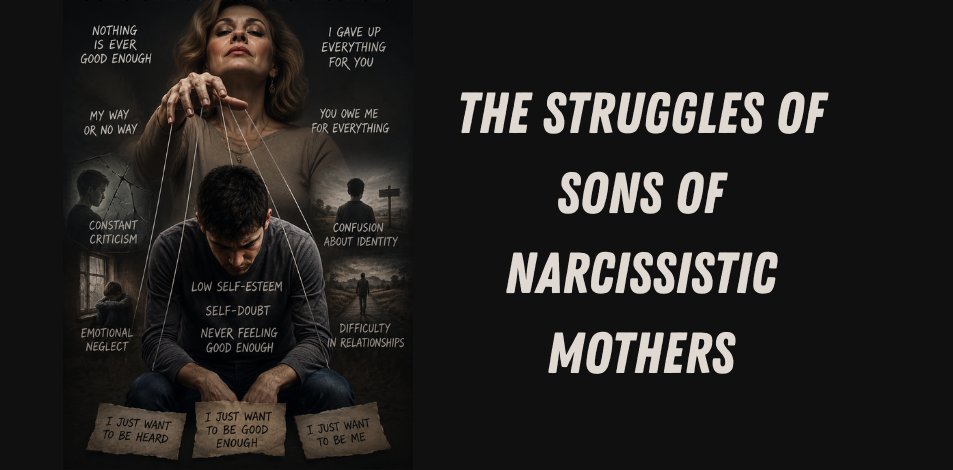
A young person whose mother has narcissistic personality disorder may experience a distorted outlook.
This disorder is characterized, among other things, by an inflated sense of self-importance and a lack of empathy.
After experiencing psychological manipulation, the individual may constantly suspect that those close to them are complicit.
Research has shown that children of narcissistic parents may have difficulties with self-esteem, setting boundaries, and forming a sense of identity. However, there is still limited research on the relational problems that children of narcissistic mothers may face.
Available studies suggest that narcissistic parenting can have numerous negative effects on children. A study published in the Journal of Personality and Social Psychology found that children of narcissistic parents have low self-esteem and are more prone to anxiety and depression (Conrath et al., 2011). A separate study published in the same journal found that children of narcissistic parents are more likely to develop narcissistic traits and experience difficulties in their relationships with others (Parry et al., 2003).
When you’re young and your mother is a narcissist, your worldview becomes distorted because you’re forced to see things through her eyes and cater to her desires. Eventually, you come to see (or imagine) most, if not all, relationships this way. As a result, you may be programmed to avoid relationships and be unable to be vulnerable as an adult.
Narcissistic personality disorder is characterized by an inflated sense of self-importance, a lack of empathy, and a constant need for attention and validation. Narcissistic individuals may struggle to build and maintain healthy relationships, and their behavior can negatively impact those around them, especially their children, with potentially devastating and long-lasting effects.
This is one reason why the focus on personal identity and relationships has become so prevalent among millennials in mainstream culture. If you don’t know yourself or lack a positive identity, it’s difficult to connect with others on an intimate level. In extreme cases, it can even be difficult to connect with people or groups in general due to social anxiety. When you’re unsure of who you are and suffer from low self-esteem—because someone has always told you you’re inadequate—it’s difficult to trust others or believe their sincerity when they show you kindness.
Related : Narcissistic Traits and Their Impact on Relationships
Once you’ve been psychologically manipulated, you’ll always suspect that those closest to you might be at odds with you. And without trust, it’s nearly impossible to find genuine intimacy. These issues directly impact your ability to build any meaningful relationship because you’ll constantly doubt yourself and those who love you.
The sons of narcissistic mothers often struggle to break free from their mothers’ control. “Sons of Narcissistic Mothers,” by Randy Fine and Shari Schreiber, a marriage and family therapist, is dedicated to helping men overcome the effects of growing up with a narcissistic mother. The book offers practical advice and support for adult sons of narcissistic mothers who have survived, or are in the process of surviving, their mothers’ toxic legacy of suffocating love, manipulation, and control. This guide aims to help them accept the reality of growing up with a narcissistic mother and move forward.
If this is your experience, know that it will take time and therapy, but you are capable of healing. You can overcome your childhood traumas and discover your true potential as an adult. In doing so, you can experience greater joy and fulfillment, create a life that suits you, and love the people who bring you happiness.