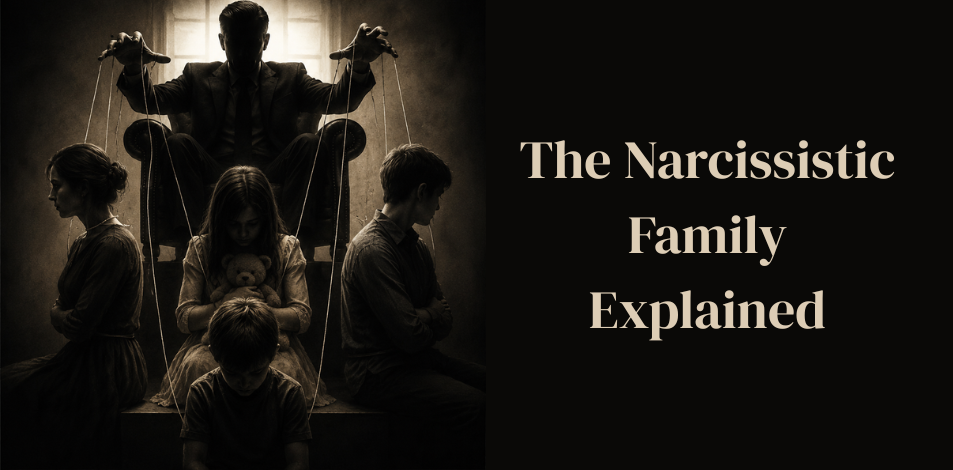
The causes of family dysfunction vary greatly. Often, one parent is addicted to alcohol or drugs. These dysfunctions are easily observed. However, the hidden cause of family dysfunction, which is harder to detect, is narcissism, which lies at the heart of the narcissistic family.
In a healthy family, parents possess high emotional security and lead balanced and dynamic lives. They have a support network around them, and their decision to have children was a natural one. Consequently, they are well-equipped to care for their children and support their development until they are able to differentiate and gain independence.
Healthy parents have enough empathy to make their children feel secure in their relationship with them, and they possess a healthy degree of shyness that allows their children to grow up with high self-esteem. Healthy parents rely on honest communication to establish order in the home, not on authoritarian rules.
In a narcissistic family, however, the parents have long since lost touch with their true selves and live in the shadow of a false, narcissistic self. For the narcissistic parent, the family represents two things: a symbol of social status and a means of gratifying their desires. What should be a nurturing and loving environment for raising healthy children becomes a source of narcissistic gratification.
In such a family, the narcissist’s needs take precedence over the needs of others, and the spouse and children are forced to serve the narcissistic parent. The narcissist’s unbridled thirst for control and self-gratification hides behind the facade of a loving family. Nevertheless, the narcissist revels in their position of power.
For this structure to continue functioning, the following guidelines must be followed:
The narcissist’s needs come first.
The needs of the children or spouse must not limit the narcissist’s power or threaten the family’s image or reputation.
Instead of optimally planning their children’s upbringing and development into independent adults, the narcissist is preoccupied with the role each individual can play in reinforcing their inflated self-image. This results in a hierarchical structure and a blurring/repression of needs, ensuring the family maintains a distorted balance that satisfies the narcissist. Anything that threatens this balance or the narcissist himself must be crushed without exception.
The Narcissistic Family Image
Each family member’s role depends on two things: the idealized image the narcissist seeks to maintain, and what the family member can contribute.
This “image,” or rather “principle,” of the narcissistic family is usually hidden beneath the following:
The Happy Family Image
At its core, the happy family image is one the narcissist needs to bolster their reputation, meaning children must be perfect in their behavior at all times. Because the narcissist is detached from their own emotions, they make no effort to meet the children’s emotional needs, yet they still expect them to maintain this image. There is no room for resentment or dissatisfaction.
The Success Image
The narcissist values success, so children are expected to succeed in everything they do. In a hidden narcissistic family, this expectation persists even if the parents make no effort to educate or guide their children. The children are left to fulfill the expectations of a parent obsessed with their own false image. In an overtly narcissistic family, the narcissistic parent leads the way and expects the child to keep up with, and even exceed, their expectations. Anything less than perfection is considered failure.
Narcissistic Family Dynamics
Your acceptance and approval within the family depend primarily on your ability to serve the prevailing narcissistic ideology. You will be evaluated based on:
The role you can play
If you can fulfill a role that serves the family’s narcissistic ideology, you will be valued, accepted, and approved. For example, the family may value firstborn sons, so being a boy and the firstborn will earn you immediate points.
Related : How To Know A Narcissist in 5 Minutes
The family may value education as a path to success, so achieving high grades becomes a source of acceptance and appreciation. A child’s good behavior and avoiding causing any trouble for the narcissist can also earn points, as a quiet, trouble-free child is described as a “good boy” or “good girl.” Even the youngest child may earn points simply for being the youngest.
How skilled you are at presenting the image
If you enthusiastically portray your family in front of others, you’ll earn points. Showing happiness in front of others enhances the family’s reputation and helps conceal the narcissist’s true intentions, as well as the family’s misery.
Any member who is unable or unwilling to reinforce the family’s narcissistic mindset will be punished with neglect, verbal or physical abuse, or ridicule.
Any member who is unable or unwilling to reinforce the family’s narcissistic mindset will be punished with neglect, verbal or physical abuse, or ridicule.
A child’s selective appreciation of some things, followed by rejection and attack on others, creates intense anxiety and tension. They simply want their parents’ love and acceptance, but they are completely unaware of what that requires. They are entirely oblivious to their parents’ narcissistic motives or to the fact that they are merely a pawn in a game. For a child, everything is a matter of the heart; for a narcissist, everything is a matter of their narcissistic image.
The Roles of the Narcissistic Family
This narcissistic “drama” is like a play, where each member plays their part. Here are the typical roles within the narcissistic family:
The Facilitator
This is usually the spouse or one of the daughters. The facilitator caters to the narcissist’s basic needs and helps them project an image of happiness. They also make excuses for the narcissist. Ultimately, the facilitator seeks the narcissist’s approval and acceptance, which can only be achieved by feigning friendliness. When the facilitator isn’t directly assisting the narcissist, they are expected to remain by their side. This helps the narcissist maintain their sense of grandeur and control.
The Spoiled Child
The narcissist seeks a child to mold in their own image. This is usually the eldest child, but it could be the second. It depends on the child’s talent, attractiveness, abilities, intelligence, or the narcissist’s goals.
For example, if a narcissist places great importance on appearance and their eldest child is shy and unattractive, they will choose their second child to be the darling. The darling child grows up believing they are special, when in reality, they have been raised in the image of the narcissist. The darling child will believe they are superior to their siblings and may try to control them.
The Surrogate Parent
Narcissists are usually so preoccupied with themselves that they are unable to meet their children’s needs, and their accommodating partner is often too busy to meet the narcissist’s demands. When there are multiple children in the family, the narcissist will choose one child to act as the surrogate parent. This child, now a childlike adult, will be expected to meet the needs of their younger siblings and will be held accountable for their safety and behavior. To fulfill this role, the surrogate parent will have to suppress their emotions, developing into an excessively disciplined and rigid individual.
The Scapegoat
Narcissists need someone to vent their frustrations and repressed anger on. The second-born or most outspoken child will be labeled the “troublemaker” and severely reprimanded at every opportunity. Other children in the family may follow the narcissist’s example, unconsciously venting their anger and shame on the scapegoat.
The Lost Child
Any child not designated as the darling, the surrogate parent, or the scapegoat will be neglected and discouraged from causing trouble. The lost child grows up with a sense of not knowing their identity or place in the world, along with a burning sense of shame and inferiority.
Any child not designated as the darling, the surrogate parent, or the scapegoat will be neglected and discouraged from causing trouble. The Darling Child
This is usually the youngest child. The darling child represents the family’s humor, creating a lighthearted atmosphere that masks its problems.
Roles can shift and change. For example, if the eldest child moves out or behaves rudely, the second child may become the darling. A child may also play multiple roles. A spoiled child can act as either a parent or a parent, while a lost child can also be a spoiled child.
Only children are particularly vulnerable to multiple roles due to the lack of siblings. They are often chosen to be the spoiled child, but they also become a scapegoat when the narcissist needs it, and are expected to play the spoiled child role to distract the parents and create a fun atmosphere. It is an extremely confusing situation for the child.
Consequences of a Narcissistic Family
By assigning specific roles to each member, the family transforms into a fierce struggle for survival. Each child is left to fight for scraps of attention and acceptance from the narcissistic parent. This instills in each child the belief that love is a competition, and that obtaining it depends on fulfilling their role. Children in a narcissistic family are completely deprived of the fact that love is a source of acceptance, care, and participation. They live under a dictatorship, cleverly disguised as a “happy family.”
The harm caused by living in a narcissistic family is immense:
Anxiety and Depression
The intermittent reinforcement a child receives from the parent is akin to gambling. Unable to consciously understand the narcissist’s goals, the child feels as though they are being randomly rejected and rewarded. This generates a great deal of anxiety. For the child, this acceptance gives them a sense of security and completeness, so they continue playing this game, addicted to it, craving love, then falling into the clutches of depression and shame when they don’t receive it, only to begin the cycle again.
Repressed Emotions
The emotional needs of family members must be repressed to avoid disrupting the fragile balance of the narcissistic family. This is painful and hinders the child’s ability to grow and love.
Low Self-Esteem
Due to the inability to achieve perfection, each family member develops an inferiority complex. The neglected child feels neglected and worthless, while the scapegoat is filled with anger and shame. Every member of the narcissistic family pays a heavy price, albeit in different ways.
Misconceptions About Relationships
Each individual grows up believing that relationships revolve around their role, constant competition, and that love is a limited resource that must be earned through actions.
Lack of Trust
Intimacy becomes a battleground for the narcissistic child. The child, who repeatedly tries to express their feelings but is met with unexplained rejection, eventually stops trusting their parents, and this distrust permeates their daily life. The path to love becomes deeply frustrating, causing the child to create obstacles to intimacy and closeness. This leads to significant complications in their relationships as adults.
The narcissistic family dynamic is deeply ingrained in the child’s psyche. As they grow older and leave (or escape) their dysfunctional family, they will unconsciously gravitate towards other structures that remind them of their family, reenacting their role, but this time in a new environment. This new structure will be based on the same principles of the narcissistic family.
This frustratingly dysfunctional dynamic continues across generations until the essence of narcissism is understood, prevailing perceptions change, and the pursuit of personal power is challenged.