Stop Waiting to Feel Better Before You Start Living
Sometimes, we tell ourselves that we will start living when things get better.
When we feel less anxious. When the sadness finally disappears. When we become more confident, stop overthinking, or feel ready to face the world again.
We make plans for a future version of ourselves who feels stronger, happier, and more certain about everything.
But what happens when that feeling never comes?
Days turn into weeks, weeks turn into months, and we find ourselves waiting for the perfect moment to begin again. We want to travel, meet people, try something new, or simply enjoy an ordinary day without carrying so much emotional weight.
Yet we keep postponing our lives because we don’t feel ready.
Here is a difficult truth: you don’t always have to feel better before you start moving forward. Sometimes, moving forward is part of what helps you feel better.
Why You Shouldn’t Wait Until You Feel Ready
When you’re struggling emotionally, even simple things can feel exhausting. Answering a message, leaving the house, meeting a friend, or starting a new project might require more energy than it used to.
It’s understandable to want to wait until you feel normal again.
However, waiting until every difficult emotion disappears can keep you trapped in a cycle of avoidance. You feel anxious, so you avoid the situation. Avoiding it brings temporary relief, but it may also make the next attempt feel even more intimidating.
Over time, your world can become smaller.
You stop doing things you once enjoyed. You turn down invitations. You tell yourself that you’ll try again when you feel stronger.
The problem isn’t that you need time to heal. Healing takes time, and rest is sometimes necessary. The problem is believing that you must be completely healed before you’re allowed to experience life.
You can be a work in progress and still have meaningful experiences.
You can feel uncertain and still make a decision. You can feel sad and still spend time with someone who makes you smile. You can be afraid and still take one small step toward something important.
You don’t need to have everything figured out to begin.
Related : Walking Away From a Narcissist: Reclaim Your Peace
You Can Feel Sad and Still Have a Good Day
One of the most important things to understand about emotional healing is that different feelings can exist at the same time.
You can miss someone and still enjoy your morning coffee. You can feel anxious about the future and still make plans for next week. You can be recovering from a painful relationship and still laugh at something genuinely funny.
Having a good moment doesn’t mean your pain wasn’t real.
Likewise, having a difficult day doesn’t mean you’ve lost all the progress you’ve made.
Many people put unnecessary pressure on themselves to feel positive before doing anything enjoyable. They believe that if they’re still sad, they shouldn’t be going out, celebrating, or trying to build a new life.
But happiness isn’t something you must earn by eliminating every painful emotion first.
Give yourself permission to experience life as you are today, not just as you hope to be someday.
You don’t have to force yourself to be happy. You simply have to leave room for moments that might make life feel a little lighter.
Healing Doesn’t Always Happen Before the Experience
Think about the things you’ve learned throughout your life.
You probably didn’t become confident before every difficult conversation. You learned by having conversations, making mistakes, and discovering that you could handle uncomfortable moments.
You didn’t necessarily become independent before making your first important decision. You learned independence by making decisions and accepting the lessons that followed.
Emotional growth can work in a similar way.
Sometimes, you discover that you’re stronger than you thought because you finally try something that scares you. Sometimes, meeting a supportive friend reminds you that not everyone will hurt you. Sometimes, starting a new hobby helps you reconnect with a part of yourself that had been forgotten during a difficult period.
These experiences don’t magically solve every problem. They don’t replace professional support when you need it, and they shouldn’t become another reason to pressure yourself.
But they can give you new information about yourself and the world around you.
You may not always feel ready before taking a meaningful step. Sometimes, confidence develops because you took that step.
How to Start Living Again When You’re Struggling Emotionally
You don’t need to transform your entire life overnight. In fact, trying to change everything at once can leave you feeling even more overwhelmed.
Start smaller.
1. Stop Making Happiness a Requirement
Instead of telling yourself, “I’ll do this when I feel better,” try asking, “Is there a small version of this I can manage today?”
If you want to exercise but feel emotionally drained, take a short walk. If you want to reconnect with people, send one honest message to someone you trust. If you want to pursue a goal, spend ten minutes working on it.
The goal isn’t to ignore your feelings. It’s to stop letting every difficult feeling make every decision for you.
2. Take Small Actions Before Motivation Arrives
Motivation doesn’t always appear first. Sometimes, it comes after you’ve started.
You might not feel like cleaning your room, going outside, or working on a personal project. But after doing a small part of it, you may feel a little more capable of continuing.
Make the first step so manageable that it doesn’t require a huge amount of emotional energy.
You don’t need to finish the entire task. You just need to begin, if you have the capacity to do so.
And if today genuinely needs to be a day of rest, allow yourself that rest without turning it into another reason to criticize yourself.
3. Learn to Live With Uncertainty
A lot of emotional suffering comes from wanting guarantees.
We want to know that a relationship will work, that a decision won’t lead to regret, or that we won’t experience disappointment again.
Unfortunately, life rarely offers complete certainty.
Waiting until you can guarantee a perfect outcome may mean waiting indefinitely.
Instead, focus on what you can control: your choices, your boundaries, your effort, and the way you respond when things don’t go according to plan.
You can take a thoughtful risk without knowing exactly how everything will turn out.
4. Reconnect With the Things That Make You Feel Like Yourself
Difficult experiences can change your routines and your sense of identity. After a painful breakup, a stressful period, or a long struggle with anxiety, you might barely recognize the person you’ve become.
Start reconnecting with yourself through small, ordinary activities.
Listen to music you enjoy. Spend time in nature. Cook something you love. Read a book, learn a skill, or return to a hobby you abandoned.
Don’t measure every activity by whether it makes you instantly happy.
Sometimes, the value is simply in remembering that your life contains more than your pain.
5. Stop Comparing Your Healing to Someone Else’s
You might see people online who seem to have moved on quickly, rebuilt their lives, and found happiness again.
It’s easy to wonder why you’re still struggling when everyone else appears to be doing fine.
But you rarely see the full story behind someone else’s progress.
Your healing may take a different path. You may need more time, more support, or a different approach. None of that automatically means you’re failing.
Focus on whether you’re taking steps that are right for you, rather than trying to meet someone else’s timeline.
Progress can be quiet. Sometimes, it’s simply recognizing an unhealthy pattern, setting a boundary, or getting through a difficult day without giving up on yourself.
If You’re Healing From a Toxic Relationship
After a toxic or emotionally abusive relationship, starting over can feel especially difficult.
You might struggle with self-doubt, fear of trusting people, guilt about what happened, or the feeling that you’ve lost a part of yourself.
You may tell yourself that you need to heal completely before meeting new people, pursuing your goals, or enjoying life again.
Taking time for yourself can be valuable, especially if you need space to rebuild your boundaries and understand what happened. You never have to rush into another relationship to prove that you’ve moved on.
But you also don’t have to put your entire life on hold until the past no longer hurts.
You can build friendships while learning to trust yourself again. You can pursue your ambitions while working through difficult memories. You can enjoy new experiences without pretending that the old wounds have disappeared.
The important thing is to move at a pace that feels manageable and safe.
Healing after a toxic relationship isn’t about becoming someone who never feels pain. It’s about gradually creating a life in which pain no longer controls every choice you make.
You deserve a life beyond what happened to you.
What If You Try and Still Feel the Same?
This is a fear many people carry: What if I finally go outside, meet a friend, or try something new, and I still feel sad?
What if nothing changes?
First, remember that not every experience will produce an immediate emotional breakthrough. You might go for a walk and still feel anxious. You might spend time with a friend and still have difficult thoughts afterward.
That doesn’t automatically mean the experience was pointless.
Sometimes, progress means discovering that you can do something meaningful while carrying uncomfortable feelings. Other times, it means realizing that you need a different kind of support.
You don’t have to turn every activity into a test of whether you’re healed.
Try to approach life with curiosity rather than pressure. Instead of asking, “Did this fix me?” ask, “Was this meaningful, helpful, or worth trying?”
And if sadness, anxiety, or emotional exhaustion is persistent or making everyday life difficult, consider reaching out to a qualified mental health professional. You don’t have to handle everything alone, and seeking help is not a sign of weakness.
Related : Why Silence Is Powerful When Dealing With a Narcissist
You Don’t Have to Wait for a Perfect Version of Yourself
There may never be a morning when you wake up feeling completely fearless, perfectly confident, and entirely free from doubt.
Life will continue to bring uncertainty. Some days will feel easier than others. You may make progress and still have moments when old fears return.
That doesn’t mean you should stop trying to build a life you care about.
You can start with the energy you have. You can make room for sadness without letting it define every part of your identity. You can take small steps, change direction when necessary, and ask for support when things feel too heavy.
You don’t have to become a completely different person before you deserve good experiences.
You are allowed to live while you’re learning. You are allowed to grow while you’re struggling. And you are allowed to experience moments of peace before every problem in your life has been resolved.
The next chapter of your life doesn’t have to begin when everything feels perfect.
It can begin with one small decision today.
Final Thoughts: Start Where You Are
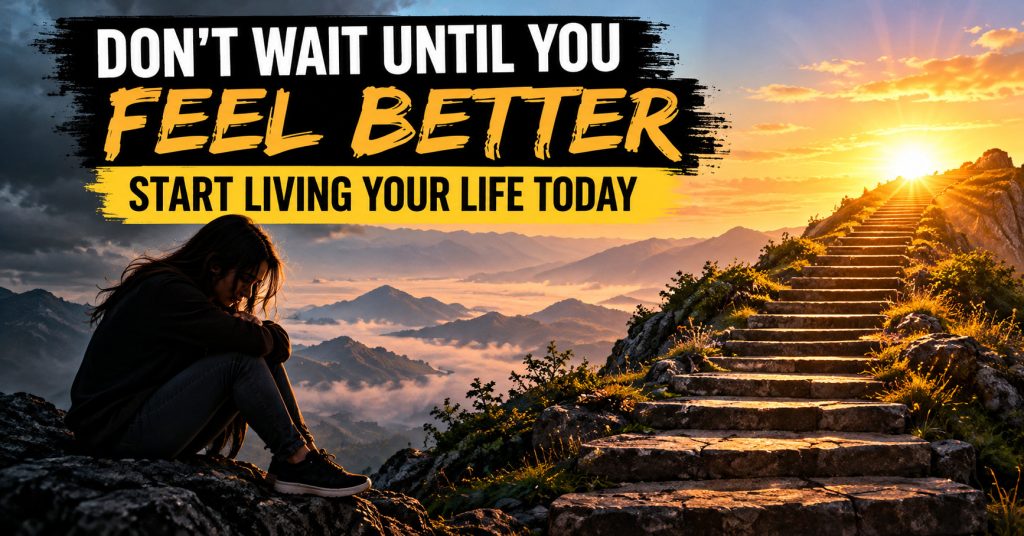
The message behind the image is simple but powerful: don’t spend your entire life waiting for the day when you finally feel ready.
Rest when you need to. Give yourself time to grieve. Seek support when you need help. Be patient with the parts of yourself that are still hurting.
But when you can, take a small step toward the life you want, even if that step feels uncomfortable.
Go for the walk. Make the call. Start the project. Meet the friend. Try again.
Not because your pain doesn’t matter, but because your life matters, too.
You don’t have to wait until you’re completely healed to begin living again. Sometimes, the journey itself becomes part of the healing.
Start where you are, with what you have, and let the next step teach you what you’re capable of becoming.