
There comes a moment when you realize that no matter how much you love someone, you cannot keep sacrificing your peace just to make the relationship work. You have explained your feelings, given second chances, forgiven things that hurt you deeply, and hoped that one day things would finally change.
But sometimes, the most powerful decision you can make is to walk away.
Walking away from a narcissist is not a sign of weakness. It is a decision to stop allowing someone else’s manipulation, criticism, and emotional games to control your life.
Why Walking Away From a Narcissist Takes So Much Strength
Leaving a toxic relationship is rarely as simple as packing your things and closing the door. Emotional attachment, memories, promises, and the hope of seeing the person you first fell in love with can make it incredibly difficult.
You might remember the beautiful moments and wonder whether you gave up too soon. You might even blame yourself for the relationship falling apart.
If this sounds familiar, remind yourself of something important: loving someone does not mean you have to accept being hurt by them.
In relationships involving narcissistic traits, affection may sometimes be mixed with criticism, control, blame, or emotional withdrawal. This can leave you constantly trying to prove your worth to someone who rarely makes you feel secure.
Over time, you may start questioning your own judgment, apologizing for things that were not your fault, or believing that if you simply tried harder, everything would improve.
Walking away means recognizing that you cannot build a healthy relationship alone.
Related : Why Silence Is Powerful When Dealing With a Narcissist
A Narcissist’s Manipulation Does Not Define Your Worth
One of the hardest parts of recovering from narcissistic abuse is learning to separate another person’s behavior from your own value.
Someone may dismiss your feelings, twist your words, blame you for their actions, or make you feel guilty for setting boundaries. After experiencing this repeatedly, it is easy to start believing that something must be wrong with you.
But another person’s refusal to respect your feelings does not make those feelings invalid.
You do not have to become perfect to deserve respect. You do not have to agree with everything someone says to deserve kindness. And you do not have to keep explaining your pain to someone who repeatedly refuses to take it seriously.
Your worth was never determined by how well you could please someone else.
When you begin to understand this, you can start rebuilding the confidence that a painful relationship may have taken from you.
Why They May Try to Pull You Back In
After you leave an unhealthy relationship, the other person may suddenly become more affectionate, promise to change, or remind you of the good times you shared.
Sometimes, these changes are sincere. In other situations, they may be part of a recurring pattern in which affection returns when the relationship is at risk.
That is why it is important to look at consistent behavior rather than emotional promises.
Ask yourself:
- Has this person taken genuine responsibility for the harm they caused?
- Have their actions changed consistently over time?
- Do they respect your boundaries, even when they do not get what they want?
- Do you feel emotionally safe expressing your needs?
You do not need to diagnose someone with narcissistic personality disorder to recognize that a relationship is unhealthy for you.
If the same painful patterns continue despite repeated conversations, you are allowed to make a different choice.
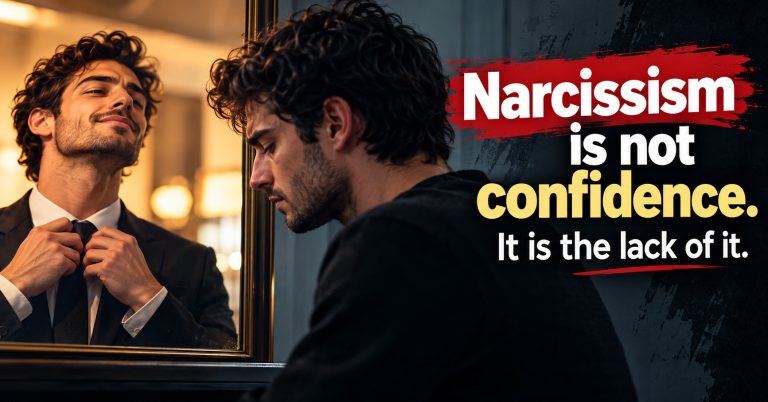
Related : Narcissism Is Not Confidence: Understanding the Difference
Choosing Peace Over the Need to Be Understood
You may spend months or even years wishing the other person would finally understand what they put you through.
You may want an apology, an honest conversation, or an acknowledgment of how deeply their behavior affected you.
Those feelings are understandable. But your healing does not have to depend on receiving closure from the person who hurt you.
Sometimes, closure begins when you stop waiting for someone else to validate your experience.
You can accept that the relationship hurt you without convincing the other person to agree. You can learn from what happened without reopening the door. And you can move forward without getting every answer you wanted.
Walking away is not about winning an argument or proving that you are stronger. It is about no longer making your emotional well-being dependent on another person’s choices.
How to Start Healing After Narcissistic Abuse
Healing does not happen overnight, and you do not have to pretend that leaving was easy. There may be days when you miss the person, question your decision, or feel tempted to return.
That does not automatically mean you made the wrong choice. It means you are processing an emotionally complicated experience.
Here are a few ways to begin rebuilding your life:
1. Set boundaries that protect your peace. Limit unnecessary contact when possible. If communication is unavoidable, such as when children or practical responsibilities are involved, keep it focused and clear.
2. Reconnect with yourself. Think about the interests, friendships, goals, and routines you may have neglected while trying to keep the relationship together.
3. Stop blaming yourself for everything. Reflect on what you have learned, but remember that another person’s harmful choices are not your responsibility.
4. Seek support. Talk to trusted friends, family members, or a qualified mental health professional if you need help processing the experience.
5. Give yourself time. Recovery is not a race. You can miss someone and still recognize that the relationship was unhealthy for you.
If you feel unsafe leaving, consider making a safety plan and seeking help from a trusted person or local support service before taking action.
The Freedom That Comes After Walking Away
At first, leaving may feel like losing everything you hoped the relationship would become. You may grieve the future you imagined, the promises you believed, and the version of the person you wanted them to be.
But with time, you may begin to notice small changes.
You sleep more peacefully. You stop rehearsing every conversation in your head. You make decisions without worrying about someone’s reaction. You begin to trust your instincts again.
Little by little, life starts to feel like your own.
The goal is not to become bitter, stop trusting people, or spend the rest of your life thinking about the person you left. The goal is to learn from the experience without allowing it to define every relationship that comes afterward.
You deserve connections where respect is mutual, communication is honest, and love does not require you to abandon yourself.
Final Thoughts: You Are Stronger Than Their Manipulation
Choosing to walk away from narcissistic abuse can be one of the most difficult decisions you ever make. It takes courage to leave a familiar situation, especially when part of you still hopes things could have been different.
But remember this: you do not have to stay in a painful relationship to prove that your love was real.
You can love someone and still choose distance. You can grieve what happened and still move forward. You can acknowledge the good memories without ignoring the harm.
Your strength is not measured by how much pain you can endure. It is reflected in your willingness to protect your dignity, rebuild your confidence, and create a healthier future for yourself.
Sometimes, walking away is not giving up on love. It is finally choosing a kind of love that includes you.