Opening up about your past can feel like an important step toward building trust. You may share painful experiences, childhood wounds, insecurities, or difficult relationships because you believe the other person genuinely cares.
But when you’re dealing with someone who repeatedly uses personal information to manipulate, shame, or control you, vulnerability can become something you later regret.
The issue isn’t that sharing your trauma is wrong. The issue is who you’re trusting with that information and how they treat it.
Why Narcissists May Pay Attention to Your Vulnerabilities
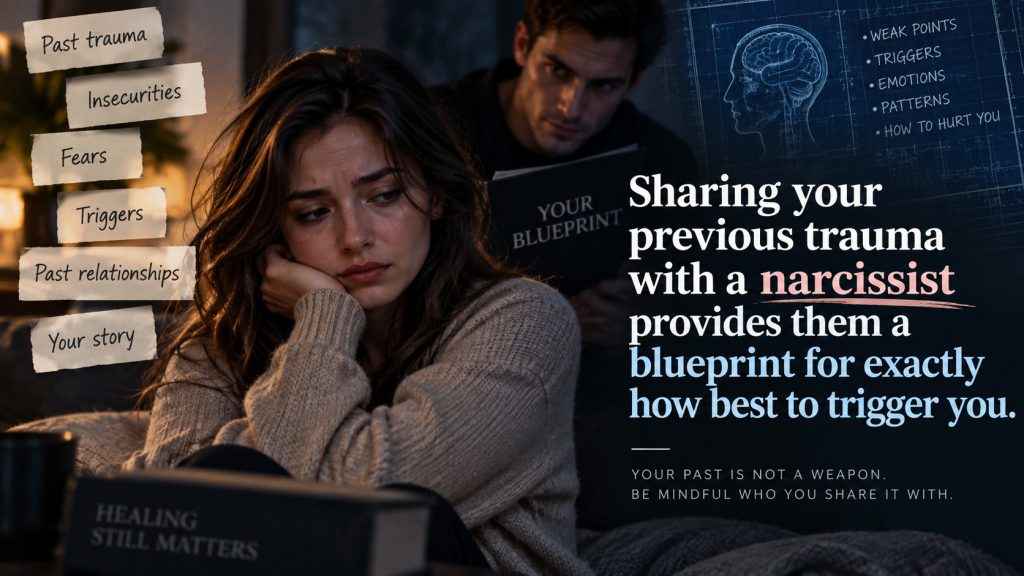
A person with strong narcissistic traits may remember the things that make you emotionally vulnerable.
For example, you might tell them:
- You have abandonment fears.
- You struggle with rejection.
- You experienced betrayal in a previous relationship.
- Certain words or situations trigger painful memories.
- You have insecurities about yourself.
- You are afraid of losing people you love.
In a healthy relationship, this information can help two people understand each other better.
In an unhealthy relationship, however, those vulnerabilities may later be brought up during arguments or moments of conflict.
Something you shared during a deeply emotional conversation can suddenly become ammunition.
Related : Narcissists Aren’t the Only Ones Who Hurt You: The Pain of People Who Take Their Side
When Vulnerability Turns Into a Weapon
One of the most painful experiences is realizing that something you shared because you trusted someone is now being used to hurt you.
A person might intentionally bring up your past during an argument:
“No wonder people leave you.”
“You’re just reacting like this because of your past.”
“You’re too sensitive because of what happened to you.”
Instead of offering understanding, they use your history to invalidate your feelings.
That’s when you may begin to feel unsafe being vulnerable.
Your Trauma Isn’t Your Weakness
It’s important to remember that having emotional wounds doesn’t make you weak.
Trauma can affect how people respond to conflict, rejection, intimacy, and relationships. Recognizing those patterns can actually be part of healing.
You don’t need to hide your past from everyone.
Instead, pay attention to how someone responds when you trust them with something vulnerable.
Do they listen without judgment?
Do they respect your boundaries?
Do they use your disclosure to understand you, or to control you?
Those differences matter.
Be Careful About Who Gets Access to Your Vulnerability
Trust doesn’t have to be given all at once.
You can allow someone to earn deeper access to your personal life over time.
Watch what they do with small pieces of information before giving them your deepest wounds.
Someone who respects your vulnerability will generally treat your private experiences with care rather than repeatedly bringing them up to shame or control you.
Related : The Hidden Cost Of Loving A Narcissist Will Make You Sick When You See It
Healing After Emotional Manipulation
If someone has used your trauma against you, you may become afraid to open up again.
That’s understandable.
But healing doesn’t mean becoming emotionally closed off forever.
It means learning that vulnerability and boundaries can exist together.
You can be honest without telling everyone everything.
You can have empathy without ignoring red flags.
And you can share your story without allowing someone else to define you by your wounds.
Final Thought
Your past does not give another person permission to hurt you.
The right people won’t need your trauma as a weapon. They’ll understand that the painful things you’ve survived are part of your story, not a blueprint for how to break you.
Your vulnerability deserves to be handled with care.