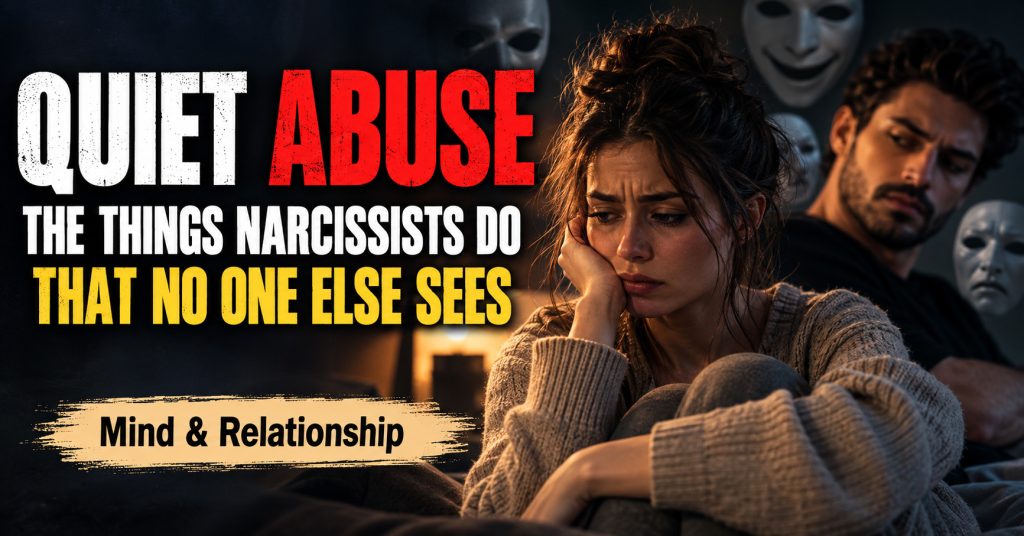
Quiet Abuse: When the Harm Is Almost Invisible
Not all abuse leaves visible bruises.
Sometimes, the most damaging behavior happens quietly, through small comments, emotional withdrawal, manipulation, gaslighting, and subtle changes in the way someone treats you. From the outside, the relationship may look completely normal. Behind closed doors, however, you may feel confused, exhausted, insecure, and constantly worried about doing something wrong.
This is one reason quiet abuse can be so difficult to recognize.
When narcissistic traits are involved, manipulation may not always be dramatic or obvious. Instead, it can happen through repeated patterns that slowly affect your confidence and your sense of reality.
Here are six subtle behaviors worth paying attention to.
1. They Undermine You in Tiny Ways
Quiet emotional abuse often begins with things that seem too small to complain about.
A sarcastic laugh when you’re excited about something. An eye roll when you express an opinion. A little insult disguised as a joke. A dismissive comment about your appearance, intelligence, or decisions.
One incident might not seem important.
But when these behaviors happen repeatedly, they can gradually change how you see yourself.
You may start questioning your choices, avoiding certain topics, or becoming afraid to speak freely because you already know how the other person will react.
The problem isn’t always one comment. It’s the pattern.
Related : When a Narcissist Feels Uncomfortable: What They Do
2. They Withdraw Affection When You Need It Most
Another form of quiet abuse is emotional withdrawal.
Instead of offering comfort when you’re struggling, the person suddenly becomes cold or distant. They may ignore your messages, stop showing affection, refuse to communicate, or behave as though your emotions are an inconvenience.
Healthy relationships allow people to have space. But there’s a difference between taking healthy space and deliberately withholding affection or communication to control someone’s behavior.
If you constantly feel that love, attention, or affection can disappear whenever you disappoint someone, you may begin walking on eggshells.
Over time, you might start changing your behavior simply to avoid losing their approval.
3. They Rewrite Events Until You Question Yourself
Gaslighting is one of the most recognizable forms of psychological manipulation, but it can happen very subtly.
You remember something that happened.
They confidently tell you it never happened.
You remember their words.
They insist you misunderstood.
You express hurt.
They tell you that you’re being too sensitive.
After enough repetition, you may stop trusting your own memory and judgment.
You might find yourself thinking:
“Maybe I really am overreacting.”
“Maybe I remembered it wrong.”
“Maybe this is somehow my fault.”
Healthy disagreement is normal. People can remember the same event differently. But repeatedly denying your experiences, shifting blame, or deliberately creating confusion can seriously damage your self-trust.
4. They Isolate You Without Directly Telling You To Leave Anyone
Not every controlling person will explicitly say, “Stop seeing your friends.”
Sometimes isolation happens through comments.
“I don’t trust your friends.”
“They don’t really care about you.”
“Your family doesn’t understand our relationship.”
“I just don’t feel comfortable when you’re around them.”
At first, these statements may sound like opinions rather than control.
But gradually, you may stop seeing certain people because every interaction creates conflict afterward.
Eventually, your support system becomes smaller.
You haven’t technically been forbidden from seeing anyone, but you’ve been conditioned to avoid the people who could provide perspective and support.
Related : Stop Being Kind to a Narcissist: Why Boundaries Matter
5. They Make You Feel Guilty for Being Kind
This can be particularly confusing.
You give more.
You forgive more.
You try to keep the peace.
You make excuses for their behavior.
And instead of appreciating your effort, they begin expecting it.
Your kindness becomes an obligation.
When you finally become tired or establish a boundary, you may suddenly be portrayed as selfish or uncaring.
This creates a dangerous cycle: the more you give, the more is expected from you.
Eventually, you can become emotionally exhausted while still feeling guilty for wanting basic respect.
6. They Always Find a Way to Become the Victim
Another subtle pattern is constant victimhood.
Whenever there’s a conflict, somehow the conversation becomes about what you did to them.
You bring up something hurtful they said.
Suddenly, you’re accused of attacking them.
You establish a boundary.
Now you’re “cruel.”
You explain how their behavior affected you.
They respond by describing everything you’ve supposedly done wrong.
This doesn’t mean every person who talks about being hurt is manipulative. Genuine pain exists in every relationship.
The warning sign is a repeated pattern where accountability is almost impossible and every conversation eventually turns into an accusation against you.
Why Quiet Abuse Can Be So Difficult to Recognize
The hardest part about subtle emotional abuse is that individual incidents can look harmless.
A sarcastic comment.
A silent treatment episode.
A strange accusation.
A cold response.
A guilt trip.
A denial.
Any one of these might be explained away.
But abuse is often better understood by looking at the overall pattern, not one isolated moment.
Ask yourself:
- Do I constantly question my own memory?
- Do I feel like I’m walking on eggshells?
- Have I become less confident since this relationship began?
- Do I feel responsible for their emotions?
- Have I become isolated from people I trust?
- Am I constantly trying to prove that I’m a good partner?
- Do conflicts almost always end with me apologizing?
- Do I feel emotionally exhausted even when nothing dramatic happened?
Your feelings alone don’t prove that someone has narcissistic personality disorder or that abuse is occurring. But persistent fear, confusion, loss of confidence, and emotional exhaustion deserve attention.
The Most Important Thing to Remember
Quiet abuse is still harmful simply because it doesn’t look dramatic.
You don’t need to wait for a huge confrontation before taking your feelings seriously.
Sometimes the first step is simply recognizing the pattern.
Start writing down incidents if you’re confused about what is happening. Talk to someone you trust. Pay attention to how you feel after interactions rather than only listening to what the other person says.
And remember this:
A healthy relationship should not require you to constantly abandon your own reality just to keep the peace.
If someone repeatedly makes you feel small, confused, isolated, guilty, or afraid to express yourself, it’s worth stepping back and looking at the relationship honestly.
Your emotional well-being matters too.