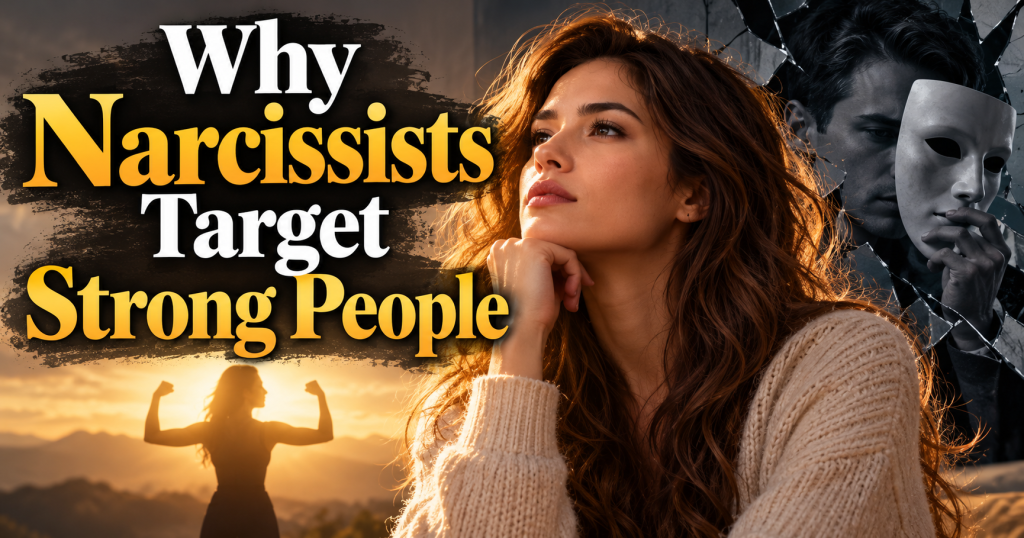
Have you ever wondered how someone who is intelligent, independent, emotionally aware, and capable of handling life’s challenges could end up in a relationship that slowly destroys their confidence?
Maybe you’ve asked yourself why you ignored the red flags, why you kept giving someone another chance, or why you started questioning your own judgment after being so sure of yourself.
If this sounds familiar, you’re not alone.
One of the most painful misconceptions about narcissistic abuse is that it only happens to weak or vulnerable people. In reality, people with many different personalities, strengths, and backgrounds can experience emotionally abusive relationships. Sometimes, the very qualities that make a person caring and committed can make it harder for them to recognize when a relationship has become harmful.
Narcissistic abuse is not proof that you are weak. And being mistreated is never your fault.
Why Do Narcissists Target Strong and Empathetic People?
People who display strong narcissistic traits may be drawn to relationships that provide admiration, attention, validation, or a sense of control. Someone who is caring, successful, emotionally available, or deeply committed may offer these things, especially when they tend to put considerable effort into maintaining a relationship.
However, it’s important to remember that not everyone with narcissistic traits deliberately chooses a partner because that person is strong or empathetic. Relationships are complicated, and emotional abuse can affect almost anyone.
Here are some reasons caring, capable people may find themselves caught in unhealthy relationship patterns.
Related : A Man Who Doesn’t Want to Lose You: 5 Clear Signs
1. Empathy Makes You Want to Understand Them
Empathy is a beautiful quality. It allows you to recognize another person’s pain, consider their perspective, and respond with compassion.
But in an unhealthy relationship, empathy can become emotionally exhausting.
When someone repeatedly hurts you, you might focus on understanding why they behave that way. You may tell yourself that they had a difficult childhood, that they struggle with insecurity, or that they simply don’t know how to express their feelings.
Instead of asking whether their behavior is acceptable, you begin asking what you can do to help them change.
You give them patience, forgiveness, and understanding, hoping that one day they will offer the same in return.
The problem is not that you care too much. The problem begins when understanding someone else’s pain becomes a reason to ignore your own.
You can understand someone’s wounds without accepting their harmful behavior.
2. You Believe People Deserve Second Chances
Emotionally mature people often understand that nobody is perfect. They know relationships involve mistakes, difficult conversations, and opportunities to grow.
That’s why you might forgive an apology, accept a promise, or believe that a painful experience will finally teach your partner something.
But there is a difference between making a mistake and repeatedly hurting someone without taking meaningful responsibility.
In some emotionally abusive relationships, the same cycle keeps repeating. Your partner hurts you, apologizes, becomes affectionate, and promises to change. Just when you begin to feel safe again, the harmful behavior returns.
Over time, you may become attached to the hope of who they could be rather than the reality of how they consistently treat you.
Giving someone a second chance doesn’t make you foolish. But you are allowed to stop giving chances when their actions repeatedly contradict their promises.
3. You Are Used to Taking Responsibility
High-functioning people often learn to solve problems, manage responsibilities, and keep moving even when life becomes difficult.
These qualities can help them succeed at work, support their families, and navigate challenging situations.
However, in an unhealthy relationship, this same sense of responsibility can become a burden.
You may start believing that if you communicate better, remain calmer, become more understanding, or change your behavior, the relationship will finally improve.
When an argument happens, you examine everything you said. When your partner becomes distant, you wonder what you did wrong. When they treat you unfairly, you search for a way to fix the situation.
Eventually, you may find yourself doing the emotional work for two people.
A healthy relationship requires mutual effort. You can take responsibility for your own mistakes, but you cannot take responsibility for another adult’s choices.
4. You Don’t Immediately See Yourself as a Victim
People who are independent and capable may find it difficult to recognize when they are experiencing emotional abuse.
They may believe they should be able to handle conflict, communicate their needs, or resolve the situation on their own.
Admitting that a relationship is hurting them can feel like admitting defeat, even when they would never judge another person for experiencing the same thing.
Instead of recognizing the seriousness of the situation, they may minimize it.
“Every couple argues.”
“They’ve been under a lot of stress.”
“Things weren’t always this bad.”
These thoughts can make it harder to recognize a pattern of manipulation, humiliation, intimidation, or persistent boundary violations.
You don’t have to identify yourself as a victim to acknowledge that someone is hurting you. You can be strong, resourceful, and independent while still needing support.
Related : Narcissists and God: 7 Signs of Spiritual Manipulation
5. You Remember the Good Times
One of the most confusing parts of an unhealthy relationship is that the other person may not treat you badly all the time.
There may be moments of affection, meaningful conversations, thoughtful gestures, and memories that feel completely genuine.
Those moments can make it difficult to reconcile the person you love with the person who hurts you.
You remember how they treated you at the beginning. You remember their promises. You remember the version of the relationship that made you believe you had found something special.
And you keep hoping that person will return.
In some abusive relationships, alternating periods of affection and mistreatment can reinforce emotional attachment and make leaving more difficult. You may begin waiting for the good moments while trying to survive the painful ones.
But occasional kindness does not erase a pattern of harm.
A healthy relationship should not require you to endure repeated pain just to experience moments of happiness.
Why Intelligent People Can Still Be Manipulated
Intelligence doesn’t make anyone immune to emotional manipulation.
Manipulation often develops gradually. It may begin with subtle criticism, confusing conversations, broken promises, or small boundary violations that seem easy to explain away.
Over time, the behavior can become more frequent or intense. You may start doubting your memory, questioning your feelings, or relying on the other person to tell you what really happened.
This can happen to people who are highly educated, successful, emotionally intelligent, and experienced in relationships.
Why?
Because emotional abuse doesn’t always begin with obvious cruelty. It can develop within a relationship where trust, affection, hope, and vulnerability already exist.
When you love someone, you naturally want to believe the best about them. Recognizing a harmful pattern can be especially difficult when it conflicts with everything you once believed about the relationship.
The lesson isn’t to become suspicious of everyone. It’s to learn how to recognize patterns without abandoning your own judgment.
Pay attention to how someone responds when you say no, express hurt, disagree with them, or ask them to take responsibility. Their response can reveal far more than their promises.
The Hidden Cost of Always Trying to Be Understanding
When you spend too much time trying to understand another person’s behavior, you can slowly lose touch with your own needs.
You may stop expressing your feelings because you don’t want another argument. You may apologize just to restore peace. You may become careful about what you say, how you say it, and even how you react.
Eventually, you might find yourself asking:
- Why am I always the one trying to fix things?
- Why do I feel guilty whenever I set a boundary?
- Why do I have to explain my pain over and over?
- Why do I feel exhausted after conversations that should bring us closer?
- Why don’t I feel like myself anymore?
These questions deserve your attention.
You don’t need to diagnose your partner to recognize that a relationship is damaging your well-being. You can evaluate the behavior, establish boundaries, and seek help based on what you are experiencing.
Love should leave room for honesty, emotional safety, and mutual respect. It should not require you to silence yourself to keep someone else comfortable.
How to Protect Your Strength Without Losing Your Kindness
Healing doesn’t mean becoming cold, distrustful, or emotionally unavailable. It means learning to offer yourself the same compassion you so freely give to others.
Here are five practical ways to begin.
1. Pay attention to repeated behavior.
Don’t judge a relationship only by its best moments or its worst arguments. Look at the overall pattern. Does the person acknowledge their mistakes and make consistent changes, or does the same harm keep happening?
2. Set boundaries without overexplaining.
You are allowed to say no, take space, and refuse conversations that involve insults or intimidation. You don’t have to convince someone that your boundaries are reasonable before you are allowed to have them.
3. Stop treating every problem as yours to solve.
Healthy relationships require two people who are willing to listen, reflect, and make changes. If you are the only person trying to repair the relationship, more effort from you may not solve the underlying problem.
4. Reconnect with people you trust.
Emotional abuse can leave you feeling isolated or confused. Talking with trusted friends, family members, or a qualified mental health professional can help you regain perspective and make decisions without carrying everything alone.
5. Remember that leaving or staying is a decision you can approach safely.
If you are considering leaving an abusive relationship, you don’t have to do everything at once. Consider your emotional, financial, and physical safety, and seek specialized support when needed. If you fear retaliation, make a safety plan before confronting the person or announcing your intentions.
You deserve support whether you’re ready to leave, are already rebuilding your life, or are still trying to understand what happened.
Related : You Don’t Have to Stay Silent to Protect a Narcissist’s Reputation
Healing After Narcissistic Abuse Begins With Self-Trust
One of the hardest parts of recovering from an emotionally abusive relationship is forgiving yourself for the things you didn’t recognize earlier.
You might wonder why you stayed, why you believed the apologies, or why you kept hoping things would change.
But you made decisions with the information, feelings, and circumstances you had at the time. You may have been trying to preserve a relationship that mattered deeply to you.
Instead of punishing yourself for what you didn’t know, begin focusing on what you know now.
You can learn to recognize unhealthy patterns. You can develop stronger boundaries. You can become more confident in your perceptions and more willing to seek support when something doesn’t feel right.
You don’t have to stop being empathetic to protect yourself. You don’t have to lose your kindness to become stronger.
You can care about someone and still recognize that they are not treating you well. You can forgive someone without giving them continued access to your life. And you can love deeply without sacrificing your peace.
Final Thoughts: It Was Never About Being Weak
The idea that narcissistic abuse only happens to weak people is not only misleading; it can also make survivors blame themselves for what they experienced.
People become involved in harmful relationships for many reasons, including love, trust, hope, vulnerability, and circumstances that may not be obvious to outsiders.
Your intelligence doesn’t make you invulnerable. Your empathy doesn’t make you responsible for someone else’s behavior. And your willingness to love someone doesn’t mean you deserve to be hurt.
Perhaps the real strength is not learning how to tolerate more pain. Perhaps it’s learning when you have tolerated enough.
You don’t have to become less caring to protect yourself. You just have to stop abandoning yourself in the process of caring for someone else.
If you’re recovering from narcissistic abuse, remember this: your past relationship does not define your worth, and you are allowed to build a future where respect, peace, and emotional safety are no longer things you have to beg for.