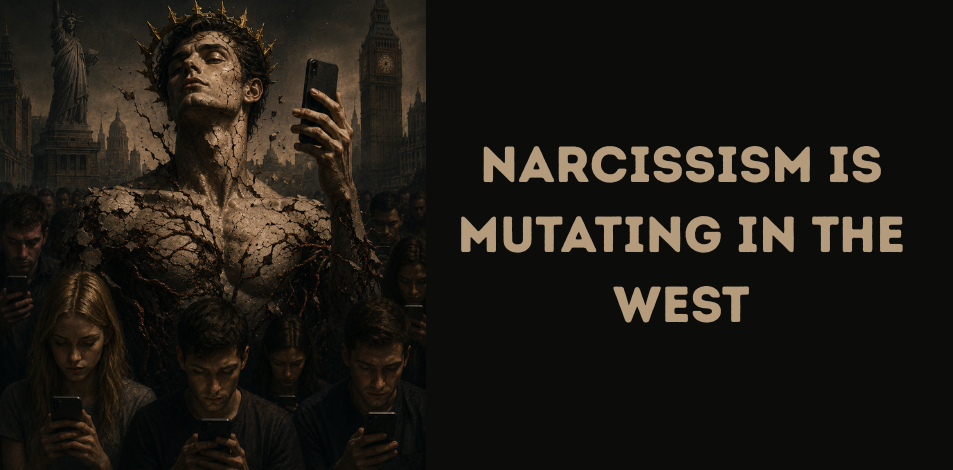
In the 21st century, we are discovering, as a group, the depth and pervasiveness of narcissism in our world. We now find its effects in our relationships, friendships, workplaces, and even our families.
The definition of narcissism as “superficial and self-absorbed” has proven to be merely the tip of the iceberg. Beneath this surface lies a whole world of dysfunctional behaviors. Borderline personality disorder, histrionics, psychopathy, codependency, paranoia, and others have been shown to be closely linked to narcissism.
From The Pandemic And Beyond
Narcissism is not a new phenomenon; it is an inherent trait in human nature, not an anomaly. What is new is our understanding of its deep dynamics. One aspect of narcissism in the 21st century is its evolution, as it has been given ample space to spread in a modern, globalized social environment.
In the past, narcissism was rooted in the tribe or family, where the tribal chief or head of the family held a dominant position in the hierarchy. When tragedy struck in the form of invasion, conflict, natural disaster, or famine, the tribe suffered a profound psychological trauma. To compensate for the collapse of their true selves, tribesmen developed personality disorders such as borderline personality disorder, psychopathy, and narcissism. Authenticity and empathy were lost, while vanity and manipulation prevailed.
Meanwhile, tribal leaders retained their positions. However, they found an outlet in projecting their own malaise onto those of lower rank, abusing them emotionally, physically, or even sexually. We see this today in narcissistic families, many of whom carry traumas passed down through generations and continue to exhibit symptoms of mental illness.
Over the centuries, tribes merged to form civilizations, and centers of power grew in strength and influence. The Roman Empire is a classic example of psychological disorder, narcissism, and corruption, where megalomaniacal emperors like Caligula and Nero committed atrocities against their people with impunity. However, historically, the ruling class has always been a minority, and empires have long lifespans. Only recently has the standard of living of the majority improved to surpass that of past emperors, and opportunities for power and independence have become widespread.
The_Hero’s_Journey_in_the_Modern_Age
Thanks to the Renaissance, the French Revolution, and the Industrial Revolution, Western society proclaimed the individual king or queen. Carl Jung took this a step further by popularizing the concept of self-realization, where one breaks away from their community in the hope of discovering their true self. By freeing themselves from the constraints of family or society, which they felt held them back, modern man hopes to flourish in complete freedom and become what he was meant to be.
This process has been documented throughout history in the form of the legendary hero’s journey, where the hero leaves his homeland, descends into the underworld, faces countless challenges and demons, and then returns enlightened and transformed.
However, the hero’s journey in the modern age does not involve sword duels or perilous situations. Rather, it may include traveling the world, experiencing mental effects, meditation, psychotherapy, entrepreneurship, healing methods, and other paths to inner liberation and self-discovery.
Related : The Narcissistic Women Who Fetishize Flawed Men
With unprecedented levels of wealth, technology, and security, humans no longer rely on a small tribe to meet their needs for survival and connection. A person can spend months or even years away from their family or community, meeting people from all walks of life. On top of that, social media enables them to build an entire virtual life by cultivating an influential brand and connecting with people everywhere, anytime. Meanwhile, they carry the virus of narcissism, ready to spread throughout the world.
Narcissism Pandemic
A person raised in a narcissistic family suffers greatly under the pressure of its dysfunctional tribal structure. When a family is interdependent and plagued by psychological issues, no one is immune to the trauma. Narcissism and toxic shame can spread rapidly across all social classes—just like any virus.
At the same time, the modern Western world is moving toward two things: consumerism and individualism. People are flocking to cities and living independent lives. Moreover, corporations are encouraging the disintegration of the family, and the socially isolated individual suffers from a painful emptiness due to a lack of belonging. As a result, people become more susceptible to the cycle of consumerism, seeking to fill an endless void with one product after another.
In the past, society had its own rituals for getting to know one another, and individuals would integrate into their community before entering into family life. Now, online dating and casual relationships have created a hasty approach to relationships. With the endless options available for dating in cities and online, settling for less has become an undesirable option.
Hiding behind anonymity and without any commitment to their community, a person can start a relationship and then disappear at will. The prevalence of dating strangers also leaves people unaware of what others are hiding. This leads to a further erosion of trust, increased suspicion, and a resurgence of trauma, significantly increasing the likelihood of exploitation by narcissists and psychopaths. The exploited individual, filled with anger at an unjust world, descends further and further, becoming increasingly narcissistic and psychologically disturbed. It’s a downward spiral into the hell of relationships.
Traditional community and tribal strongholds still exist in the West, but they are being severely tested. Even traditional regions like Africa, the Middle East, and Asia are being influenced by the West, which seeks to mold the world in its own image, preparing the masses for fragmentation and consumerism.
Many ethnic families migrate to the West, fleeing wars or seeking better economic opportunities. Their children are then left adrift, torn between the pressures of modernity and the high expectations of their traditional families.
All of this is now reaching its peak, as people are no longer bound by traditional structures like the village, monogamy, and the family. With countless choices and a society geared towards economic growth and endless self-improvement, the conditions are ripe for the spread of a narcissistic epidemic.
Even those without a family history of mental illness may lose touch with tradition and be corrupted by its influence. This situation is exacerbated by social media, which creates “high-status” figures who shame the public with their distorted and unattainable standards and their narcissistic pursuit of clicks, money, and fame.
Others flee their troubled family environments and then plunge into the whirlpool of modernity, indulging in selfish and psychologically damaging behaviors. These individuals suffer from detachment from reality, delusions, and act as a reaction to psychological trauma. They drift into a sea of casual sex, fantasies, online dating, the pursuit of online fame, drugs, and utter chaos.
Returning To Tradition
The Western world is not returning to tradition. Pandora’s box has been opened. We have come too far. Yet, tradition remains a valuable source of nourishment and order.
Those who leave their dysfunctional societies and families may not only discover chaos and destruction, but also insight and transformation. The “death” of their former selves gives way to the phoenix rising from the ashes. Liberation from a sick and rigid structure allows a person to uncover their layers and reach the essence of their being. With enlightenment comes inner peace, self-knowledge, and the setting of stricter boundaries. However, a person who is liberated cannot live long without a sense of belonging. Faith, family, and order are essential necessities for all human beings.
While ethnic and traditional minorities can draw inspiration from the progressive West, the West can also learn how to refine itself through tradition. Those who have transformed and awakened, who have left their troubled past behind and chosen the path of heroism, can return home and share their talents. They can set boundaries and live on their own terms while serving as positive role models. Instead of playing the savior or looking down on everyone else, they can simply be themselves, without shame or excuses.
In return, their community can provide them with belonging and organization, even if it is burdened by trauma and illness. Often, this can be an opportunity to discover humility, compassion, humanity, healing, and a deeper understanding of their origins. Communities in their final stages of illness may no longer be able to provide this, but many still do, retaining their inherent goodness.
The only other option is to continue feeding the world’s pandemic of narcissism, remaining disorganized, arrogant, and insatiable. How sustainable this solution is remains to be seen.