Metaphorically, narcissism is like inflating a balloon. The balloon represents the false, narcissistic self, and the helium is its source. When someone receives your attention, they get helium for their balloon. When someone can control your reaction, they also get helium to keep their balloon inflated. Your cooperation with others also contributes to the inflation of their balloon. Receiving praise for your talents or appearance is like helium for your narcissistic balloon. All these actions reinforce the person’s false, narcissistic self.
In a world where power is the spearhead, the means to fulfill our desires and needs, narcissism becomes an essential element of our lives. This is healthy narcissism, where we exchange metaphorical helium, trading it as a valuable commodity. When our balloons inflate, we feel powerful and capable. The dopamine effect can be so strong and irresistible that it drives us to crave more. More power means more ability, just as more helium means a bigger balloon. The problem arises when this “inflated balloon” state takes over our reality.
In the case of the narcissist, this “inflated balloon” keeps them from realizing their true self. Tracing the origins of a narcissist reveals that their early experiences are filled with trauma and abuse. They were attacked, manipulated, and humiliated to conform to the expectations of their elders. To escape these traumas, they began to reinforce their narcissistic personality by seeking attention, validation, cooperation, and approval. They discovered that the more they inflated their “balloon,” the more powerful and comfortable they felt. They worked to maintain this state, manipulating their environment and the people around them with all their might. They would never risk anyone or anything bursting this “balloon.” No one would dare question their reality.
So, what is it that the narcissist fears most about losing their self-confidence? The truth is, we all experience this state occasionally. Feeling exhausted on a Monday and experiencing rejection are prime examples. We’re filled with happiness at the end of the week, and when the source of that pleasure disappears, we feel a painful withdrawal. The hope of acceptance lifts us up, but the shattering of that hope sends us crashing back down. In both cases, the experience is deeply painful and distressing. This collapse is the narcissist’s withdrawal, much like the withdrawal symptoms of a drug.
Related : Narcissism Is Mutating In The West
What distinguishes the narcissist from others is their inability to accept this freefall. Allowing their ego to deflate means falling into a spiral of shame, where reality overwhelms their fantasies. The narcissist’s emotions begin to take over, and repressed traumas and anger surface.
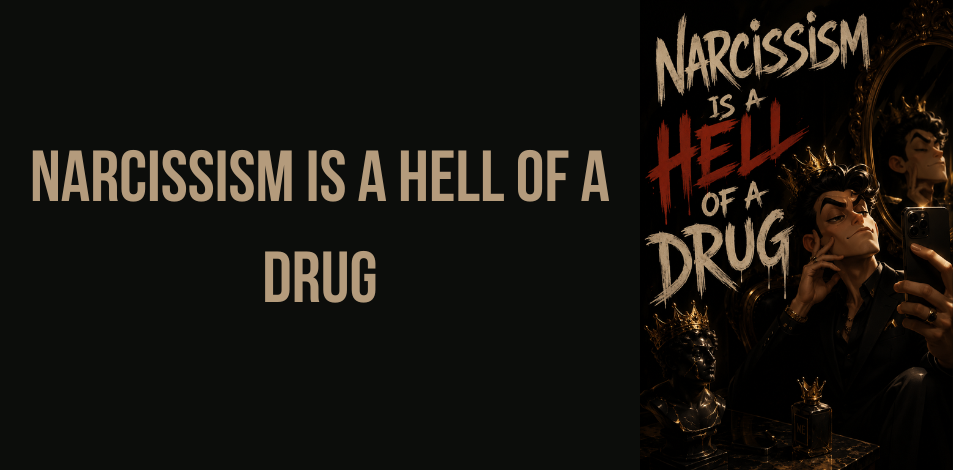
Again, metaphorically speaking, this keeps the narcissist’s balloon afloat above a pool of lava, where the lava represents their repressed trauma. The descent from this state is a painful and agonizing experience. This is what the narcissist fears most. Narcissism is like a drug, but in this case, power is the drug. By cooperating with the narcissist, interacting with him, and allowing him to control you, you are helping him consolidate his addiction while depriving yourself of your right to empowerment.
To overcome our inherent narcissism, we must be aware of the cycles of inflation and deflation we experience. Narcissistic inflation is beneficial, allowing us to experience pleasure and opportunity in life. The most important part is accepting deflation and embracing feelings of shame. The experience of reaching the peak of inflation and then losing our source of narcissistic energy is painful, but if we are mature enough, we can accept it as part of the human experience.
If we can resist the urge to seek unhealthy ways to inflate, we gradually descend and reach a state of equilibrium. What awaits us when all our narcissistic energy fades? Our true selves, of course. We reach a state of emptiness and fullness simultaneously, of tranquility and energy, of shock and anxiety, and of true love and happiness. The full richness of the human experience is available to us if we have the courage to allow ourselves to break down from time to time and to stop inflating our egos with actions, schemes, thoughts, and drama.
Although the narcissist lacks this courage, defaming them ignores the fact that they have no safe haven to retreat to. The devastating psychological trauma, when it seizes the authentic self and traps it within a false one, can extinguish a person’s humanity. The path back may be nearly impossible.
So, how do we break down consciously and courageously? We do so through awareness and acceptance. Every euphoria has its downfall, and every narcissistic shock gives us a sense of power on one hand, while robbing us of our true human experience on the other. By accepting the narcissist’s withdrawal from our lives, we can swell with joy and then shrink back happily, returning to our humanity—a luxury the narcissist cannot afford.