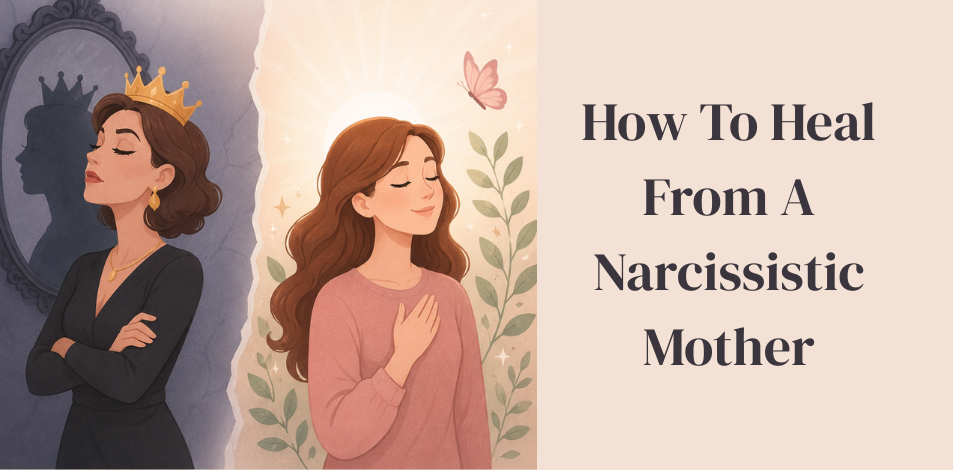
A child with a narcissistic mother suffers greatly. Recovering from her abuse requires breaking free from her manipulation and building their own life. But where does one begin?
It starts with a starting point, and that requires you to detach this person from the relationship. Your mother verbally abuses you because she knows that by humiliating you, crushing your self-confidence, and making you feel guilty, she can keep you obedient and under her control. She does this because she fears losing control over you.
Recovering from a narcissistic mother involves the following strategies:
Distance yourself: Take time away from her. Then use this time to regain your composure. Take care of yourself and create an environment that makes you feel safe and empowered. This could be a favorite café, a park, a spa, a place in nature, or your own home.
Reflect on the harm done to you: Write about your experiences with her. Reflect on them. Pay attention to your inner state. Remind yourself that this state is someone else’s doing.
Alternate: After spending time away from her, reconnect with her. Set aside time for this. Then, disconnect and observe the results. Do you feel different after being with her? How so? Notice it, and if necessary, write it down.
Regain Your Calm
Disconnection: When you’re with her, pay attention to patterns in her psychological manipulation. Does she target your vulnerabilities? Do some of her words affect you more than others? Analyze these attacks and resist responding to them. See these attacks for what they are: desperate attempts to undermine and control you. The emotional reaction will still be there, but you can reflect on it once you’re away again.
Stay Focus On Your Priority
Isolation, then connection, then mindfulness and analysis, then back to isolation.
Repeat this process again and again. Use this experience as a laboratory to understand this madness. It may seem absurd and pointless, and you’ll feel incredibly frustrated at first. It’s important to persevere and be patient.
The shame and trauma of being in a relationship with a narcissistic mother are immense, and at first, they will be far greater than you can comprehend or cope with. Like any challenge, you’ll start as a complete amateur, but with each small success, you’ll get closer to mastery.
After the initial strategy of mindfulness and self-care, you’ll need to delve deeper. The real solution, as with all relationship problems, lies in childhood.
The Source of the Narcissistic Mother’s Power
No adult can solve the problem “mentally” alone. The narcissistic mother’s grip is so strong because it was established before the child was even capable of thinking. The relationship between the child and their mother is formed deep within the child’s subconscious mind, body, and soul. Only through this inner child can an adult recover from the narcissistic mother’s influence and bring about lasting change.
The mother, whether narcissistic or not, is the figure from whom all our relationships stem. Attachment to her is deeply ingrained and continues to influence us well into adulthood. This is difficult for adults to grasp. Separation from the narcissistic mother seems impossible because attachment isn’t just to a person, but to a powerful archetype in their mind. It’s attachment to an idea.
When a child first bonds with their mother, they are incredibly sensitive and vulnerable. The mother is their lifeline; their only means of survival and growth. The mother nourishes her child completely, providing milk, love, and warmth to their developing body. As a result, she assumes a godlike role in their life. The child perceives her as a divine being and simultaneously yearns for her complete acceptance.
Since abandonment is tantamount to death, the child observes their mother’s reaction with extreme caution. A child facing an angry mother is like someone with a severe fear of flying, as a violent storm forces the plane to make an emergency landing.
Good Mother, #Bad Mother, #Narcissistic Mother
Furthermore, as the child grows, they initially possess only the capacity for black-and-white thinking. They don’t understand that a person may experience life’s pressures, mood swings, or childhood traumas. When the child encounters intense emotions, their black-and-white thinking, coupled with their intense fear, forces them to split their mental image of their mother in two.
When the mother reflects her child’s personality, meets their needs, and makes them feel safe, the child identifies with the good mother, who becomes a symbol of perfection and idealism. In other cases, the mother may be angry, neglectful, or fail to adequately meet the child’s needs, as is the case with a narcissistic mother. In this instance, the child identifies with the bad mother, who is perceived as domineering and cruel.
The child splits in this way to find an outlet for their overwhelming emotions, which they cannot fully comprehend. It is important for the child to hate their bad mother and direct their anger toward her. This helps them maintain the image of the good mother while escaping the terrifying fear of abandonment. It also gives them a sense of control and allows them to release their frustration. The more the mother abuses the child, the greater the terror and anger, and the more the child splits in order to cope. The child clings more tightly to the idea of the good mother to alleviate their fear and terror.
Reconciling Good And Evil
Ultimately, the child matures, and their imaginative thinking fades. They realize that the person they love (the good mother) and the person they hate (the bad mother) are one and the same. The concepts of good and evil merge, and the child begins to see a real person, not just an idea in their mind. The child’s thinking becomes more realistic. The mother may be kind and she may be harsh at times, and this is normal; she will not abandon the child when things go wrong.
Related : Narcissistic Abuse Recovery: Where To Begin
If a mother allows her child to bond with her and grow under her care, the child will gradually absorb the role of the caring mother and eventually overcome it. This is a maturing process that requires patience and support from the caring mother. The child needs time to experience the caring mother role and then move beyond its influence. There are no shortcuts.
The Narcissistic Mother Occupies The Caring Mother
When trying to recover from the influence of a narcissistic mother, the separation becomes even more difficult. In a healthy mother-child relationship, the child experiences the caring mother role on their own terms. Their needs and desires are met, fostering high self-esteem and self-respect. This also gives them the freedom to act independently without fear of losing her love.
With a narcissistic mother, however, she only becomes a caring mother when the child behaves as she expects. If the child expresses negative feelings, behaves inappropriately, or rebels against the narcissistic mother, she reverts to her negative parenting behavior, venting her anger on them, shaming them, or turning her back on them. The consequences of losing a loving mother are devastating. Remember, for a child, abandonment is like death. Therefore, the child quickly learns that if they want a loving mother, they must behave as the narcissistic mother expects. The child temporarily alleviates this separation through obedience.
The narcissistic mother holds the child hostage by being their lifeline. At the same time, she remains moody, selfish, manipulative, controlling, and abusive. Clinging to a loving mother in such an environment is difficult and frustrating, and often leads to despair. The problem is that the child cannot let go of their intense longing for the loving mother; it is deeply ingrained. The child lives with an unconscious drive that compels them to cling to her desperately.
The Fluctuating Love of a Narcissistic Mother
If a child loses trust in their narcissistic mother, they will feel her withdrawal. The mother may suddenly respond with attention and care, or she may make the child feel guilty, accusing them of abandonment. The child then reverts to seeing the mother as a loving figure, only to unconsciously return to the narcissistic game, after which the mother regains control.
The child’s hatred of the bad mother triggers feelings of guilt and shame, forcing them to exert extra effort to please her. They also idolize and appease the narcissistic mother, hoping to show her the loving mother they so desperately need. This type of “Stockholm syndrome” can keep an adult trapped for life, robbing them of opportunities for recovery and maturity.
What’s even more painful is that the narcissistic mother will never be the loving and caring person the child so desperately seeks. The child must either endure and remain silent, or face the consequences: shame, panic, and overwhelming guilt. After a while, the child usually becomes what the narcissistic mother wants, and the system is established. But deep down, the child feels lonely, frustrated, and hopeless because their voice isn’t heard, they aren’t understood, and they aren’t loved for who they are. They are simply playing the role of the perfect child, hoping to receive the love they crave.
Recovering From A Narcissistic Mother
A child can begin to recover from a narcissistic mother when they learn to see the dysfunction. But seeing the dysfunction won’t solve the problem. The power of the perfect mother is irresistible. For the child to break free from the dysfunction in their relationship with the narcissistic mother, they must embrace and surrender to the idea of the perfect mother: through another person.
The path to recovery from a narcissistic mother remains through the perfect mother, but the adult must replace the persona she represents. The narcissistic mother will never provide the harmonious love and empathy that the adult’s inner child needs. The adult will need to find a female therapist and place their trust in her. The adult will be aware of what they are trying to do, but they must allow their inner child to bond with the new mother figure at their own pace.
Transitional_Rituals
Ultimately, if the therapist is dedicated and understanding enough, the adult will be able to gradually let go of their inhibitions and allow themselves to be treated like a child. When the therapist shows sufficient empathy and understanding, the child raised by the mother will relive their trauma in a safe environment and begin to heal. The therapist may have their own shortcomings and problems, but they will avoid delving into these in their practice to ensure the adult can reproduce the ideal mother image without hindrance.
Over time, the adult will experience the ideal mother image consistently and authentically. Then they will begin to grieve the fact that they will never find it in their narcissistic mother. They will come to understand and experience the truth: the mother they longed for doesn’t exist. It’s merely an image in their mind that they clung to throughout their life. For everyone to mature and heal from the influence of a narcissistic mother, they must experience the ideal mother image sufficiently and then finally let go of it. It’s a transitional phase we all need, without it being abruptly interrupted by the bad mother.
The Mortal Woman
One cannot know a good mother and then suddenly abandon her. An adult must experience her. And it is crucial that they experience her on their own terms. In the therapist’s office, the adult must be completely open, free from shame. They need a state of complete vulnerability, like a child. They must reveal their innermost self to the therapist, allowing them to connect with and accept it.
With the therapist’s support, the adult can experience and gradually grieve the passing of their good mother. The rosy outlook gradually fades, and the adult begins to see their therapist as a human being: a woman with good qualities, but also with flaws and “bad” aspects.
Most importantly, the adult will learn to see their mother more clearly; as someone deeply wounded, who expressed their illness through a dangerous and destructive game. The true nature of the game becomes clear to the adult, and they stop being drawn into it. Guilt and shame lose their power. At some point, the child within him awakens, and the adult experiences a peace and joy he never knew existed. He begins to heal from the effects of his narcissistic mother, and basks in the warmth of life, freed from her shadow.