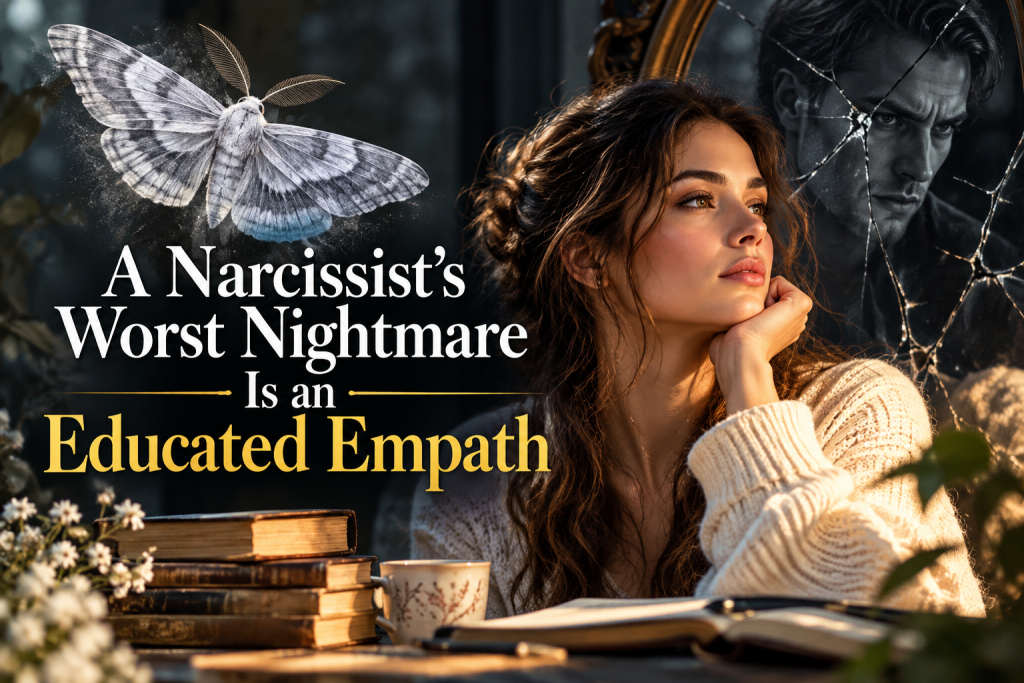
A Narcissist’s Worst Nightmare Is an Educated Empath
Have you ever wondered why someone who once seemed able to control your emotions suddenly loses that power over you? Sometimes, the answer is simple: you have started to understand what is happening.
An educated empath is not someone who has stopped caring about others. It is someone who has learned to combine compassion with awareness, emotional intelligence, and healthy boundaries. They can understand another person’s pain without accepting mistreatment in return.
This is one reason an emotionally aware person may become much harder to manipulate in a relationship marked by narcissistic behaviors.
When you begin recognizing manipulation, questioning confusing behavior, and trusting your own judgment, the dynamics of the relationship can change dramatically.
1. They Recognize Manipulation Instead of Making Excuses for It
In an unhealthy relationship, manipulation does not always look obvious. Sometimes it comes disguised as love, concern, jealousy, or a promise to change.
A person might deny something they clearly said, shift the blame onto their partner, or make the other person feel guilty for expressing a reasonable concern.
An empath who has learned about these patterns may begin connecting the dots. Instead of constantly asking, “What did I do wrong?” they start asking, “Why does this keep happening?”
That shift matters.
Related : Why a Good Woman Leaves When She Feels Disrespected
Education helps people recognize recurring behaviors rather than judging a relationship by its occasional good moments. It also helps them understand that an apology means little if the same hurtful behavior continues without meaningful change.
2. They Stop Confusing Empathy With Tolerating Abuse
One of the most difficult lessons for a deeply compassionate person is learning that understanding someone does not mean accepting everything they do.
You may understand that your partner had a painful childhood, struggles with insecurity, or has difficulty managing emotions. You can acknowledge those experiences without making yourself responsible for fixing them.
Compassion explains why someone might behave a certain way; it does not make harmful behavior acceptable.
An educated empath understands this distinction. They can care about someone and still decide that a relationship is damaging their peace, confidence, and well-being.
They no longer believe that loving someone harder will automatically make that person treat them better.
3. Gaslighting Becomes Easier to Recognize
Gaslighting is a form of psychological manipulation that can make someone question their memory, perceptions, or understanding of events.
Imagine repeatedly raising a concern, only to hear that you are too sensitive, imagining things, or remembering everything incorrectly. Over time, you might begin doubting yourself.
Learning about gaslighting can help someone recognize this pattern and take their own experiences seriously.
An educated empath may start documenting important conversations, seeking an outside perspective, and paying attention to whether words match actions.
This does not mean assuming that every disagreement is manipulation. Healthy relationships involve misunderstandings, different memories, and honest mistakes. The important difference is whether both people can discuss problems respectfully and take responsibility for their actions.
4. They Set Boundaries Without Feeling Obligated to Explain Everything
People who care deeply about others sometimes struggle to say no. They worry about disappointing someone, triggering an argument, or being viewed as selfish.
But healthy boundaries are not punishments. They are limits that protect your emotional and personal well-being.
An educated empath learns that saying no does not require a lengthy defense. They can refuse disrespectful conversations, take space when overwhelmed, and decide what behavior they will no longer accept.
For example, instead of arguing for hours about why their feelings are valid, they might say:
“I am willing to talk about this, but not while I am being insulted. We can continue when we can speak respectfully.”
The goal is not to control the other person’s reaction. It is to remain consistent about what you will participate in.
5. They Stop Chasing Validation
In some unhealthy relationships, affection and approval seem to come and go unpredictably. One day, the relationship feels wonderful; the next, the same person may become cold, critical, or distant.
This inconsistency can leave someone working harder and harder to regain the affection they once received.
An educated empath begins to understand that their worth cannot depend on another person’s mood or approval.
They stop treating every moment of distance as proof that they have failed They learn to evaluate the relationship by its overall pattern: Is there mutual respect? Is there accountability? Do both people feel emotionally safe?
When your self-worth becomes less dependent on someone else’s validation, it becomes harder for that person to influence every decision you make.
6. They Judge Actions, Not Just Promises
A heartfelt apology can feel convincing, especially when you desperately want things to improve. But promises alone cannot rebuild trust.
An emotionally aware person looks for consistent changes over time. Does the person acknowledge the harm they caused? Do they respect boundaries even when they are frustrated? Can they accept criticism without turning every discussion into an attack?
These questions reveal more than charming words ever could.
Not everyone who displays narcissistic traits behaves in the same way, and no single behavior proves that someone has narcissistic personality disorder. What matters in a relationship is the actual behavior, its impact, and whether the people involved are willing to work toward healthier patterns.
An educated empath learns to stop judging a relationship solely by its potential and start looking at what is happening in reality.
7. They Are Willing to Walk Away
Perhaps the biggest change happens when someone realizes that leaving an unhealthy relationship is an option.
For an empath, walking away can be particularly painful. They may remember the good times, worry about the other person’s future, or feel guilty about giving up on someone they once loved deeply.
But staying at the expense of your emotional well-being is not proof of love.
Sometimes, the healthiest decision is to stop trying to convince someone to understand your pain and begin focusing on your own recovery.
Walking away does not mean you never cared. It means you recognize that a relationship requires more than one person’s patience, forgiveness, and effort.
And if leaving feels unsafe, especially when there are threats, intimidation, or controlling behavior, planning your next steps with trusted support can be important.
8. They Learn That Peace Is More Valuable Than Winning an Argument
When a relationship repeatedly turns into a battle over who is right, it is easy to spend hours explaining yourself, defending your intentions, and trying to make the other person understand.
But not every disagreement can be resolved through more explanation.
An educated empath learns to recognize when a conversation is productive and when it has become a cycle of blame and exhaustion.
They do not need to win every argument to trust their own judgment. They can disengage from conversations that go nowhere, protect their energy, and focus on decisions that improve their lives.
Sometimes, the most powerful response is not another explanation. It is a clear boundary followed by consistent action.
Can an Empath Love a Narcissist Without Losing Themselves?
It is possible for people with strong empathic qualities to form relationships with partners who display narcissistic traits. However, empathy alone cannot make an unhealthy relationship work.
A lasting relationship requires mutual respect, honesty, accountability, and a willingness to recognize how each person’s behavior affects the other.
You cannot do another person’s emotional work for them. You cannot create accountability on their behalf, and you cannot guarantee that someone will change simply because you understand them.
If you find yourself constantly anxious, apologizing for things you did not do, questioning your reality, or sacrificing your needs to avoid conflict, take those experiences seriously.
Consider speaking with a qualified mental health professional, particularly if the relationship has left you feeling isolated, frightened, or emotionally overwhelmed.
Healing is not about becoming cold or suspicious of everyone. It is about learning to recognize healthy love and no longer confusing suffering with devotion.
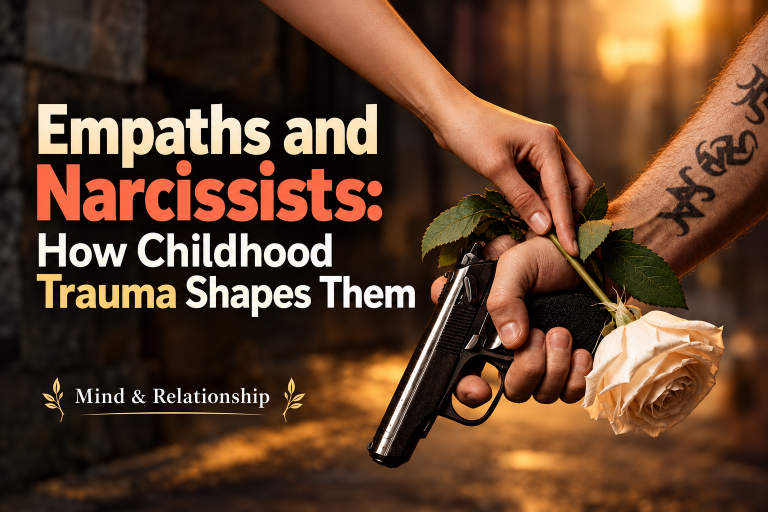
Related : Empaths and Narcissists: How Childhood Trauma Shapes Them
Final Thoughts: Knowledge Changes the Way You Love
A narcissist’s worst nightmare is often described as an educated empath because knowledge can make manipulation more difficult when it helps someone recognize harmful patterns and act on what they learn.
But the real transformation is not about defeating a narcissist, exposing them, or proving that you are stronger.
It is about becoming someone who can care deeply without abandoning themselves.
You can remain kind without being endlessly available. You can forgive without returning to the same harmful situation. You can understand another person’s struggles without accepting responsibility for changing them.
Most importantly, you can stop measuring your worth by how well you manage someone else’s emotions.
Your empathy is not your weakness. Without boundaries, it can leave you vulnerable to being taken for granted. With self-awareness and healthy limits, it becomes a strength you can protect.
You do not have to stop being a compassionate person to protect your peace. You simply have to learn that you deserve the same understanding, patience, and respect that you give to others.
Sometimes, healing begins the moment you stop asking how to make someone treat you better and start asking what you need to feel safe, respected, and whole again.