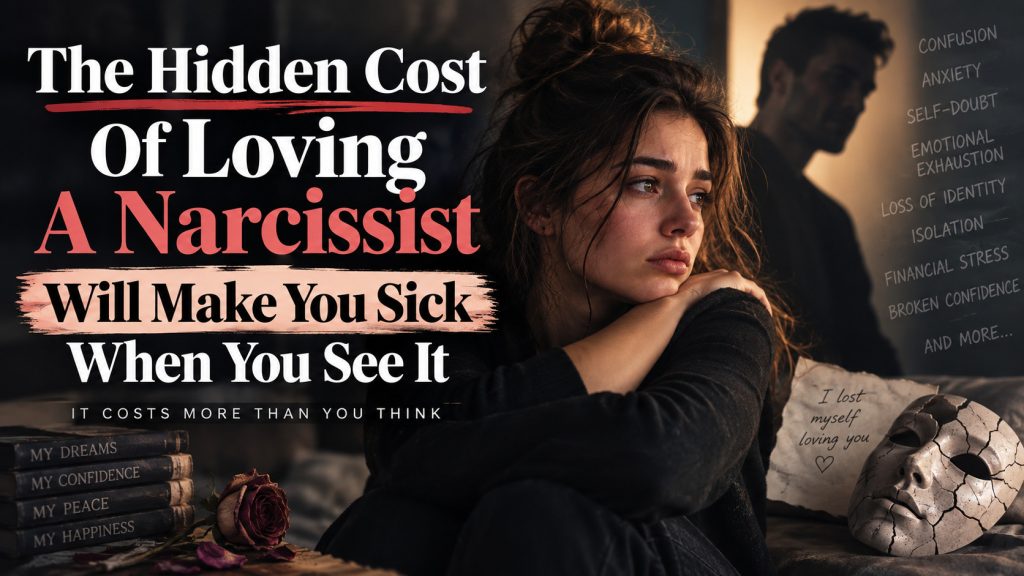
At first, you may not realize what the relationship is costing you.
You may simply think you’re tired.
Tired of explaining yourself. Tired of walking on eggshells. Tired of having the same argument over and over again. Tired of wondering why something that should feel like love leaves you feeling so anxious and empty.
The hidden cost of loving a narcissistic person isn’t always obvious from the outside.
Sometimes, it’s everything you slowly stop being.
You become quieter. You question yourself more. You stop trusting your instincts. You may distance yourself from friends and family because maintaining the relationship seems easier than explaining what is happening behind closed doors.
And eventually, you may look in the mirror and realize you don’t recognize the person you used to be.
- You Start Losing Your Sense of Self
One of the most painful effects of a toxic relationship can be losing touch with your own identity.
You may begin changing your opinions, appearance, routines, friendships, and even your personality just to avoid conflict.
Related : The One Thing You Keep Giving the Narcissist That Keeps Them Coming Back
You learn what triggers an argument.
You learn what topics are “safe.”
You learn when to stay quiet.
Eventually, you aren’t asking, “What do I want?”
You’re asking, “What will keep the peace?”
That’s a very expensive way to live.
- Your Confidence Slowly Disappears
Constant criticism can change the way you see yourself.
If you’re repeatedly told you’re too sensitive, too difficult, selfish, dramatic, or never good enough, eventually you may start questioning whether those things are true.
This is one reason emotional manipulation can be so damaging.
The person doesn’t have to destroy your confidence overnight.
They can simply make you doubt yourself a little more every day.
- You Become Emotionally Exhausted
A healthy relationship shouldn’t require you to constantly analyze someone’s mood.
But in a difficult relationship, you may find yourself thinking:
“Is today going to be a good day?”
“What did I do wrong?”
“Should I bring this up?”
“How do I say this without making things worse?”
That constant mental calculation is exhausting.
You’re not just living your life anymore.
You’re managing the emotional atmosphere around another person.
- You Stop Trusting Your Own Reality
When conversations repeatedly end with you questioning what happened, confusion can become part of your everyday life.
You remember something one way.
They insist it happened differently.
You explain what hurt you.
The conversation somehow becomes about what’s wrong with you.
Over time, you may start thinking:
“Maybe I’m the problem.”
That self-doubt can be one of the most difficult things to recover from after emotional abuse.
- Your Friendships Can Suffer
Toxic relationships can become increasingly isolating.
Sometimes the isolation happens because the other person directly discourages certain friendships. Other times, you withdraw yourself because you’re embarrassed, exhausted, or afraid people won’t understand.
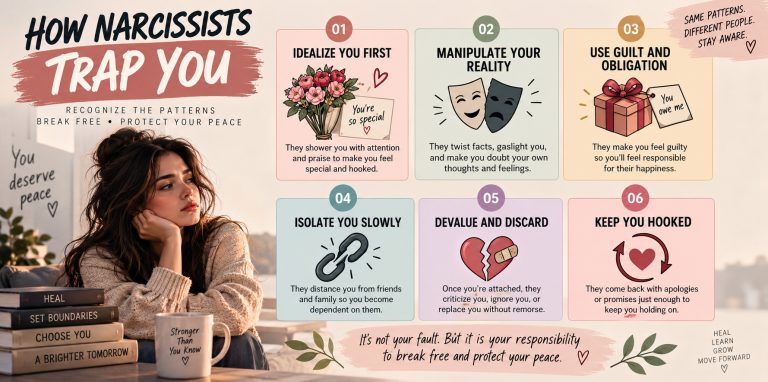
Related : How Narcissists Trap You: 6 Manipulation Tactics to Recognize
You may stop answering messages.
You cancel plans.
You avoid telling people what’s really happening.
And slowly, your support system becomes smaller.
That’s why reconnecting with trustworthy people can be an important part of healing.
- There Can Be A Financial Cost Too
Not every narcissistic relationship involves financial abuse, but money can become another source of control in some unhealthy relationships.
Shared accounts, unequal financial responsibilities, debt, withheld money, or pressure around spending can create enormous stress.
Financial independence isn’t just about having money.
It’s also about having options.
When possible, knowing where your important documents are, understanding your finances, and maintaining access to your own resources can provide greater stability.
- Your Body May Start Carrying The Stress
Emotional stress doesn’t stay neatly inside your thoughts.
Long periods of stress can affect sleep, energy, concentration, appetite, and general wellbeing.
You may feel constantly tense.
You may struggle to relax.
You may wake up already exhausted.
This doesn’t mean every physical symptom comes from a relationship. But if you notice major changes in your wellbeing while living through prolonged emotional stress, it’s worth taking them seriously and speaking with an appropriate healthcare professional.
Related : Why Men Resent Women Who Don’t Need Them
Your body deserves attention too.
- You Stop Dreaming About Your Own Future
This is one of the hidden costs people don’t talk about enough.
You stop making plans.
Not because you don’t have dreams anymore, but because everything feels complicated.
You think:
“Maybe later.”
“When things get better.”
“After this problem is solved.”
“When they finally understand.”
Years can pass while you’re waiting for the relationship to become something it has repeatedly shown you it isn’t.
Your life shouldn’t have to remain on hold indefinitely.
- You Become Addicted To The Good Moments
One of the most confusing parts of an unhealthy relationship can be the contrast between painful periods and moments of affection.
After days of conflict, one loving conversation can feel incredibly powerful.
After emotional distance, a little attention can feel like everything.
Those good moments can make you question whether the relationship is really that bad.
You remember the person they were at the beginning.
You remember the apologies.
You remember the promises.
And you start hoping that version of them will return permanently.
Related : 5 Things Gen X Women Wish We’d Learned Decades Ago
But a relationship needs to be evaluated by its consistent pattern—not only by its best moments.
- The Biggest Cost May Be How Long You Abandon Yourself
Maybe the greatest hidden cost isn’t losing money.
It isn’t losing friends.
It isn’t even losing the relationship.
It’s spending years believing that you have to become smaller to be loved.
You shouldn’t have to constantly silence yourself, abandon your boundaries, or destroy your confidence just to keep someone close.
Love should not require you to disappear.
You Can Rebuild What You Lost
If you recognize yourself in this, don’t use the realization as another reason to attack yourself.
You survived what you knew how to survive.
Maybe you stayed because you loved them.
Maybe you stayed because you hoped things would change.
Maybe you were financially dependent.
Maybe there were children involved.
Maybe you simply needed time to understand what was happening.
Whatever the reason, understanding the pattern now gives you an opportunity to start doing things differently.
Start small.
Reconnect with someone you trust.
Write down what you’re experiencing.
Rebuild your routines.
Protect your boundaries.
Learn about emotional abuse and manipulation.
And most importantly, start listening to your own voice again.
The hidden cost of loving a narcissist can be enormous, but losing yourself doesn’t have to be the end of your story.
Sometimes healing begins with one simple realization:
You are allowed to become yourself again.