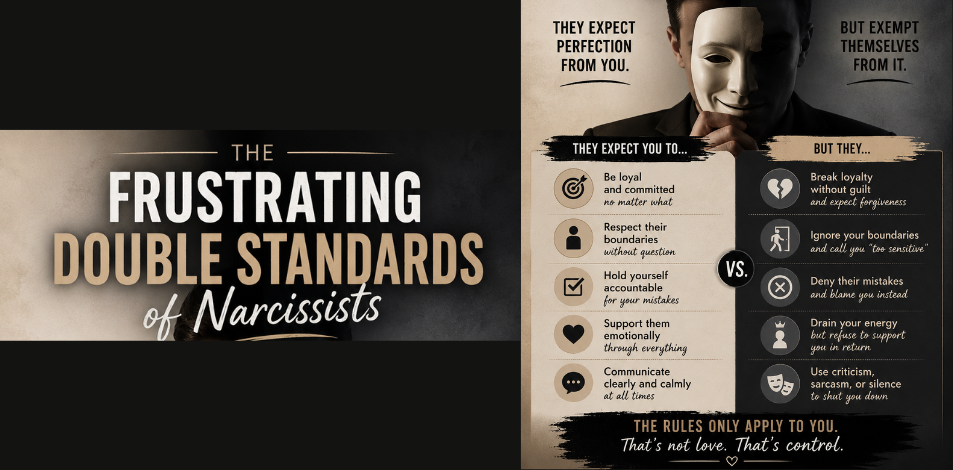
Personality disorders, such as narcissism, are characterized by distorted norms of feeling, thinking, and communicating. Among the most prominent of these distortions in narcissists are their inherent double standards and inconsistencies.
For example, narcissists crave attention but are poor listeners. They appear extremely confident, yet suffer from profound insecurity. They expect special treatment but rarely reciprocate unless they receive something in return.
This double standard can lead to confusion, frustration, and humiliation. To deal with narcissists, it is helpful to recognize eight key contradictions. Narcissists:
- Grandeur, but Fragile
Narcissists often project an exaggerated image. They pretend to be more competent, accomplished, and intelligent than others. They feel entitled to special treatment commensurate with their “status.”
However, narcissists can also be highly sensitive and easily angered. When things don’t go their way or they aren’t the center of attention, they may erupt in anger or regress into a state of childlike melancholy.
- Hostile, but resentful of questions or opposition
Many narcissists seem to enjoy refusing others’ requests or fulfilling their needs. They often need an enemy or adversary and frequently resort to settling scores, seeking revenge, or retaliating.
But if someone questions or contradicts them, narcissists explode in anger. They deflect attention, play the victim, or personally attack anyone who challenges their views.
- Thirsty to be heard, but uninterested in listening
Because narcissists cannot provide the self-esteem they need from within, they greedily seek it from the outside in the form of attention. The irony is: “Stop talking about me. What do you think of me?” This description perfectly encapsulates narcissists.
Because of their intense need for attention, narcissists may listen to others impatiently, counting the seconds until they can redirect the conversation back to them. They may even compete with their loved ones for the spotlight, as if any attention given to others is a personal loss for them.
- Emotional Entitlement, with Indifference to Others’ Feelings
Narcissists expect others to respect and value their feelings. When they have needs, they expect others to meet them.
Related : Cast of Characters in the Narcissistic Family
But when others express their feelings, these are often ignored or ridiculed. If someone asks them for something, narcissists often become angry or label the other person as “selfish” or “demanding.” Narcissists seem oblivious to the impact of their selfishness on others and feign surprise or indignation when the consequences of their behavior are pointed out.
- Quick to Blame, with a Dislike of Taking Responsibility
People with narcissistic behavior are quick to blame others. If they fail, it’s always someone else’s fault. (Even though when they succeed, it’s solely their own doing.)
However, narcissists seem to hate admitting their role and rarely say, “I was wrong” or “I’m sorry.” 6. They are obsessed with appearances but woefully oblivious to their own insecurities.
Narcissists seek status through external means such as power, wealth, sexual attractiveness, appearances, and relationships. They seek the company of the “right people” and look down upon those they perceive as inferior.
However, narcissists are incredibly short-sighted about their own superficiality. Their sense of entitlement leads them to expect admiration, respect, and adoration, failing to realize that respect is earned and admiration is built on both character and achievement.
- They are charming in public but unpleasant in private.
Many narcissists possess a captivating charm in public. But those who live with them often witness the darker side in private: selfishness, manipulation, abuse, and more.
It can be disheartening when others are deceived by a narcissist’s charm and fail to recognize their contradictory nature. But if you live with a narcissist, you’re not imagining their unhealthy behavior; it’s simply another example of their double standards.
8) They demand absolute loyalty, yet they betray others quickly.
Narcissists fear abandonment, humiliation, and betrayal, so they demand and test the loyalty of others repeatedly.
Yet, narcissists will sell out almost anyone without a second thought or remorse if it serves their interests.
Recognizing this double standard can help you deal with narcissists. Remember:
Double standards like these are unhealthy and unfair.
You are not obligated to follow these rules.
When faced with narcissistic behavior, ask yourself: “What’s the price?”
Dealing with narcissists often comes at a price, but your power lies in choosing which price you’re willing to pay and which you’re willing to refuse.