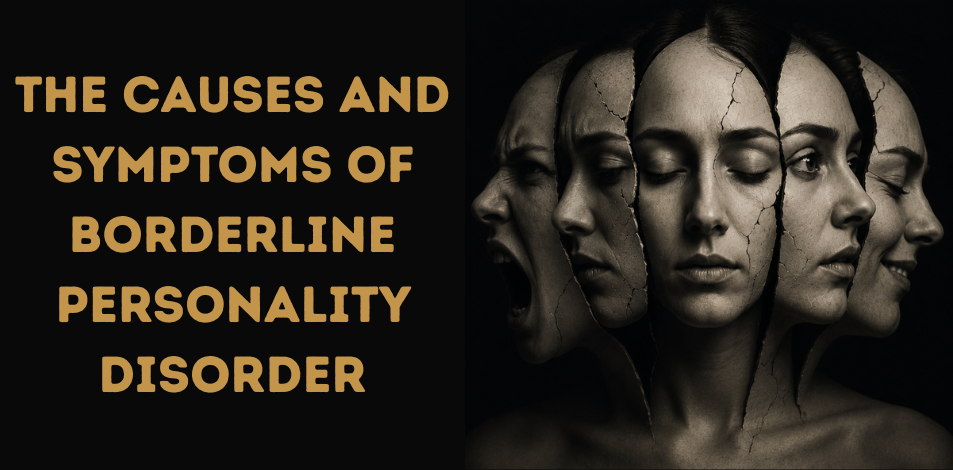
The term “borderline personality disorder” describes someone on the edge of psychosis; teetering between control and chaos, vulnerable to sudden episodes of panic, anger, or depression at any moment.
The Root Cause of Borderline Personality Disorder
The trauma that triggers borderline personality disorder is as complex as its name: complex post-traumatic stress disorder, or C-PTSD for short. Often, the individual with this disorder is the child of divorced parents, where the tension between them creates an environment filled with hostility, chaos, uncertainty, and fear. In many cases, one or both parents have a personality disorder. Narcissistic or borderline mothers are more likely to give birth to children with this disorder.
These environments are unstable, and the child is constantly on edge, anticipating what will happen next. Disturbed parents do not provide a safe environment. If the parents are divorced or separated, the child is often forced to move between two homes. Parental mood swings are often unstable and frightening for a child, especially if one parent has borderline personality disorder (BPD) or narcissism. As a result, the child is overwhelmed by a sea of negative emotions, unable to control them. Their sense of self collapses, and they lose their sense of identity.
Borderline Mindset
A person with borderline personality disorder suffers greatly from complex post-traumatic stress disorder (PTSD) and a lack of a positive role model. They seek ideal love, attempting to regulate their inner turmoil through a “perfect” partner. By building a loving relationship with this idealized person, the person with BPD can soothe their fears and alleviate their suffering with the promise of a bright future with a lover who will never leave them.
Due to their immaturity and inability to move beyond binary thinking, a person with BPD tends to see people as either absolutely good or absolutely evil. When they do become positive, they become attached to the other person very quickly. Initially, the person with BPD idealizes their partner. The relationship is the best thing that has ever happened to them. Their partner is a dream come true. This love will bring a bright future filled with prosperity and abundance.
But no fantasy can withstand the test of reality for long. Within the first few weeks or months, the partner’s flaws become apparent, and the cracks in the illusion appear. The shock resurfaces, casting doubt on this fantasy. To alleviate the resulting discomfort, the person with borderline personality disorder projects their feelings onto their partner and blames them. Everything turns from “good” to “bad,” and the “belittling” phase begins. The person with borderline personality disorder criticizes, judges, shames, punishes, and points out their partner’s flaws. Nothing their partner does ever satisfies them.
Symptoms of Borderline Personality Disorder
The main features of Borderline Personality Disorder are:
Abandonment Anxiety: Individuals with Borderline Personality Disorder cling to others, demanding their constant time and attention to feel secure in relationships.
Integration: Individuals with Borderline Personality Disorder only feel secure when they are completely integrated with others, hoping that the other person will take responsibility for their feelings, thoughts, and decisions. However, they quickly lose their sense of self and feel swallowed up by the other person.
Related ; The Five Weaknesses All Narcissists Have
Approach/Distance: Individuals with Borderline Personality Disorder seek integration with others while simultaneously experiencing a fear of abandonment. Any perceived flaw in their idealized image of love triggers abandonment anxiety and threatens their emotional stability. Therefore, if the other person disappoints them, acts independently, or creates emotional distance, they will suddenly withdraw as a defense mechanism. Individuals with Borderline Personality Disorder experience periods of deep attachment and love before suddenly becoming cold and critical without warning. Although this may give the person with borderline personality disorder a temporary sense of control, their fear of loneliness compels them to reconnect, clinging to the other person once more. They quickly feel trapped and withdraw again. This cyclical dynamic naturally leads to frequent outbursts of anger and arguments with the bewildered partner. The relationship becomes burdened with pointless arguments, emotional outbursts, bitterness, mood swings, and chaos.
Fluctuating self-esteem: The person with borderline personality disorder oscillates between excessive self-confidence and destructive self-doubt and intense self-loathing.
Identity confusion: The person with borderline personality disorder suffers from a weak sense of self and constant doubt in their abilities. They have a blurred and fluctuating self-image, altering their values and behaviors as needed to gain acceptance.
Emotional instability: The person with borderline personality disorder has difficulty forming a stable mental image of the other person. When they withdraw, it feels as if the other person no longer exists. This makes infidelity easier for him, while simultaneously making him desperate to keep that person by his side, as his fear of abandonment threatens to overwhelm him.
Emotional instability: Individuals with borderline personality disorder are often overwhelmed by their emotions, uncertain of their feelings. They experience extreme mood swings, oscillating between euphoria and severe depression. They are frequently unsure of their feelings toward others and tend to end relationships abruptly and impulsively. They also suffer from poor self-control, exhibiting reckless and risky behavior. They tend to suppress their turbulent emotions, striving to remain “normal” and avoid hurting others, until they suddenly erupt in a violent outburst, displaying intense anger and acting in ways they later regret.
Self-harm: Individuals with borderline personality disorder are known to harm themselves through cutting, substance abuse, overeating, and promiscuous sex.
Suicidal thoughts: Individuals with borderline personality disorder (BPD) may be on the brink of death instinct and may consider suicide as a way to end their suffering.
Disconnection from reality: Individuals with BPD may experience gaps in their memories. They may sometimes lose touch with reality and feel as though serious events are happening to someone else. This feeling is intensified when the event is shameful or guilt-inducing, such as betrayal or deception. They may fabricate a story to compensate for their memory loss, hoping to maintain a “rational” narrative to avoid abandonment or a breakdown.
The Chaos Behind Borderline Personality Disorder
People with borderline personality disorder (BPD) often experience developmental delays, making it easy for them to play the helpless child or victim. They appear submissive to others, hoping someone will step in as their savior or parent, magically rescuing them or solving their problems. They struggle to form mature adult relationships, but their innocence and playfulness can be appealing. If someone has an underlying rescue complex or hidden narcissism, they may be drawn to the person with BPD and seek to compensate for it. These individuals enjoy playing the role of the “perfect” partner.
The BPD’s black-and-white, imaginative thinking serves to protect them from trauma. They are constantly vigilant, feel abandoned everywhere, and therefore act in ways that ensure they will be abandoned. They constantly test their loved ones, pushing them to their limits to ensure their continued presence.
The BPD, with its cycles of approach and withdrawal, keeps their loved ones in a state of perpetual anxiety. The other person has no idea when the mood of someone with this disorder will change, or when and how they will accuse, judge, criticize, or erupt in anger. Often, the person is unaware that they are caught in a cycle of extreme binary thinking, morbid suspicion, and repressed anger.