Do you know that heartbreaking moment when you realize that what you called love might actually be something else? Like that time you dismissed your partner’s jealousy as “over-the-top attention,” or how you convinced yourself that those little jokes were just banter.
I want to talk about habits we go by unnoticed—habits we justify, romanticize, or simply ignore because we desperately want to believe in love, so we overlook the warning signs.
No sugarcoating. Just the truth as it is, because you deserve to see it.
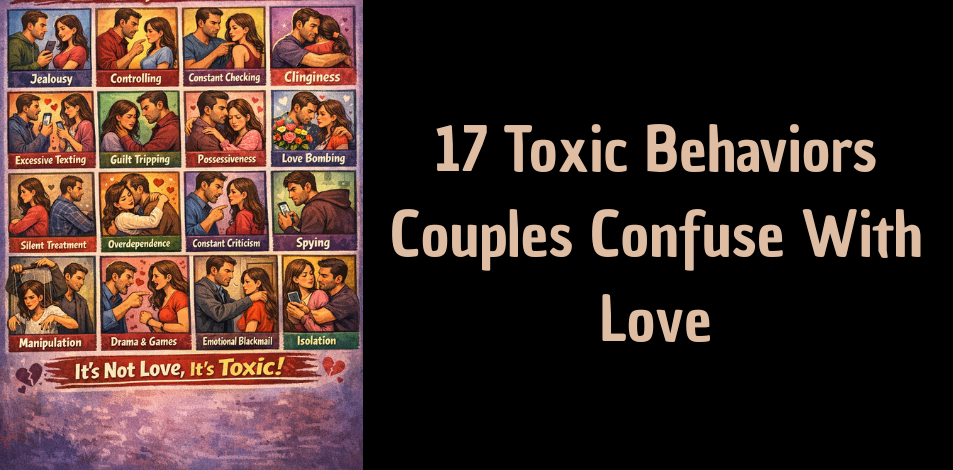
- Constant Criticism
Have you ever felt like nothing you do is ever enough, no matter how hard you try? That’s the poison of constant criticism. It’s insidious because it may disguise itself as “helpful advice” or “just trying to make you better,” but it erodes your self-confidence day by day.
You start doubting yourself. Your partner’s voice replaces your own, and you hear their criticisms echoing in your head even when they’re not there. This isn’t love; it’s gradual erosion.
You might convince yourself they only have your best interests at heart. You might blame yourself for being “too sensitive.” But the truth is, true love builds you up, even when you’re being criticized.
- Jealousy Disguised as Passion
You know that phrase: “I’m only jealous because I care.” Sounds nice, doesn’t it? Until you realize that jealousy isn’t a sign of love; it’s a sign of fear and possessiveness.
There’s a certain allure in being so desired that someone can’t bear the thought of losing you. But when every text message becomes an interrogation, and every friend a threat, the passion quickly fades.
Related : 18 Gaslighting Tactics People Use When They’re Losing Control
True passion builds trust. Love doesn’t require monitoring your social life or demanding your phone password. Obsession and insecurity are two different worlds, even if both are intense.
- Suffocation Under the Guise of Closeness
At first, it feels satisfying—someone who wants to be with you every moment. But you soon feel suffocated, you miss your friends, and it’s as if your world has shrunk to the space of your relationship.
Closeness is wonderful, but love leaves room for your personal life. When someone surrounds you so tightly that you forget where you end and they begin, it’s not intimacy; it’s suffocation!
You both have the right to miss each other. You both have the right to need some time alone. Love won’t punish you for having a life outside of it.
- Point-Scoring
If your arguments are like, “Well, I remember that time when…”, you’re not solving anything—you’re just accumulating ammunition. Love isn’t an endless barrage of insults and compliments.
Point-scoring turns affection into a competition, not a partnership. It’s tempting to keep track of everything, especially when hurt feelings are piling up. But the more mistakes you make, the less communication there will be.
Tolerance cannot flourish where every mistake is buried for later. Try to genuinely let some things go. See what happens when you stop keeping documents.
- Control disguised as care
Has anyone ever told you, “I’m just worried about you,” while in reality, they’re dictating who you talk to, where you go, and how you dress? It’s easy to confuse control with concern, especially when it’s disguised as care.
But love doesn’t meddle in every little thing. It gives you the freedom to make your own decisions, even the complicated ones. Someone who trusts you doesn’t need to control you.
The next time someone crosses a line and calls it love, ask yourself: “Are they protecting you, or are they protecting their own comfort?” There’s a world of difference.
- Ignoring as Punishment
Remember when you spent days on edge because your partner shut down? Silence isn’t just the absence of words; it’s a weapon used to isolate you and make you crave warmth.
It hides behind the excuse of “needing space,” but it’s really about control. The more you reach for them, the further they pull away, until communication becomes impossible.
Healthy love isn’t punished by absence. It bravely faces difficult things, even if they are complex and challenging. Silence solves nothing.
- Assuming Mind-Reading is a Sign of Intimacy
They say, “If you really knew me, you wouldn’t need to ask.” That sounds romantic, sure. But mind-reading isn’t love, and expecting it leads directly to resentment.
True intimacy is built on expressing feelings, not guesswork. No one, no matter how close, can always read your mind.
Loving someone means having the courage to express your needs. Expecting someone to know what’s on your mind without you even thinking? That leads to disappointment, not loyalty.
- Turning Sacrifice into Competition
“I’ve sacrificed so much for this relationship.” You’ve probably heard this phrase, or even said it yourself. Sacrifice is part of love, but when it becomes competition, it becomes just another form of control.
Counting sacrifices turns affection into martyrdom. Suddenly, every action becomes a transaction, and every compromise just a number in the ledgers.
Healthy love is a two-way street. If you’re making sacrifices, it’s time to ask yourself why you feel invisible, or why you’re hiding yourself.
- Lack of Personal Boundaries
It’s easy to think, “If we’re close, there’s no need for boundaries.” But true intimacy respects boundaries, even the invisible ones. When every aspect of your life becomes up for grabs, you lose yourself in the name of being together.
Love that ignores your boundaries isn’t love; it’s entitlement. You’re not obligated to know every detail of your day, or every thought in your head, just because you’re a couple.
The strongest relationships value personal space. You have the right to keep your secrets, to take time to relax, and to have your own door.
- Over-reliance on each other
Do you know that feeling when your partner is your whole world and safe haven? It feels romantic, until you realize you’ve forgotten how to be independent.
Interdependence isn’t inherently bad. But when your happiness, self-worth, or identity becomes tied to another person, things quickly become unstable.
Love should support your independence, not erase it. You might feel secure in interdependence, but it’s a narrow space to live in. Break free. Remember what it means to want, not just need.
- Ignoring Other People’s Feelings
Nothing hurts more than sharing your feelings and then having them dismissed. Phrases like “You’re overreacting” or “It’s not that big of a deal” shut down communication.
It might be tempting to convince yourself that they don’t want you to feel bad. But repeated dismissal isn’t caring; it’s avoidance. Each time it happens, you shrink back a little, until you’re a whisper instead of a voice.
Appreciation isn’t about agreeing with every feeling; it’s about listening and making room for it. That’s love, not just words.
- Confusing Drama with Passion
Remember those couples who thrived amidst chaos? Shouting, doors slamming, dramatic reconciliations—it’s like a real-life drama. It might seem exciting in the moment, but drama isn’t a sign of passion.
Drama is adrenaline, not affection. It flares up intensely but leaves you empty, exhausted, wondering when the next spark will ignite the fuse.
True love is constant. It may be powerful, but it doesn’t need fireworks to feel alive. Calmness isn’t boring—it’s security at last.
- Forgiving Everything, Even the Unforgivable
How many times have you suppressed your anger because you didn’t want to argue? Forgiveness is a powerful force, but when you overlook every betrayal, love becomes self-sacrifice.
You tell yourself, “Everyone makes mistakes.” True, but not everyone makes the same mistakes. Boundaries matter, and so does your pain.
Related : 17 Gaslighting Red Flags You Should Never Shrug Off
Some things simply shouldn’t be ignored. True love acknowledges when things have reached a limit. Don’t lose yourself in the name of being “the best person.”
- Confusing Possessiveness with Loyalty
You say, “They’re just loyal,” ignoring their monitoring of your phone or their constant inquiries about your every move. Loyalty is built on trust, while possessiveness is built on fear and control.
It’s easy to confuse the two, especially if you grew up believing that jealousy is a sign of someone caring. But when loyalty turns into surveillance, something is wrong.
Love celebrates your freedom, even as it embraces you. If you feel more watched than supported, it’s time to re-examine what loyalty means.
- Using Love as an Excuse for Misbehavior
How many times have you heard the phrase “But I love you” after someone has crossed a line? Love is not an excuse for cruelty, neglect, or recklessness. It’s not magic that erases bad behavior.
If someone continues to hurt you and calls it love, it’s not romance; it’s just an excuse. Words are worthless if they don’t change anything.
Don’t let anyone hide behind the word “love” to evade responsibility. True love acknowledges its mistakes, corrects them, and strives to be better.
- Emotional Manipulation Disguised as Care
Have you ever been overwhelmed by “love” that felt like a suffocating constraint? At first, it’s sweet—gentle gestures, constant communication, and a partner who wants to take care of everything. But then… everything changes.
Suddenly, they become the ones in charge because they think they know best. Your opinions? Optional. Your choices? Questionable. What seemed like devotion morphed into disguised control. This isn’t love; it’s control disguised as affection. A subtle, sophisticated takeover, rooted in insecurity and a fear of losing power.
Don’t confuse overprotection with passion. Distinguish between love that uplifts you and love that restricts you. Healthy relationships don’t control every aspect of your life; they boost your self-esteem.
- Guilt Manipulation as a Sign of Deep Love
Have you ever felt manipulated with guilt in the name of “love”? Yes, that classic tactic where affection is offered in exchange for sacrifices. Suddenly, you’re no longer in a relationship, but emotionally indebted.
Think of a partner who holds you accountable for every sacrifice, reminding you of them casually as if preparing a case. After everything I’ve done for you… this phrase begins to transform from love into an interrogation in a courtroom.
Emotional manipulation hides behind a mask of deep devotion, but don’t be fooled; it’s simply a power play. Manipulation disguised as care. A control tactic masquerading as concern. Call it what it is: emotional blackmail, not romance. Love should be unconditional, unbound, and unobligatory. You deserve a relationship built on respect, not blackmail.