
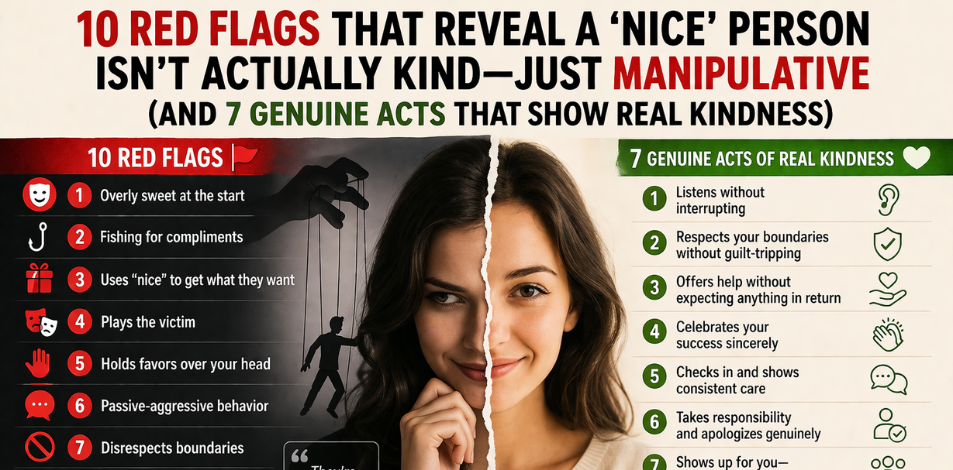
In a world where appearances can be deceiving, distinguishing between genuine kindness and manipulative kindness is crucial. While some may seem friendly and kind, their actions may reveal hidden motives.
This guide highlights ten warning signs of manipulative behavior disguised as kindness, compared to seven genuine acts of empathy. By understanding these differences, we can build more authentic and profound relationships.
- They always say the “right” things—but rarely do them.
Words can be hollow, full of good intentions but devoid of action. Some people have a knack for saying what you want to hear and always know the right words to offer comfort or support. However, when it comes to action, they vanish like a mirage in the desert.
This trait reveals a gap between words and genuine empathy, creating a facade of kindness without substance. Their promises float by like clouds, never translating into tangible support. This discrepancy between their words and actions is what reveals their manipulative nature, cloaked in a veneer of kindness.
The danger lies in confusing their sweet talk with sincerity, leaving you alone in your darkest hour of need.
- They make you feel guilty with a smile.
The art of guilt manipulation is subtle, often concealed behind a seductive smile. These individuals have mastered the art of making you feel responsible for their annoyances or needs, blending manipulation with an aura of friendliness.
Related : 17 Toxic Behaviors Couples Confuse With Love
Their smiles soften the burden of the guilt they place on you. This tactic keeps you perplexed, questioning your actions and decisions, while they maintain an air of innocence.
It’s a psychological game where they gain your obedience by making you feel wrong. True kindness doesn’t require guilt as a motivator; it’s based on understanding without ulterior motives.
- They offer kindness, but expect control in return.
Conditional kindness is a gift wrapped in control. Outwardly, they appear generous, always ready to help and go the extra mile. But beneath the surface lies the expectation of controlling your choices or actions.
This transactional mindset turns their generosity into a kind of currency, used to buy influence or loyalty. Kindness becomes a constraint, binding you to their will under the guise of helping.
True kindness doesn’t seek reciprocity or control; it thrives on the freedom to give without expecting anything in return. Recognizing this difference helps us break free from manipulative exchanges and cultivate genuine relationships.
- They constantly need to appear kind.
For some, the need to appear “kind” is a powerful motivator. They thrive on external validation, ensuring their actions are always visible and praised. This constant need for approval may mask a deeper insecurity, turning their kindness into a performance.
Their self-esteem seems to depend on projecting an image of virtue, leading them to orchestrate situations that highlight their perceived virtues. This behavior doesn’t reflect genuine concern but rather an attempt to maintain a false image.
When kindness becomes a display, it loses its credibility and transforms into manipulation aimed at protecting a fragile ego.
- They avoid conflict but punish with silence.
Avoiding conflict is often seen as a virtue, but when combined with ignoring it, it becomes a weapon. These individuals avoid open disagreements, choosing instead to use silence as a form of punishment.
Cutting off communication becomes their means of control, leaving others in a state of emotional distress. This passive-aggressive tactic maintains their image of kindness while they skillfully manipulate others’ feelings.
True kindness is based on open dialogue and resolution, not silence and avoidance. Recognizing this warning sign helps break the cycle of manipulation disguised as peace.
- They offer help unsolicited, then use it against you.
Unsolicited help often masks a desire to exploit influence. When you offer help without being asked, it can create a sense of obligation. These people are keen to demonstrate their “kindness” and often remind you of their generosity.
This act doesn’t stem from genuine compassion, but rather from a need to control or manipulate you. By using their help against you, they tighten their grip on your decisions and actions.
True kindness respects boundaries and independence and offers help without expecting anything in return. It thrives on mutual respect, not on exploiting unsolicited acts.
- They only appear in public.
Actions performed only in the public eye reveal a desire for praise, not a genuine inclination towards kindness. These people thrive in the spotlight and ensure their acts of “kindness” are seen and commended.
Their appearance is strategic, aimed at enhancing their “kind” image and gaining admiration. This behavior sacrifices sincerity for the sake of public approval.
True kindness is constant, even in the absence of observers. It doesn’t seek validation from others but finds satisfaction in the act itself, not in recognition.
- Their compliments sound manipulative.
Compliments are meant to uplift, but when they carry a manipulative undertone, they serve a different purpose. These people don’t praise you to encourage you, but to control you or influence your actions.
Their words are carefully chosen, designed to affect your emotions and push you to make decisions you might not otherwise make. It’s the art of subtle influence, disguised as positivity.
True kindness in compliments is sincere and unconditional. It doesn’t seek manipulation but genuine appreciation and recognition.
- They make you feel guilty for setting boundaries.
Boundaries are essential for healthy relationships, but some see them as an obstacle to their control. These people express disappointment or sadness when you assert your boundaries, making you question your right to personal space.
Related : 18 Gaslighting Tactics People Use When They’re Losing Control
Their reaction turns your boundaries into burdens, manipulating you into compliance to avoid conflict. This approach undermines your autonomy and transforms kindness into a tool for control.
True kindness respects boundaries and values mutual understanding. It doesn’t see limitations as threats, but as essential elements of respectful interactions.
- Their “kindness” vanishes when they’re told “no.”
True kindness is tested in the face of rejection. For some, a simple “no” reveals the conditional nature of their kindness. When their offers are refused, their behavior changes, exposing the fragility of their supposed kindness.
This reaction reveals an implicit expectation of compliance, where their generosity is contingent on your approval. It’s a utilitarian approach, where kindness is withdrawn at the first sign of opposition.
Genuine kindness remains steadfast, even in the face of rejection. It isn’t based on acceptance, but rather thrives on honesty and respect.
If you want to know how to recognize genuine kindness, here are 7 signs that can help you spot it.
True kindness is constant, even in the absence of observers. It doesn’t seek validation from others but finds satisfaction in the act itself, not in recognition.
- Their compliments sound manipulative.
Compliments are meant to uplift, but when they carry a manipulative undertone, they serve a different purpose. These people don’t praise you to encourage you, but to control you or influence your actions.
Their words are carefully chosen, designed to affect your emotions and push you to make decisions you might not otherwise make. It’s the art of subtle influence, disguised as positivity.
True kindness in compliments is sincere and unconditional. It doesn’t seek manipulation but genuine appreciation and recognition.
- They make you feel guilty for setting boundaries.
Boundaries are essential for healthy relationships, but some see them as an obstacle to their control. These people express disappointment or sadness when you assert your boundaries, making you question your right to personal space.
Their reaction turns your boundaries into burdens, manipulating you into compliance to avoid conflict. This approach undermines your autonomy and transforms kindness into a tool for control.
True kindness respects boundaries and values mutual understanding. It doesn’t see limitations as threats, but as essential elements of respectful interactions.
- Their “kindness” vanishes when they’re told “no.”
True kindness is tested in the face of rejection. For some, a simple “no” reveals the conditional nature of their kindness. When their offers are refused, their behavior changes, exposing the fragility of their supposed kindness.
This reaction reveals an implicit expectation of compliance, where their generosity is contingent on your approval. It’s a utilitarian approach, where kindness is withdrawn at the first sign of opposition.
Genuine kindness remains steadfast, even in the face of rejection. It isn’t based on acceptance, but rather thrives on honesty and respect.
If you want to know how to recognize genuine kindness, here are 7 signs that can help you spot it.
- Helping Without Expecting Appreciation
True kindness is most beautiful when done discreetly. Helping without expecting recognition reflects a selfless nature that doesn’t seek praise. Whether it’s a small gesture or a great act, the focus remains on the impact, not the recognition.
This altruism is rare, as it requires letting go of selfishness and embracing humility. This humble approach creates genuine connections, driven by empathy and compassion.
In a world where appearances often overshadow substance, these acts stand out, reminding us that true kindness transcends the need for recognition.
- Listening Without Trying to Correct or Interrupt
The art of listening is a profound act of kindness. It allows us to be present without the desire to correct or interrupt. It requires patience and empathy, giving others the freedom and honesty to express themselves.
In a world filled with noise and distractions, true listening can be life-changing. It validates experiences and feelings, creating a safe space for open dialogue.
This kind of kindness focuses on communication rather than correction, and appreciates the speaker’s journey instead of imposing solutions. It’s an invitation to be present and respect the narrative without overwhelming it with unnecessary advice.
- Respect Your Boundaries Without Taking Them Personally
Boundaries define personal space and independence, and respecting them is a hallmark of true kindness. This means appreciating others’ needs without taking their boundaries as a personal insult.
This understanding fosters trust and lays the foundation for healthy relationships. It acknowledges individuality and celebrates differences without imposing guilt or obligation.
True kindness embraces these boundaries, viewing them as opportunities for growth and mutual respect, not as barriers to communication. It’s a sign of empathy and compassion, nurturing relationships through understanding and acceptance.
- Staying True to Your Principles, Even in the Absence of a Supervisor
Staying true to your principles in kindness, regardless of the recipient, is a testament to authenticity. It reflects integrity, rooted in a genuine desire to do good without seeking approval or recognition.
This consistent approach builds trust, as actions align with values regardless of any external judgment. It demonstrates sincerity, where kindness is not just an appearance but a way of life.
In a world obsessed with appearances, this authenticity reminds us that the true measure of kindness lies in those unseen moments, when actions consistently and unequivocally align with beliefs.
- Being There in Times of Need
The essence of kindness lies in being there, especially in times of need. It is in these moments that true intentions are revealed, as personal comfort is sacrificed for the sake of others.
This kind of kindness requires sacrifice, prioritizing empathy over comfort. It motivates us to put others first, even if it disrupts our plans or routines.
These actions resonate deeply because they reflect a commitment to support and care, demonstrating that true kindness transcends personal comfort, driven by an unwavering dedication to doing good.
- Acknowledging and Making Right Their Mistakes
Admitting mistakes is a courageous act of kindness, rooted in humility and responsibility. It requires acknowledging errors and taking proactive steps to correct them, stemming from a commitment to integrity.
This approach fosters trust, demonstrating a willingness to grow and learn from past experiences. It transforms mistakes into opportunities for communication and understanding.
Kindness in this context means accepting imperfections and valuing growth over guilt. It reinforces the belief that true kindness lies in the ability to repair and rebuild, and in nurturing relationships through honesty and sincerity.
- Supporting Without Controlling
Offering support without controlling reflects genuine kindness and respect for autonomy. It embodies trust in others’ abilities and offers help without imposing conditions or expectations.
This approach celebrates individuality and empowers those we support to make their own choices. It also cultivates trust and independence, and strengthens genuine bonds based on mutual respect.
True kindness finds its joy in empowering others and celebrating their successes without overpowering them with control. It is a generous approach to support that prioritizes freedom and independence above all else.