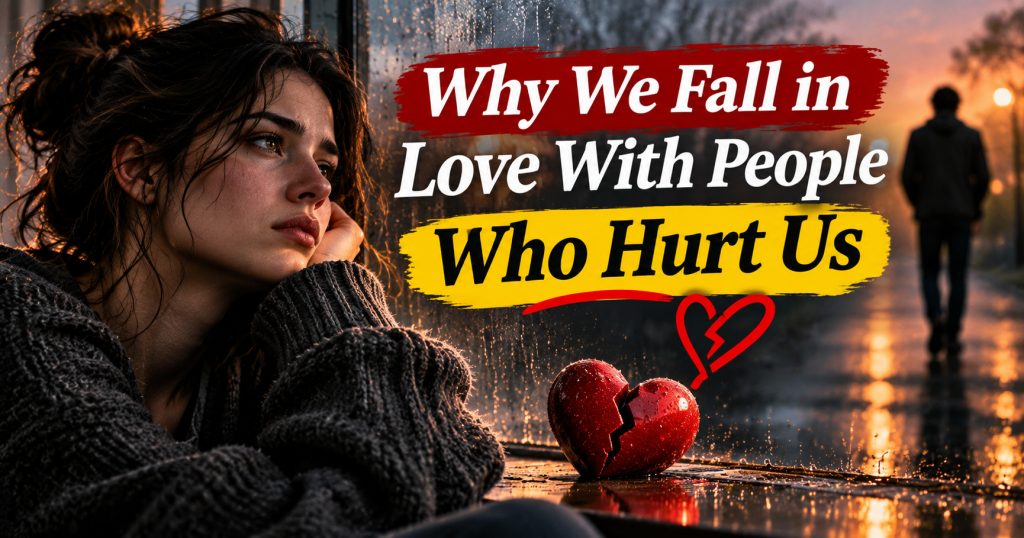
Have you ever loved someone so deeply that you couldn’t imagine your life without them, even though they constantly made you unhappy?
You knew the relationship was hurting you. You recognized the emotional distance, the broken promises, the arguments, and the moments when they made you question your own worth. Yet, whenever you thought about walking away, something pulled you back.
Maybe you remembered how loving they were in the beginning. Maybe you kept waiting for the person you first fell in love with to return. Or perhaps you simply couldn’t understand how someone who claimed to love you could cause so much pain.
If this sounds familiar, you’re not alone.
One of the most confusing experiences in human relationships is becoming emotionally attached to someone who repeatedly hurts you.
But why does this happen? Why can someone recognize that a relationship is unhealthy and still struggle to let go?
The answer involves several psychological factors, including attachment patterns, childhood experiences, intermittent reinforcement, emotional dependency, and something known as trauma bonding.
Understanding these mechanisms can help you recognize unhealthy relationship patterns and begin separating genuine love from emotional attachment.
Related : 10 Psychological Truths About Being Deeply in Love
1. Your Brain Can Become Attached to the Good Moments
One of the biggest reasons we fall in love with people who hurt us is that harmful relationships aren’t necessarily painful every single day.
There may be moments of genuine affection, beautiful conversations, romantic gestures, and promises that everything will change.
Then, suddenly, the person becomes distant, critical, or emotionally unavailable.
You experience another argument, another disappointment, and another period of uncertainty.
And just when you’re beginning to feel ready to walk away, they become loving again.
This unpredictable pattern can create a powerful psychological attachment.
Researchers studying traumatic bonding have found that alternating mistreatment and affection, particularly within relationships involving a power imbalance, can contribute to strong emotional attachments that persist even after separation.
The unpredictable moments of affection can become especially meaningful because you’re constantly hoping to experience that happiness again.
You may begin remembering the good moments more intensely than the painful ones.
Eventually, you stop asking whether the relationship makes you happy and start waiting for the next moment when it will.
2. You Might Be Trying to Earn the Love You Never Consistently Received
Sometimes, our attraction to emotionally unavailable people has connections to earlier experiences.
Think about someone who grew up feeling that affection had to be earned.
Perhaps they received attention only when they behaved perfectly. Maybe emotional support was inconsistent, or they learned that expressing their needs could lead to rejection.
As adults, these experiences can influence how they approach romantic relationships.
They might become attracted to people who are emotionally distant, difficult to please, or inconsistent with affection.
Why?
Because familiar emotional patterns can feel strangely comfortable, even when they aren’t healthy.
Someone who constantly has to prove their worth may mistake emotional struggle for love.
They might think:
“If I become more understanding, they’ll finally appreciate me.”
“If I stop complaining, they’ll treat me better.”
“If I love them enough, they’ll eventually change.”
But love shouldn’t feel like an endless audition where you’re constantly trying to convince someone that you’re worthy of affection.
You don’t have to earn basic kindness.
3. Trauma Bonding Can Make It Extremely Difficult to Leave
The term trauma bonding is often used to describe a powerful emotional attachment that develops in an abusive relationship, particularly when mistreatment alternates with affection, apologies, or periods of apparent reconciliation.
Imagine a relationship that follows this pattern:
- Your partner criticizes you or makes you feel worthless.
- You become emotionally distressed and start questioning the relationship.
- They suddenly become affectionate and apologize.
- They promise that things will be different.
- You feel relieved and begin hoping again.
- Eventually, the harmful behavior returns.
Over time, this cycle can make the emotional attachment increasingly difficult to break.
You may find yourself missing someone who has repeatedly hurt you.
You may even defend their behavior because you remember the loving person they sometimes become.
A study by psychologists Dutton and Painter examined emotional attachments in abusive relationships and found that factors such as intermittent mistreatment and power imbalances were associated with stronger attachments to abusive partners.
This helps explain why leaving can feel emotionally complicated, even when someone recognizes that the relationship is harmful.
It’s important to understand that trauma bonding is not simply loving someone too much. It describes a particular attachment dynamic associated with abuse and unequal power.
4. You Fall in Love With Their Potential Instead of Their Behavior
This is one of the most heartbreaking patterns in unhealthy relationships.
You don’t necessarily love the way someone treats you today. You love the person you believe they could become.
You remember their kindness during the early stages of the relationship. You remember the promises, the conversations about the future, and the moments when everything seemed perfect.
Instead of accepting their current behavior, you keep looking for signs that the old version of them is coming back.
You might tell yourself:
“They’re just going through a difficult period.”
“They had a difficult childhood.”
“They don’t know how to express their feelings.”
“They’ll change when they realize how much I love them.”
Understanding someone’s struggles is not a bad thing. Empathy is an important part of healthy relationships.
But understanding why someone behaves badly doesn’t mean you have to accept being hurt.
Potential is not the same as progress.
A person’s repeated actions tell you much more about the relationship than promises they never follow through on.
5. Fear of Abandonment Can Become Stronger Than Your Desire for Happiness
Sometimes, the fear of losing someone becomes so overwhelming that you start tolerating things you would never have accepted before the relationship.
You might know that you’re unhappy, but the thought of being alone feels even worse.
You imagine waking up without their messages, never hearing their voice again, or seeing them move on with someone else.
These thoughts can create intense emotional distress.
People with anxious attachment tendencies may be particularly sensitive to perceived rejection or emotional distance.
For example, a partner taking longer than usual to respond to a message might trigger anxiety, overthinking, and a desperate need for reassurance.
Instead of asking whether the relationship meets their emotional needs, they become focused on preventing abandonment.
This can create a painful cycle:
The more distant the partner becomes, the harder the other person tries to restore the connection.
And the harder they try, the more of their emotional energy they invest in someone who may not be willing to meet them halfway.
But being alone doesn’t mean you’re unlovable.
Sometimes, learning to feel comfortable without someone’s attention is an important part of rebuilding emotional independence.
6. You Start Confusing Emotional Intensity With Love
Not every intense relationship is a healthy one.
Some relationships involve constant arguments, emotional highs and lows, jealousy, uncertainty, dramatic reconciliations, and overwhelming feelings.
When things are good, they feel incredible.
When things are bad, they feel unbearable.
This emotional contrast can make the relationship seem unusually powerful.
You might believe that nobody else will ever make you feel the same way.
But there’s an important distinction between emotional intensity and emotional intimacy.
Intensity often involves unpredictability, fear, and uncertainty.
Healthy intimacy involves trust, consistency, respect, and the freedom to express yourself without constantly worrying about the other person’s reaction.
A relationship doesn’t have to hurt to be meaningful.
And someone doesn’t have to make you cry to prove that your connection is real.
Sometimes, the healthiest love feels surprisingly peaceful because you’re no longer spending every day wondering where you stand.
Related : 10 Psychological Truths About Being Deeply in Love
7. You May Have Started Losing Your Sense of Self-Worth
One of the most damaging effects of repeated emotional mistreatment is the way it can change how you see yourself.
At the beginning, you might have been confident, independent, and comfortable expressing your opinions.
But after months or years of criticism, rejection, manipulation, or emotional neglect, you may begin questioning everything.
You wonder whether you’re too sensitive.
You apologize for things that aren’t your fault.
You become afraid of expressing your needs because you don’t want to start another argument.
Eventually, you may start believing that the problem is you.
This is particularly concerning when a partner repeatedly uses blame, humiliation, or gaslighting to undermine your confidence.
When someone constantly challenges your perception of reality, it can become harder to trust your own judgment.
And when your self-esteem becomes tied to their approval, even small moments of affection can feel like enormous victories.
But your worth doesn’t depend on how someone treats you.
You deserve respect even when you disagree, make mistakes, or express emotions.
8. You Keep Waiting for Closure That May Never Come
Another reason people struggle to let go is the desire to understand what happened.
You replay conversations in your head.
You remember specific arguments and wonder whether you could have handled them differently.
You ask yourself why someone who once made you feel special eventually treated you like you didn’t matter.
Sometimes, you keep communicating with them because you believe one honest conversation will finally explain everything.
You want an apology. You want accountability. You want them to acknowledge the pain they caused.
But not everyone is willing or able to offer that kind of closure.
Some people avoid responsibility. Others rewrite the past to protect their image.
And sometimes, the answers you want simply never come.
Waiting for someone else to explain your pain can keep you emotionally connected to the same relationship you’re trying to leave.
Closure doesn’t always come from a final conversation.
Sometimes, it begins when you accept that their behavior was enough information to make a different choice.
9. You Become Addicted to the Hope That Things Will Change
Hope is a beautiful thing, but in an unhealthy relationship, it can also keep you emotionally stuck.
Every apology feels like a fresh beginning.
Every romantic gesture makes you believe that this time might be different.
Every promise gives you another reason to stay.
You begin measuring the relationship by what might happen instead of what repeatedly happens.
This is closely related to intermittent reinforcement.
When affection and positive attention arrive unpredictably, the uncertainty can encourage someone to keep seeking the next rewarding moment.
However, this doesn’t mean every difficult relationship creates a trauma bond, or that every person who struggles to leave is experiencing an addiction.
Human attachment is complicated, and different psychological and practical factors can contribute to staying.
The important question is whether the relationship is genuinely improving or simply repeating the same painful cycle.
Real change involves consistent behavior over time, accountability, and respect for boundaries.
An apology without changed behavior is not the same as progress.
10. You Can Love Someone and Still Need to Walk Away
Perhaps the most difficult truth is that loving someone doesn’t automatically mean that staying with them is the right decision.
You can miss someone and still recognize that the relationship was unhealthy.
You can remember the beautiful moments without denying the painful ones.
You can care about someone’s future without making yourself responsible for changing them.
Many people believe they must stop loving someone before they can leave.
But that’s not always how emotional healing works.
Sometimes, you make the decision to protect yourself while your feelings are still there.
And that’s okay.
Choosing your well-being doesn’t mean that your love was fake. It means that you finally understand that your emotional needs matter too.
A healthy relationship should not require you to sacrifice your dignity, identity, or emotional safety.
How to Stop Falling in Love With People Who Hurt You
Understanding the psychology behind unhealthy attachment is an important first step. But recognizing the pattern is only part of the process.
Here are some practical ways to begin changing your relationship patterns.
1. Pay Attention to Repeated Behavior
Stop evaluating someone exclusively by their promises, apologies, or occasional romantic gestures.
Look at how they treat you consistently.
Do they respect your boundaries? Do they take responsibility when they hurt you? Do their actions match their words?
Consistency matters more than temporary affection.
2. Learn to Recognize Your Emotional Triggers
Notice what happens when someone becomes distant or emotionally unavailable.
Do you immediately feel anxious? Do you start blaming yourself? Do you feel compelled to chase their attention?
Understanding these reactions can help you respond more thoughtfully instead of automatically repeating familiar patterns.
3. Rebuild Your Life Outside the Relationship
Spend time reconnecting with the things that make you feel like yourself.
Reconnect with friends, pursue your interests, establish personal goals, and create routines that don’t revolve around another person’s mood or availability.
Your relationship should be part of your life, not your entire identity.
4. Stop Treating Potential as Proof of Change
Someone might have the ability to become a wonderful partner, but that doesn’t mean they are currently treating you well.
Look for sustained changes in behavior rather than promises made during emotional moments.
5. Seek Support When You Need It
Talking to a trusted friend, therapist, or qualified relationship counselor can help you understand your emotional patterns.
If you’re experiencing abuse, threats, coercive control, or fear for your safety, consider contacting a local domestic violence support service to discuss confidential safety planning.
Leaving an abusive relationship can involve practical and emotional risks, so getting appropriate support can make a meaningful difference.
You don’t have to figure everything out alone.
Final Thoughts: Why We Fall in Love With People Who Hurt Us
Sometimes, we don’t stay because the relationship makes us happy.
We stay because we’re attached to the memories, the promises, the person we believed they were, and the future we imagined together.
We keep hoping that the next apology will be different, the next conversation will change something, or the next expression of affection will finally make us feel secure.
But love shouldn’t require you to constantly recover from the person you’re sharing your life with.
You can have compassion for someone’s past without allowing their behavior to destroy your present.
You can understand their struggles without becoming responsible for fixing them.
And you can miss someone deeply without needing to return to a relationship that hurt you.
Perhaps the most important lesson is this:
Sometimes, the hardest person to let go of is not the person who loved you the most, but the person you kept hoping would finally love you the way you deserved.