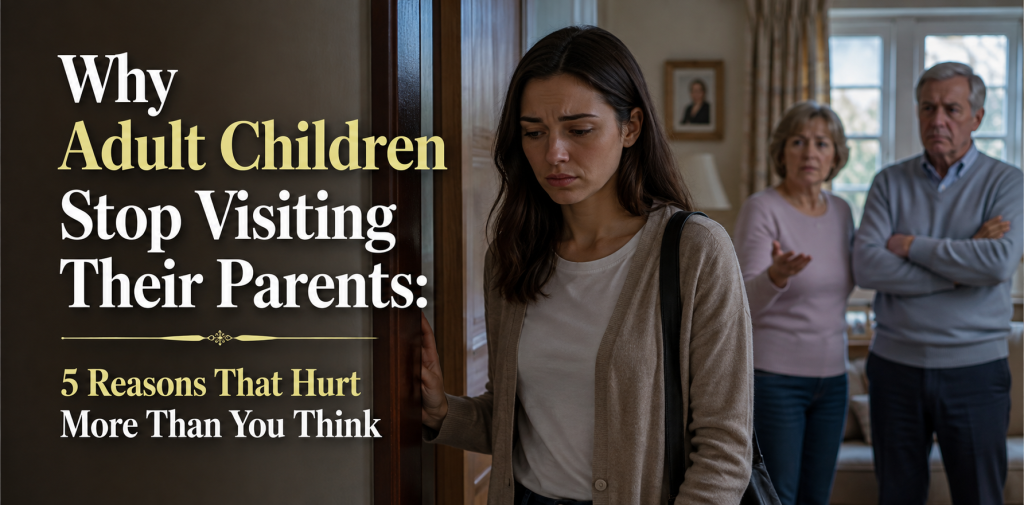
Sometimes, you don’t stop visiting your parents because you’ve stopped loving them, but because being with them has become painful, exhausting, or lonely. In those moments when you wonder why grown children have stopped visiting their parents, and feel guilty because you know you should want to go home, remember that you’re not alone. Creating this distance isn’t rejection at all; it’s simply protecting a part of yourself that craves security, respect, and understanding.
Key Points
If you’ve felt criticized, controlled, or misunderstood for years, creating distance may seem easier than constantly having to explain yourself, and this is a major reason why grown children distance themselves. When your feelings and boundaries are consistently ignored, it’s a sign of an unhealthy parent-child relationship, and you may ultimately choose your inner peace over forcing yourself into a painful relationship. Because sometimes, distance isn’t about a lack of love; it’s about how you felt when you were with your parents.
Five Reasons Grown Children Stop Visiting Their Parents
- You’re tired of the criticism every time you come home: When every conversation turns into criticism, advice, or comparison, and you’re constantly told you’re doing something wrong, the visit can lose its joy and become one of the main reasons why grown children distance themselves from their parents.
Related : Signs That Tell You Are a Clairsentient Empath
In fact, you might start anticipating the comments before they even happen, making spending time with them emotionally exhausting. Therefore, distancing yourself might ultimately seem like the only way to protect your peace of mind.
- You’re still being treated like a child despite being an adult.
You’ve built your own life, made your own decisions, and learned how to take good care of yourself. Yet, your parents may still expect you to follow their rules.
It’s natural to feel disrespected when your maturity is questioned about your choices, daily routines, relationships, or lifestyle. They might justify it as a sign of concern, but the truth is, it can make you feel controlled and is another major reason why grown children stop visiting their parents.
- You’ve set boundaries, but they’re constantly being violated.
You may have tried to explain your needs, asked not to discuss certain topics, or pointed out when something repeatedly hurts you. But when these boundaries are constantly ignored, you eventually stop wanting to justify yourself. Here, creating distance isn’t about punishment, but about creating a safe space that you haven’t found in this toxic parent-child relationship.
Related : Body Language Signs She’s Actually Flirting With You
- The Exhaustion of Not Taking Responsibility
Sometimes, the hardest part isn’t the pain itself, but knowing your parents will never acknowledge it. You might hear excuses, have your feelings ignored, or even find yourself blamed for the conflict. That’s why, when every attempt to resolve things leaves you feeling more frustrated, you might decide it’s easier than having the same painful conversation again.
- Feeling Unlistened, Ununderstood, and Unemotionally Safe
You might love your parents, yet not feel emotionally safe with them. When you don’t feel listened to, valued, or treated kindly, spending time with them becomes exhausting instead of relaxing. And when home is no longer a place where you feel comfortable and relaxed, creating distance becomes a natural way to protect your mental health—another reason why grown children distance themselves from their parents.
So, the bottom line is…
Sometimes, distancing yourself from your parents and creating that distance can be the only way to breathe when family dynamics leave you feeling exhausted or ignored. The story behind those missed calls, missed visits, or growing silences often holds deeper meanings than they first appear. Does any of this sound familiar? Share your experiences in the comments.