People who appear overly confident or self-absorbed are called narcissists. Narcissism is a thought and behavior pattern that includes several negative elements, such as:
- Excessive self-confidence
- Self-obsession
- Excessive self-love
- Vanity
- Egocentrism
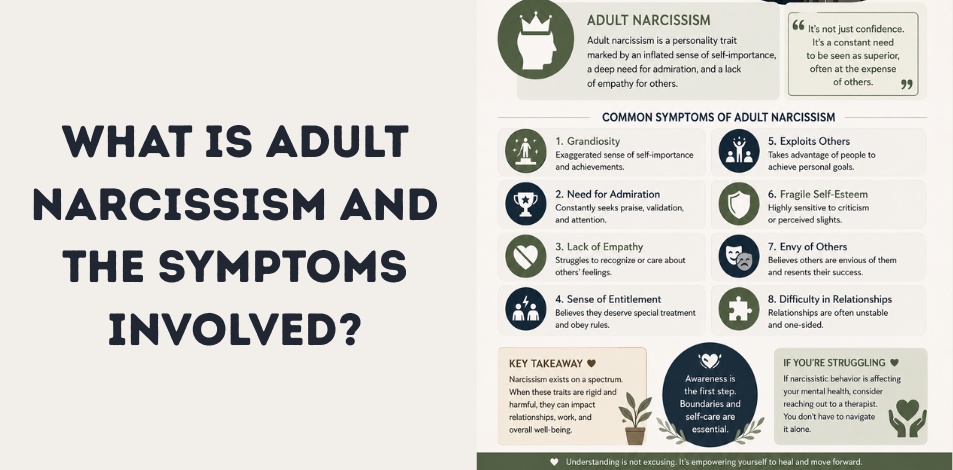
An exaggerated sense of self-importance (e.g., exaggerating achievements and talents, and expecting recognition for superiority without comparable accomplishments)
Preoccupation with fantasies of unlimited success, power, intelligence, beauty, or ideal love.
They believe they are “special” and unique, and can only be understood by or associated with special or high-status people (or institutions).
They need excessive admiration.
They have a strong sense of entitlement, for example, expecting special preferential treatment or automatically conforming to their own expectations.
- They exploit others, for example, using them to achieve their own personal goals.
- They lack empathy, for example, and are unwilling to acknowledge or identify with the feelings and needs of others.
- They often envy others or believe that others envy them.
- They regularly display arrogant and conceited behaviors or attitudes.
So, what causes an individual to become so immersed in a narcissistic, almost coma-like state? During my studies in psychology, scientists have yet to pinpoint the cause. I left psychology and continued my studies with a Canadian scientist and physician who also believed that psychology was limited in its ability to effect lasting change. Through my experience, I found that the true cause of this problem in adults is an inflated sense of grandiosity, compensating for feelings of inadequacy stemming from constant criticism during early developmental stages. In my work with countless individuals, I have never failed to treat a single case, and each time I ended up returning to the same painful memories buried deep in the unconscious.
Related : 7 Vital Tips For Co-parenting With A Narcissist
Narcissism is a serious psychological problem in adults. In fact, narcissists live in what I call a “childhood trance.” In other words, they feel and believe they are emotionally like a young child. Imagine being in a hypnotic state, thinking and acting as if you were five years old; now imagine that this state never ends, and that you behave this way in your relationships, your work, and even when relaxing at home or in public. This has serious consequences for your life, as you can imagine.
So how does this “trance” occur? At a young age, children are forced to adapt to unfavorable social conditions. This often takes the form of criticism.
A child who is constantly criticized believes that they are:
- Incompetent
- Ineffective
- Lacks self-confidence
- Unable to interact with the world.
These beliefs lead the individual to feel:
- Inadequate
- Deadly loneliness
- Inadequate
- Worthless
- Emptiness
- Voidness
- And more.
These beliefs and feelings are extremely painful and even threatening to the person who experiences them. To cope with these painful feelings, the child develops narcissism as a defense mechanism. The problem is that narcissistic tendencies render a person ineffective, preventing them from developing emotionally beyond the age at which they were hurt.
To awaken a narcissist from their self-destructive state, negative memories must be erased and hurtful emotions dispelled. Then, the individual begins to awaken and discover their true self, realizing that they have always been this way, but were previously unable to see it.
Once the narcissistic destructive state is overcome, the individual begins to feel like a competent and confident adult, possessing the following qualities:
- Self-confidence
- Security
- Perfection
- Completion
- Peace
- Balance
- Emotional security
- Maturity
- Competence
- Self-love and love for others
- Empathy
- Abilities
- Strength
- Resilience
- And genuine self-love and attraction to others.
Through years of experience, I’ve concluded that narcissistic individuals live in a state akin to hypnosis, believing they are still five years old. This, predictably, negatively impacts their lives. However, there’s another crucial point: all they need to do to break free from this harmful trance is wake up. That’s all!
A narcissist possesses an authentic, mature, and internally integrated self, but it is detached from their conscious awareness. In other words, the authentic, mature self is suppressed, while an immature, intrusive self takes control, leaving the person feeling childish and dependent on others.
I have helped many narcissists break free from their negative patterns, unleash their authentic selves, and achieve their true potential. My coaching process empowers individuals trapped in harmful patterns to reclaim their stolen vitality.