There is a moment in a controlling relationship when something quietly changes. You stop explaining yourself. You no longer react to every accusation. You begin setting boundaries, trusting your own judgment, and making decisions without asking for permission.
And suddenly, the other person’s behavior seems different.
Someone who once appeared confident and comfortable with having influence over your life may start acting strangely. They might become unusually affectionate, suddenly angry, emotionally distant, or even desperate to get your attention back.
For people with strong narcissistic traits, losing influence over someone can feel like losing an important source of validation and control. When their usual tactics stop working, they may try different approaches to regain the dynamic they were used to.
Not every person with narcissistic traits behaves in the same way, and these behaviors alone do not prove that someone has Narcissistic Personality Disorder (NPD). However, recognizing unhealthy patterns can help you protect your emotional well-being.
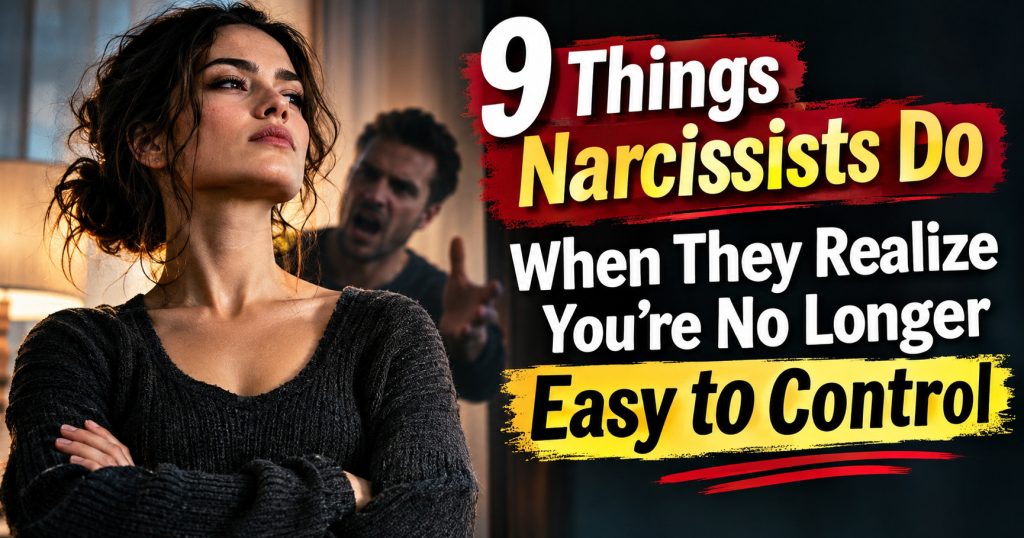
Here are nine things narcissists may do when they realize you’re no longer easy to control.
1. They Suddenly Become Extremely Nice
One of the first things you might notice is a sudden change in their attitude.
The person who previously ignored your feelings may suddenly become thoughtful, affectionate, and attentive. They might start complimenting you, remembering small details, offering help, or doing things you had been asking them to do for months.
At first, this change can feel wonderful. You may even wonder whether they have finally understood how much they hurt you.
But sometimes, this sudden kindness is not necessarily a sign of genuine change. It can be an attempt to restore the connection and regain the influence they feel they are losing.
Pay attention to what happens after you become emotionally available again. Does the respectful behavior continue, or do the old patterns return?
Real change is consistent. It does not disappear as soon as someone gets what they want.
Related : Narcissistic Abuse and Self-Doubt: How to Heal
2. They Start Making You Feel Guilty
When guilt no longer controls your decisions, a controlling person may try harder to make you feel responsible for their emotions.
They might say things like:
- “After everything I’ve done for you, this is how you treat me?”
- “You’ve changed so much. I don’t even recognize you anymore.”
- “I guess I never meant anything to you.”
- “You only care about yourself now.”
The goal of these statements may be to shift your attention away from their behavior and toward defending your character.
Instead of discussing what hurt you, you suddenly find yourself explaining why you are not selfish, cruel, or ungrateful.
This is an exhausting cycle because it makes you question whether having boundaries makes you a bad person.
It doesn’t.
You can care about someone and still refuse to accept behavior that damages your emotional health.
3. They Become Angry When You Say No
A simple “no” can reveal a lot about a relationship.
When someone is accustomed to getting their way, your refusal may feel like a personal challenge to them. They might respond with irritation, accusations, arguments, or an exaggerated emotional reaction.
Perhaps you decline a request, refuse to change your plans, or decide not to participate in another argument.
Suddenly, you are accused of being difficult, disrespectful, or selfish.
The important thing to understand is that healthy relationships allow two people to disagree without punishment.
You should not have to sacrifice your comfort, time, or personal decisions just to keep someone else happy.
A boundary is not an attack. It is a statement about what you will and will not accept.
4. They Use Silent Treatment to Get a Reaction
When arguments and emotional pressure stop producing the reactions they expect, silence may become another way to influence the situation.
They might suddenly stop answering messages, ignore you, withdraw affection, or behave as though you no longer exist.
Of course, taking space during conflict can be healthy when someone communicates their need for time to calm down.
The difference is that punitive silent treatment is often used to create anxiety, uncertainty, or pressure.
You may start wondering:
- Did I do something wrong?
- Should I apologize first?
- Are they going to leave me?
- How can I make things normal again?
This is how the cycle can pull you back into seeking their approval.
Instead of chasing someone who deliberately uses silence to punish you, give yourself permission to remain calm and maintain your boundaries.
5. They Try to Make You Jealous
When they realize they are no longer the center of your attention, they may try to provoke an emotional reaction.
This can involve suddenly talking about someone else, displaying new romantic interests, posting suggestive pictures, or repeatedly mentioning how much attention they receive from other people.
Sometimes, they may compare you with an ex-partner or someone they believe you feel insecure about.
Why?
Because jealousy can create emotional reactions, and those reactions may make you feel connected to the situation again.
You might feel tempted to compete, prove your worth, or show them that you are not replaceable.
But your value does not depend on whether someone chooses you over another person.
You do not need to compete for basic respect, honesty, or emotional security.
6. They Play the Victim
Another common response is to reverse the roles.
Suddenly, the person whose behavior caused you pain begins presenting themselves as the one who has been mistreated.
They might tell friends or family that you have become cold, distant, disrespectful, or impossible to deal with.
They may leave out important details, focus on your reactions, and avoid discussing what happened before those reactions.
This can be particularly confusing because people who have never experienced the relationship privately may only hear one side of the story.
You might feel pressured to defend yourself and explain every detail to everyone.
Remember that you do not have to convince every person of your experience.
Focus on the people who genuinely listen, respect your perspective, and allow you to make your own decisions.
Related : The Psychology Behind People Who Never Text First
7. They Start Testing Your Boundaries
Once you begin establishing boundaries, they may not immediately accept them.
Instead, they might test how serious you are.
For example:
- Sending messages after you have clearly asked for space.
- Making jokes about boundaries you have established.
- Asking for small favors they know you do not want to provide.
- Repeating behaviors you have already explained are unacceptable.
- Finding excuses to enter your personal space or restart conversations.
These small incidents can seem insignificant individually. However, repeated boundary violations can reveal a larger pattern.
The real test is not whether someone agrees with every boundary you establish.
It is whether they respect your right to have one.
You do not need to keep repeating yourself indefinitely. Consistency is often more powerful than lengthy explanations.
8. They Try to Make You Doubt Your Own Memory
When you become more confident in your understanding of what happened, someone who has repeatedly denied or distorted events may intensify that behavior.
They might say:
- “That never happened.”
- “You’re remembering everything incorrectly.”
- “You’re too sensitive.”
- “You’re always creating problems.”
- “You’re imagining things.”
Repeated denial, distortion, and blame-shifting can make you question your own perception.
This is commonly associated with gaslighting, a form of psychological manipulation that can undermine someone’s confidence in their own memory and judgment.
Over time, you might find yourself recording conversations, constantly reviewing old messages, or asking other people whether your feelings are reasonable.
If this sounds familiar, try grounding yourself in specific events and written records when it is safe to do so. Talking with a trusted person or qualified mental health professional can also help you regain perspective.
You deserve to trust your own judgment without constantly having to defend your reality.
9. They Increase Their Efforts When You Start Moving On
Perhaps the most confusing behavior happens when you genuinely begin moving forward.
You become less available. You stop checking their social media. You spend more time on your own goals, friendships, and interests.
Then, unexpectedly, they return.
They might send a message saying they miss you, bring up old memories, apologize, or promise that everything will be different.
Sometimes, they may contact you through mutual friends or find seemingly innocent reasons to restart communication.
This can resemble what is commonly called hoovering: an attempt to pull someone back into a relationship or emotional dynamic they have been trying to leave.
The difficult part is that these attempts may bring back memories of the good moments, making you question your decision to create distance.
Before responding, remember why you needed distance in the first place.
Has anything genuinely changed? Are they taking responsibility without blaming you? Are their actions consistent over time?
Missing someone does not automatically mean that returning to the relationship is healthy.
Related : What Happens Psychologically When You Stop Chasing Someone?
Why Do Narcissists Struggle When They Lose Control?
For someone with strong narcissistic traits, relationships may sometimes revolve around validation, admiration, attention, and maintaining a sense of superiority.
When another person becomes independent, starts questioning unhealthy behavior, or refuses to accept constant criticism, the familiar relationship dynamic may change.
That change can trigger anger, defensiveness, blame, or attempts to restore the previous arrangement.
However, it is important not to assume that every difficult reaction is caused by narcissism. People can behave selfishly or manipulatively for different reasons, and only a qualified professional can diagnose Narcissistic Personality Disorder.
What matters most is recognizing the behavior rather than becoming consumed with identifying a label.
How to Protect Yourself When a Narcissist Realizes You’re No Longer Controllable
If you recognize these patterns in your relationship, you do not have to spend all your energy trying to understand or change the other person’s behavior.
Start by protecting your emotional well-being.
1. Stop overexplaining your decisions. You do not need to provide a detailed defense every time you establish a reasonable boundary.
2. Trust consistent behavior more than promises. Genuine improvement takes time and requires accountability, not just emotional apologies.
3. Maintain your independence. Continue investing in your friendships, interests, finances, and personal goals.
4. Avoid unnecessary arguments. You do not have to respond to every accusation or attempt to provoke you.
5. Keep a record of concerning behavior when appropriate. This can help you recognize patterns and maintain clarity, especially when events are repeatedly denied or distorted.
6. Seek outside support. A trusted friend, therapist, or domestic abuse support organization can help you evaluate your situation and consider safe next steps.
If you feel threatened, monitored, or unsafe, prioritize a safety plan rather than confronting the person.
Final Thoughts
One of the biggest changes that happens when you stop being easy to control is that you begin making decisions based on your own needs instead of constantly trying to manage someone else’s reactions.
You may notice anger, guilt-tripping, sudden affection, silent treatment, or attempts to pull you back into old patterns.
But remember something important: you are not responsible for keeping another person comfortable at the expense of your own emotional well-being.
You do not have to become cold, cruel, or heartless to establish boundaries. You simply have to recognize that your feelings, needs, and personal freedom matter too.
Sometimes, the most powerful thing you can do is stop participating in a cycle that has been hurting you.
Your freedom begins when you stop allowing someone else’s reactions to determine how you live your life.