
Have you ever been in a relationship where you somehow became the problem every time something went wrong? No matter how carefully you chose your words, how much you tried to explain yourself, or how often you apologized, nothing seemed to be enough.
One day, you might find yourself apologizing for something you didn’t even do. The next, you’re wondering how a relationship that once felt so meaningful has turned into a constant battle to prove your intentions.
This can happen in relationships involving narcissistic traits and emotionally manipulative behavior. Sometimes, before cutting someone off completely, a person begins shifting the blame, bringing up old arguments, and making the other person feel responsible for every problem in the relationship.
Understanding this pattern can help you stop questioning your worth and start protecting your emotional well-being.
Why Do Narcissists Blame You for Everything?
Blaming others can be a way for someone to avoid responsibility, protect their self-image, or maintain control over a relationship. For a person who struggles to accept criticism, admitting a mistake may feel like a threat to their pride.
Instead of saying, “I hurt you, and I need to make things right,” they might respond with, “You made me do it.”
Suddenly, the conversation is no longer about their behavior. It becomes about your reaction, your tone, your mistakes, or something you did months ago.
This is known as blame-shifting, and it can leave you feeling emotionally exhausted because the original issue never gets resolved.
You may start explaining yourself repeatedly, hoping that if you find the right words, the other person will finally understand. Unfortunately, when someone is unwilling to take responsibility, no explanation may feel sufficient.
Related : Why Women Stay in Unhappy Relationships and Hope for Change
The Blame Often Gets Worse Before They Cut You Off
In some unhealthy relationships, blame becomes more intense when one person is emotionally withdrawing or preparing to end the relationship.
You might notice that they suddenly bring up every mistake you’ve ever made. Small disagreements become major conflicts, and ordinary misunderstandings turn into accusations.
Here are some common patterns you may experience:
- Rewriting the past: They focus on your mistakes while ignoring their own actions.
- Playing the victim: They present themselves as the person who suffered most, even when you’ve tried repeatedly to address the hurt they’ve caused.
- Moving the goalposts: Every time you address one complaint, another problem appears.
- Withdrawing affection: They become distant, cold, or unresponsive, leaving you wondering what went wrong.
- Making you feel replaceable: They act as though your presence no longer matters, despite the emotional connection you once shared.
These behaviors do not prove that someone has narcissistic personality disorder or that they are deliberately planning to abandon you. However, when they form a repeated pattern, they can signal an unhealthy relationship dynamic.
Why Do They Make You Feel Guilty Before Walking Away?
Sometimes, blame-shifting allows a person to justify their decision to distance themselves. If they convince themselves that you are responsible for everything that went wrong, they may feel less pressure to acknowledge their contribution to the relationship’s problems.
In other situations, blaming you may be a way to avoid uncomfortable conversations or escape accountability.
The hardest part is that you may still be trying to repair the relationship while the other person has already emotionally withdrawn.
You keep asking what you can do differently. You replay conversations in your mind. You wonder whether you were too demanding, too sensitive, or not loving enough.
But here’s something worth remembering: a relationship cannot be repaired by one person taking responsibility for both people’s actions.
You can acknowledge your mistakes without accepting blame for someone else’s behavior.
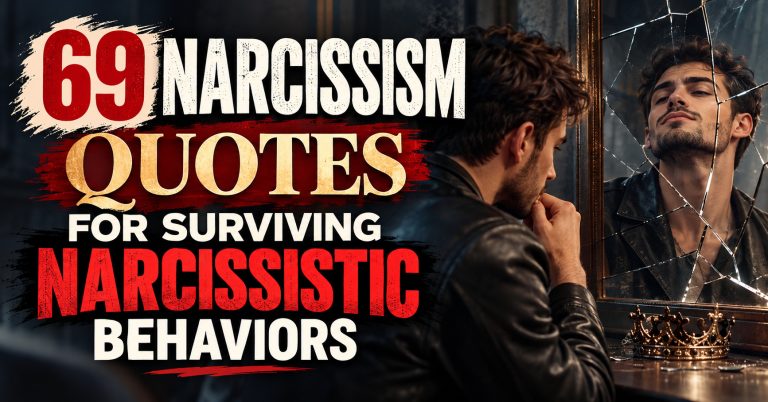
Related : 69 Narcissism Quotes for Surviving Narcissistic Behaviors
What Happens When They Finally Cut You Off?
When a person suddenly cuts off communication after repeated conflict, the silence can feel devastating, especially if you were constantly trying to make things right.
You may experience confusion, sadness, anger, or even relief. You might also feel an intense urge to contact them and explain yourself one last time.
If the relationship involved manipulation, this period can be especially difficult because you’ve become accustomed to defending yourself and seeking reassurance from the same person who made you doubt yourself.
Their silence does not automatically mean they are trying to punish you. People end relationships for different reasons, and sometimes distance is a legitimate boundary. What matters is the broader pattern of behavior and how the relationship affected you.
You do not have to chase someone for closure, nor do you have to accept mistreatment simply because you still love them.
How to Protect Yourself From Blame-Shifting
Healing begins when you stop making it your responsibility to convince another person to see every situation your way.
Here are a few practical steps you can take.
1. Stop overexplaining yourself.
You can clarify a misunderstanding without spending hours defending your character. If someone repeatedly twists your words, recognize that more explanations may not solve the problem.
2. Focus on facts rather than accusations.
Write down important incidents or conversations if doing so helps you maintain perspective. This can make it easier to recognize recurring patterns when emotions become overwhelming.
3. Set clear boundaries.
You can say, “I’m willing to discuss this, but I’m not willing to accept responsibility for things I didn’t do.” You don’t need to argue endlessly to justify that boundary.
4. Stop measuring your worth by their treatment of you.
Someone else’s anger, rejection, or unwillingness to understand you does not determine your value as a person.
5. Reconnect with people you trust.
Talk to supportive friends, family members, or a qualified mental health professional if the relationship has left you feeling anxious, isolated, or confused.
6. Give yourself permission to move forward.
You may never receive the apology or explanation you hoped for. You can still heal without getting every answer.
Related : When People Believe a Narcissist Without Hearing Your Side
Final Thoughts
One of the most painful parts of an unhealthy relationship is realizing how much time you’ve spent trying to prove that you are not the person someone keeps accusing you of being.
You may have apologized when you weren’t wrong, stayed silent to avoid another argument, or accepted responsibility simply because you wanted the relationship to survive.
But love should not require you to abandon your own reality.
If someone repeatedly blames you for everything and then cuts you off, take a step back and look at the entire pattern. Ask yourself whether your feelings were respected, whether accountability went both ways, and whether you felt emotionally safe expressing your needs.
You cannot control whether another person takes responsibility, offers closure, or chooses to walk away. What you can control is whether you continue sacrificing your peace to earn their approval.
Sometimes, the first step toward healing is realizing that you don’t have to keep defending yourself to someone who refuses to listen.
Your peace matters, your boundaries matter, and you deserve relationships where accountability and respect go both ways.