Have you ever reached a point in a toxic relationship where you stop explaining yourself, stop chasing apologies, and simply begin to see things for what they are? It’s a powerful moment. Not because you suddenly become heartless, but because you finally understand that your kindness should never come at the expense of your peace.
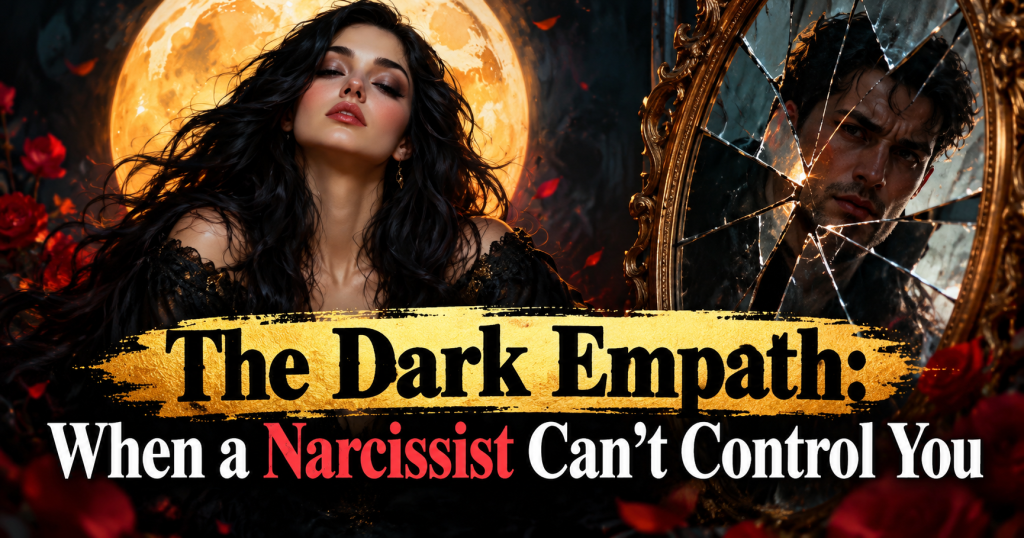
The narcissist thought they could control me. The dark empath in me smiled and handed them the mirror instead.
That statement captures something many people experience after dealing with emotional manipulation: the moment they stop playing a role in someone else’s game.
What Is a Dark Empath?
The term dark empath is often used to describe someone who understands other people’s emotions but may also use that understanding strategically or manipulatively. However, it is a popular psychological term rather than a formal mental health diagnosis.
Being emotionally perceptive doesn’t automatically make someone a dark empath. You can recognize another person’s insecurities, understand their behavior, and still choose compassion, honesty, and healthy boundaries.
Related :Why Narcissists Try to Destroy You
Sometimes, what people call their “dark side” is simply the part of themselves that has finally learned to say no.
Why Do Narcissists Try to Control Others?
In relationships involving narcissistic traits, control can become a way to protect a fragile self-image, maintain a sense of superiority, or avoid accountability. This behavior may show up in subtle but damaging ways.
Here are a few common examples:
- Gaslighting: Making you question your memory, feelings, or perception of events.
- Guilt-tripping: Making you feel selfish for setting reasonable boundaries.
- Playing the victim: Shifting attention away from their behavior and toward how supposedly unfairly they have been treated.
- Silent treatment: Withdrawing communication to punish you or pressure you into giving in.
- Emotional manipulation: Using affection, fear, or insecurity to influence your decisions.
Not everyone who displays these behaviors has narcissistic personality disorder. What matters most is recognizing repeated patterns and how they affect your well-being.
The Moment You Stop Being Easy to Control
One of the biggest changes happens when you no longer feel the need to prove your worth to someone who constantly questions it.
You stop writing long explanations to someone who twists your words. You stop begging for understanding from someone who repeatedly dismisses your feelings. You stop confusing emotional intensity with genuine love.
And slowly, you begin to take your power back.
This doesn’t mean you become cold, cruel, or incapable of love. It means you learn that empathy without boundaries can leave you emotionally exhausted.
You can understand someone’s pain without accepting their mistreatment. You can recognize their insecurities without making yourself responsible for healing them. And you can walk away without needing them to agree with your decision.
That is what emotional growth looks like.
Handing Them the Mirror: The Power of Self-Awareness
The mirror in this quote represents accountability.
When someone expects you to accept all the blame, refusing to participate in that pattern can feel like a major shift. Instead of arguing endlessly, you begin to focus on facts, consistent behavior, and your own boundaries.
You no longer need to expose, embarrass, or defeat the other person. You simply stop protecting them from the consequences of their choices.
Sometimes, the most powerful response is not revenge. It’s refusing to abandon yourself just to keep someone else comfortable.
You cannot force another person to acknowledge their behavior, and you don’t need their confession to validate your experience.
Related : Reassurance Is a Love Language: Healing From Trauma
How to Protect Your Peace After Narcissistic Abuse
If you’ve been in a relationship where you constantly felt confused, guilty, or emotionally drained, rebuilding your confidence may take time. Start with small, practical steps.
1. Trust your observations. Pay attention to repeated actions rather than promises made during emotional moments.
2. Set clear boundaries. Decide what behavior you will no longer accept and what you will do if that boundary is crossed.
3. Stop overexplaining. Your boundaries don’t need endless justification. A calm, direct answer is often enough.
4. Reconnect with yourself. Spend time with supportive people, return to activities you enjoy, and make room for your own needs.
5. Choose peace over revenge. You don’t have to make someone regret losing you. Your energy is better spent building a life that feels safe and meaningful.
If the relationship involves threats, stalking, or abuse, prioritize your safety and seek trusted or professional support.
Final Thoughts: Your Empathy Is Not Your Weakness
The goal isn’t to become a dark empath who knows how to hurt people back. The goal is to become someone who can recognize manipulation without being controlled by it.
You can be kind without being available to everyone. You can be understanding without accepting disrespect. You can forgive someone without giving them another opportunity to hurt you.
And you can walk away from a toxic relationship without becoming the person who hurt you.
The real transformation begins when you stop asking, “How can I make them understand my worth?” and start asking, “Why am I still trying to prove my worth to someone who refuses to respect it?”
Your empathy is a gift, but your boundaries are what protect it.
You don’t need to win the battle against a narcissist. You need to stop losing yourself in it.