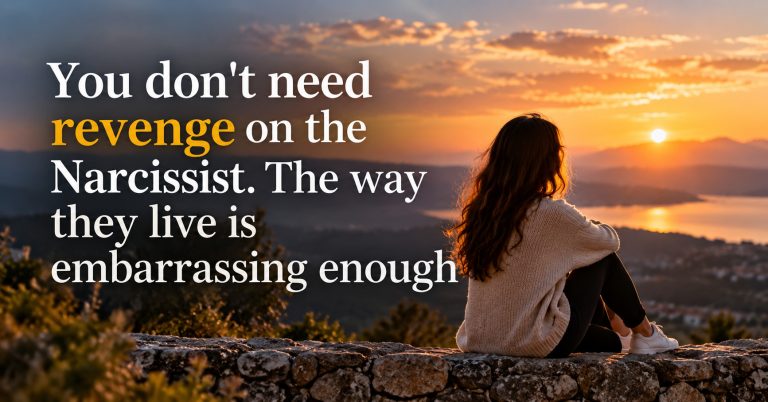

Being a kind and compassionate person is a strength. But when kindness is repeatedly used against you, it can become exhausting, and sometimes harmful.
If you are dealing with someone who consistently manipulates, disrespects, or takes advantage of your empathy, the answer isn’t necessarily to become cold or cruel. The answer is to stop confusing kindness with unlimited access to you.
When Kindness Becomes a Tool for Manipulation
People with strong narcissistic traits may take advantage of someone who constantly forgives, explains, gives second chances, or tries to understand their behavior.
You may find yourself thinking:
“Maybe they will change if I love them enough.”
“Maybe I should give them another chance.”
“Maybe they are hurting, so I should be more understanding.”
Compassion is valuable, but compassion doesn’t require you to tolerate repeated disrespect.
If someone learns that hurting you will always be followed by your forgiveness, they may have little motivation to change the pattern.
Related : Why Relationships Fail When Attention Matters More Than Love
Your Empathy Doesn’t Have to Become Their Permission
One of the hardest lessons after a toxic relationship is realizing that understanding someone’s pain doesn’t mean accepting their behavior.
You can understand why someone behaves a certain way and still decide that you don’t want that behavior in your life.
You can forgive someone and still keep your distance.
You can love someone and still say no.
You can feel compassion without sacrificing your peace.
That is what healthy boundaries look like.
Boundaries Are Not Cruel
When people finally establish boundaries, they sometimes feel guilty.
They wonder:
“Am I being selfish?”
Not necessarily.
A boundary isn’t punishment. It is a clear statement about what you will and won’t accept.
Instead of repeatedly explaining yourself, you might simply say:
“I won’t continue this conversation if I’m being insulted.”
Or:
“I’m not comfortable with that, and my answer is no.”
You don’t need a ten-page explanation to justify a reasonable boundary.
Distance Can Be More Powerful Than Arguments
Trying to convince a manipulative person that they are hurting you can become an endless cycle.
You explain.
They deny.
You provide examples.
They change the subject.
You defend yourself.
They accuse you of being the problem.
Eventually, you are exhausted while nothing has changed.
Sometimes the healthiest response isn’t another argument. It’s distance.
Reducing contact, refusing unnecessary conversations, and protecting your emotional space can give you something arguments never could: peace.
Related : How to Starve a Narcissist: Stop Giving Them Emotional Reactions
You Don’t Have to Stop Being a Kind Person
The goal isn’t to become heartless.
It’s to become selective with your kindness.
Be kind, but don’t abandon yourself.
Be compassionate, but don’t ignore patterns.
Forgive if you choose, but don’t automatically restore someone’s access to you.
Love people, but remember that loving someone doesn’t create an obligation to tolerate mistreatment.
Your kindness should be something you freely give, not something someone can use to control you.
Final Thought
Kindness doesn’t mean unlimited access.
Sometimes the most loving thing you can do for yourself is stop trying to heal someone who repeatedly hurts you.
Your empathy is valuable. Your forgiveness is valuable. Your time is valuable.
And your boundaries matter too.