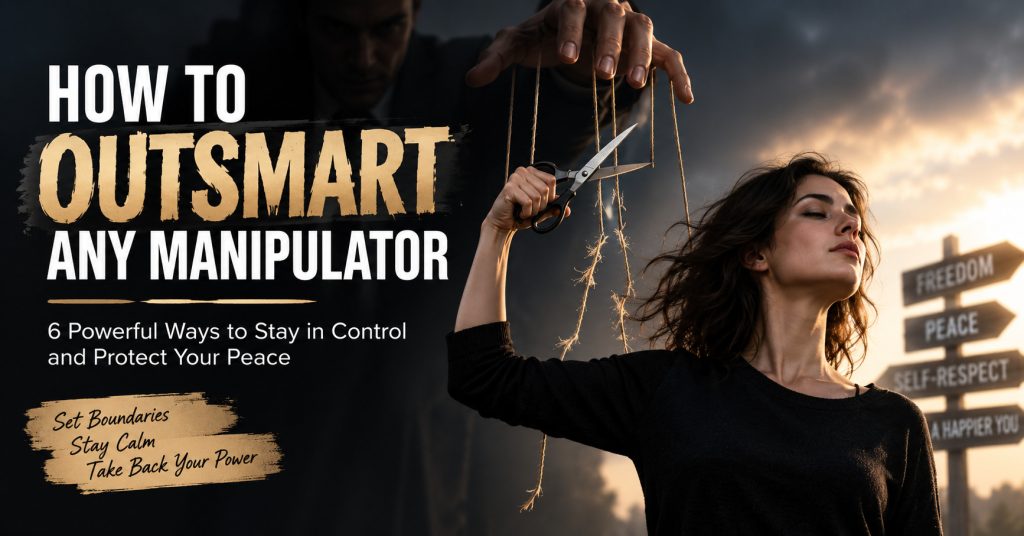
Manipulative people often rely on one thing: your reaction.
They may use guilt, pressure, intimidation, rumors, interruptions, or emotional outbursts to push you into defending yourself or giving them the response they want. The more emotional you become, the easier it can be for the conversation to move away from the real issue.
But “outsmarting” a manipulator doesn’t have to mean manipulating them back. In many situations, the strongest response is simply staying calm, setting a boundary, and refusing to participate in unhealthy communication.
Here are six ways to protect yourself when someone is trying to control the interaction.
1. Recognize the Guilt Trip
Guilt can be a powerful tool.
Someone might say things like:
- “After everything I’ve done for you…”
- “If you really cared, you would…”
- “You’re making me feel like a terrible person.”
- “I guess I’m always the bad guy.”
Instead of immediately defending yourself, pause.
Ask yourself: Am I actually responsible for this situation, or am I being pressured into feeling responsible?
Related : Hurting Her While She Was Struggling: The Emotional Damage We Don’t See
You don’t need to prove that the other person is manipulating you. You can simply say:
“I understand that you’re upset, but I’m not going to make a decision because I feel guilty.”
That keeps the conversation focused on your choice rather than their emotional pressure.
2. Don’t Let Intimidation Control You
An aggressive stare, raised voice, threatening body language, or hostile tone can make you feel like you need to back down.
You don’t have to respond with aggression.
Stay composed, create physical space if necessary, and keep your words simple:
“I’m willing to talk when we can do this respectfully.”
If the person becomes threatening or you feel unsafe, the priority isn’t winning the conversation. Leave the situation and seek appropriate support.
Confidence doesn’t mean acting intimidating. Sometimes it simply means refusing to be intimidated.
3. Stop Over-Explaining Yourself
This is one of the most useful communication skills when dealing with difficult people.
When someone accuses you of something, you might feel the need to explain every detail:
“I didn’t mean that because…”
“Actually, what happened was…”
“Let me explain what I was doing…”
The problem is that endless explanations can turn into an endless debate.
You don’t have to answer every accusation.
Try:
“That’s not how I see it.”
Or:
“I’ve already explained my position.”
Or simply:
“You can believe what you want.”
Being calm doesn’t mean admitting fault. It means understanding that you don’t have to convince everyone.
4. Handle Constant Interruptions With Calm Boundaries
Being repeatedly interrupted can make a conversation exhausting.
Instead of competing to speak louder, stop and establish a boundary:
“I’d like to finish what I’m saying.”
If they interrupt again:
“I’ll listen to you after I finish.”
Then continue.
If the person refuses to allow a normal conversation, you can end it:
“We’re not having a productive conversation right now. We can continue later.”
Silence can be useful here, not as a weapon, but as a way of refusing to participate in chaos.
5. Don’t Let Someone’s Anger Force an Immediate Answer
Some people demand immediate answers because they know pressure can make you agree to things you wouldn’t normally accept.
You are allowed to pause.
Try:
“I’m not answering this while we’re both angry.”
Or:
“I need some time to think about that.”
A reasonable person may not love your answer, but they can respect your need for time.
You don’t owe anyone an immediate decision simply because they’re demanding one.
6. Don’t Confuse Emotional Control With Emotional Numbness
The original idea of giving someone “zero reaction” can be useful in certain situations, but there’s an important distinction.
Emotional regulation is not emotional numbness.
You don’t have to shut off your feelings completely. You simply don’t have to let another person’s behavior control what you say or do.
Take a breath.
Slow down.
Notice what you’re feeling.
Then decide how you want to respond.
That is much more powerful than reacting automatically.
The Real Goal Isn’t to Dominate the Manipulator
The biggest mistake is turning every interaction into a psychological battle.
You don’t need to “destroy” someone, embarrass them, or prove that you’re smarter than them.
Related : What a Man Who Is Serious About You Actually Does: 10 Signs of Genuine Commitment
The real goal is protecting your peace and maintaining your boundaries.
Sometimes the strongest response is:
“No.”
Sometimes it’s:
“I’m not discussing this anymore.”
Sometimes it’s walking away.
And sometimes it’s realizing that you don’t need to respond at all.
When you stop allowing guilt, intimidation, pressure, and endless arguments to dictate your behavior, you take back control of your own choices.