Looking back, I realize the warning signs were there almost from the start, but at the time, I lacked the vocabulary or awareness to name and describe them. When you are in the throes of a turbulent, intense romantic relationship, “red flags” (or negative indicators) can easily be mistaken for sheer passion and overwhelming love. The abusive behavioral pattern only becomes clear with the passage of time, distance from the situation, and a conscious, mature re-evaluation of events.
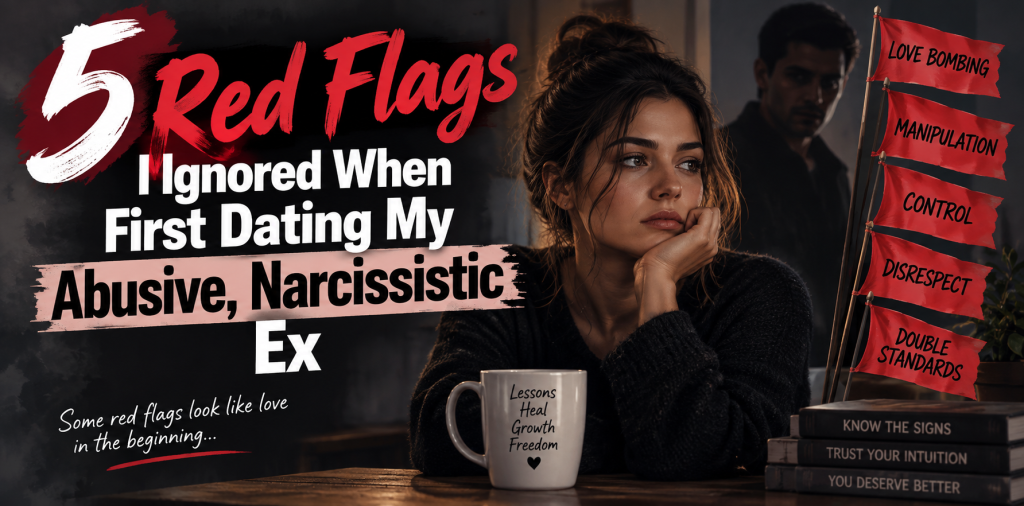
If you are in the early stages of a new relationship and sense that something is amiss, without being able to pinpoint exactly what, I hope this article helps. Here are five signs of narcissistic abuse that I overlooked in my own early experience, and what I would advise my younger self to watch out for:
- The relationship moves at an exaggerated pace
Within just a few weeks, he began speaking about our future as if it were a foregone conclusion. Living together, meeting the family, and even getting matching tattoos, at the time, all of this felt flattering and delightful. I told myself I had finally found someone who “knew exactly” what he wanted (namely, that I was the right person for him).
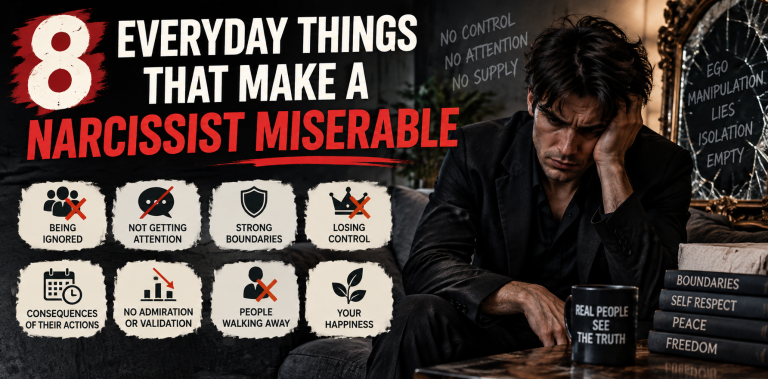
Related : 8 Everyday Things That Make a Narcissist Miserable
This behavior is a classic example of “love bombing,” one of the most common early signs of narcissistic abuse. Overwhelming displays of affection, grand and dazzling gestures, and constant declarations that you are “different from anyone else he has ever met” are not merely romantic actions; In fact, they are often designed to accelerate the pace of trust-building and foster emotional dependency before you have time to notice any red flags. Healthy relationships build intimacy and closeness gradually; if the pace is dizzying or confusing, it is something worth pausing to reflect on, not ignoring.
- Portraying jealousy as a sign of devotion and commitment
He didn’t like me going out with friends without him. He would ask endless questions about my male colleagues, justifying it as an expression of care and concern, claiming it was “because he loved me so much.” I remember feeling a sense of pride about it; it seemed like proof of how important I was to him.
Possessiveness disguised as love is one of the most insidious signs of a toxic relationship because it mimics genuine care. The fundamental difference lies in control: a healthy partner trusts you, whereas a jealous partner monitors your movements. If expressions of affection are accompanied by surveillance, guilt-tripping, or constant scrutiny of who you spend time with, this is not devotion or commitment, it is an early attempt to exert control.
- The gradual fading away of friends and family
It didn’t happen all at once. It started with seemingly minor comments: my close friend was a “bad influence” on me, my mother “didn’t understand the reality” of our relationship, or plans with others could be postponed because my partner “needed” me. Each excuse seemed logical on its own. This is the classic pattern of isolation, a fundamental tactic in abusive relationships. A narcissistic partner often seeks to shrink your support network, not through a single, abrupt, and blatant demand, but through a gradual accumulation of small requests. The danger of isolation lies in the fact that it deprives you of outside perspectives that could clearly reveal the reality of the relationship; therefore, if you notice your social circle shrinking and your partner is consistently the reason behind it, take this as a serious warning sign.
- Calmly dismissing my views
Whenever I disagreed with him, even on a trivial matter, he would find a way to make me feel like I had misunderstood, overreacted, or simply didn’t know what I was talking about. Over time, I stopped bringing up topics for discussion; it was easier to just agree.
Related : 12 Moments That Show The Narcissistic Abuse Was Intentional
This is an early form of psychological manipulation known as “gaslighting.” It is one of the most damaging signs of narcissistic abuse because it erodes your confidence in your own perception of reality. It rarely begins with an outright denial of reality; instead, it starts with small things, dismissiveness, veiled condescension, or being told you are “too sensitive.” If you find yourself constantly questioning your own reactions when dealing with a specific person, this is a crucial warning sign, and it is not a flaw in you.
- Explosive reactions followed by attempts at affection
Minor disagreements could trigger disproportionate reactions, such as the silent treatment, rage, or sudden, unfounded accusations. Then, just as quickly, he would return to showing affection, sometimes through gifts or apologies, making the outburst seem like a distant memory.
This volatile cycle (alternating between cruelty and kindness) is sometimes known as “intermittent reinforcement,” and it is one of the reasons why ending abusive relationships is so difficult. The inability to predict the other person’s actions keeps you in a state of instability. Furthermore, the “good” moments feel far more intense and impactful than others, potentially forging an emotional bond much stronger than one created by consistently kind treatment. If the best moments of your relationship always follow immediately after the worst, this is a recurring pattern, not merely a random coincidence.
Trust Behavioral Patterns, Not Promises
No single sign on this list is sufficient, on its own, to prove that someone is abusive or narcissistic; however, behavioral patterns matter more than isolated incidents. If you notice more than one of these signs early on, it is best to pause and pay close attention, not to the promises being made to you, but to the behavior underlying them.
I cannot go back in time to warn my past self, but if this list helps even one person trust their intuition sooner than I did, then writing it will have been worth the effort.