The show begins.
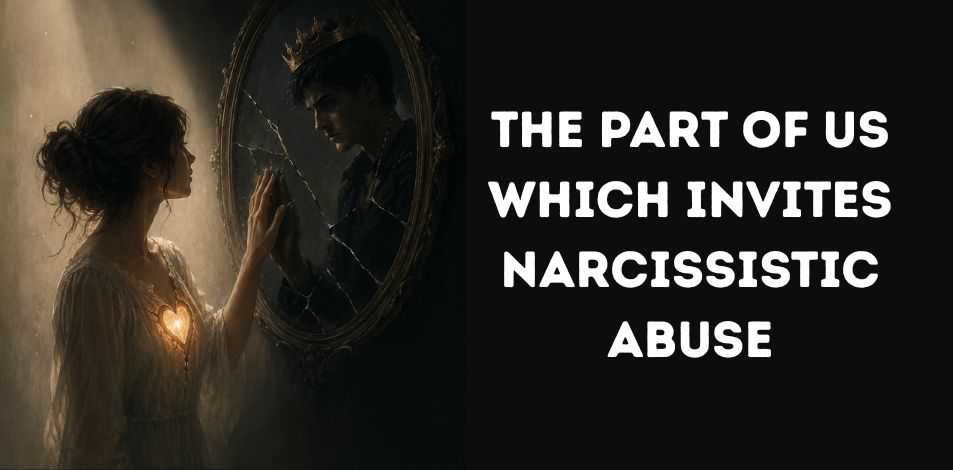
A perpetual smile that hurts your cheeks. Constant positive talk. Forced laughter. It’s like a solemn tiptoe around a cunning presence lurking deep in your subconscious. This presence hides behind a mask, pulling strings and wresting control from you with shocks of fear, guilt, and shame to bring you back on track. It sabotages you the more you resist, driven by a hidden agenda: acceptance.
This illusion will do whatever it takes to achieve its goal—no matter the cost. Your boundaries. Your integrity. Your self-confidence. Your resources. All are up for grabs, as long as people accept you. The narcissist sees this and pounces.
You feel like you’re living on a single, unchanging frequency. Positive affirmation must be maintained at all costs. They’re good, you’re good, everything in between is good, therefore the relationship is good. No exceptions. Keep it up long enough, and at some point, feelings of anxiety and resentment will surface. It becomes exhausting to be constantly on guard. How about a change of scenery? Perhaps a way to ease the tension, or a mix of different moods? Expressing your true feelings? Saying “no.” Expressing your opinions. Expressing your desires. Releasing some of the pressure, and not having to be happy and positive all the time? Be honest with yourself.
Forget it. You’re not in control. The illusion is.
What is the illusion? It’s the hidden part of our ego that protects our vulnerable selves. It’s the result of being overwhelmed by the suffering of our true selves during a period of severe abuse. The illusion emerged as a last resort; it was a way to understand the world and end the pain. Now it lurks in the shadows, doing what it must to “protect” us.
In short: Illusion = Ego + Trauma + Shadow.
The illusion creates an image of you as a lovable person, then creates an image of the other person as a generous one, and then showers them with this positivity to attract them.
What’s difficult for victims of narcissism to accept is that this positivity has a dark side. The illusion pulls the strings to gain acceptance, alternating between positive reinforcement and withdrawal to keep the show going. When the other person resists too strongly, or pushes us to our limits, the illusion ends the show and withdraws completely. The only people immune to this are narcissists, because they are adept at keeping their victims engaged and providing their narcissistic sustenance. Your illusion is overwhelmed by the narcissist’s power. Your vulnerabilities are exploited, and you are inundated with emotions. You have no time to think or act—only to react.
Related : The Spouse In A Narcissistic Family
The narcissist’s illusion, above all, seeks to secure power and control. Unmask the narcissist’s illusion, and you will feel their anger. Sometimes it is an outright attack, but more often it is a sudden withdrawal of the respect they so generously bestowed upon you. Remember, it is not the person you are dealing with who is in control; it is their illusion that pulls the strings. Their respect may persist as long as the illusion is satisfied with your loyalty.
Some might argue that illusion is what makes a person a narcissist. But how can that be true, when everyone harbors an illusion to some degree? The intensity and cruelty of delusion vary depending on the depth of a person’s past trauma, but delusion is present. Everyone has a dark side.
This dark side is made up of parts of ourselves that others have rejected, and therefore, that we have rejected ourselves. It contains our wounds, our self-loathing, our anger, our pain, our trauma—everything delusion tries to hide.
When a person’s trauma exceeds a certain threshold, the ego creates this defensive persona to protect itself. Its first instinct is to do anything to gain love, believing that this will stop the abuse. But if a person has grown up in an environment that values power and control, this delusion clings to this model and uses it as a means to fulfill its needs. Why submit when control is possible? Instead of accepting, the delusion seeks control. This double-edged sword is at the heart of the relationship between narcissism and codependency.
We all wonder about the hierarchy—what our lives would be like if we had more power and dominance, and more people who admired us. Many of us simply want to avoid the suffering and pain that fueled our illusions. We all need to cultivate power in our lives, at least to protect ourselves from those who would manipulate and exploit us. But we must also recognize that the line between power and narcissism is very thin. What gives meaning to our power is what determines our stance on that line.
Accepting power at any cost is unsustainable. It leads to dysfunctional relationships, damages our health, and leaves us stagnant and depressed. Worse still, it drives us to manipulate others to gain their affection. To live well, we must reclaim control from our illusions.
Some of us need to begin by acknowledging that we do indeed have an illusion. Deep down, the illusion doesn’t want to control the conversation. It understands that a competent, wise, and powerful higher self is far more effective and efficient than its petty games and schemes. When our higher self aligns with our true self, we can access the infinite wisdom within the body. All our inherited energies are available when we transcend the ego. We have the potential to access knowledge that stretches back to the dawn of history—to the Big Bang. What is the value of delusion in comparison? Insignificant. And he knows it.
A crucial step in evolving and overcoming narcissistic abuse is confronting the delusion, plunging into its pain, and restoring order to its inner chaos. Through conscious focus, you can transcend it and understand how it operates and why it wreaks havoc on your life. You can endure its intensity and accept its presence—however difficult that may be. The delusion doesn’t want to be seen. It hides for a reason.
However, you can guide your higher self to see and acknowledge the delusion. You can reveal a truth far greater than it. Demonstrate your control. Demonstrate your ability to bring people into your life who are genuinely interested in you and care for you. Demonstrate your capacity to manage the complex emotional states that dynamic relationships demand. Show him you can express your needs while setting boundaries that protect his sensitive nature. Show him you can help him grow, release his anger, and become a useful partner in your life.
Demonstrate your resolve and perseverance to your illusion. Adopt a noble vision and persuade your illusion to join you. By doing so, you will protect yourself from narcissistic abuse and gain control over your own narcissism. If you don’t, your illusion will have no choice but to resume its games.