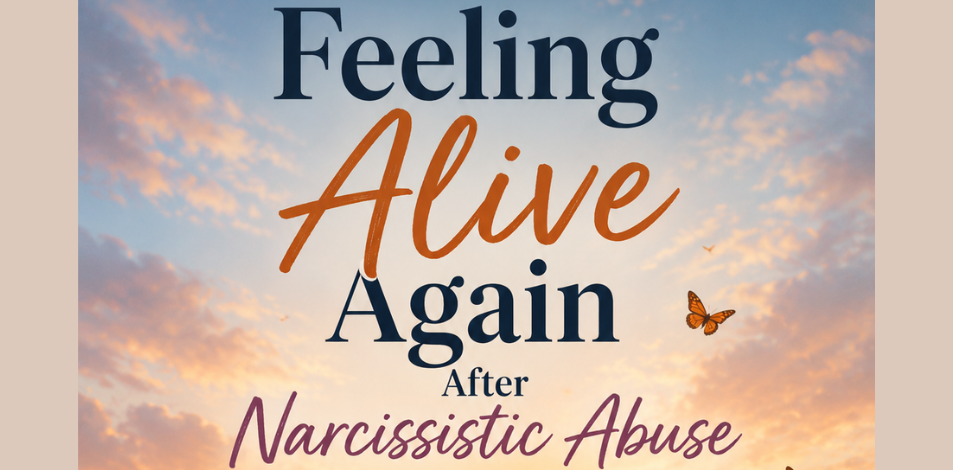
Narcissistic abuse only occurs when you are persuaded to change your view of yourself and your life.
We all live according to a self-image; a set of beliefs that defines how we should live, why we should live, and who we are in society. We usually derive this image from our families and the world around us.
In childhood, we possess tremendous vital energy, and the role of family and society is to teach us which impulses are permissible, which should be suppressed, and which should be eliminated altogether.
In a free and supportive family or community, we are given ample space and opportunity to express our passions, dreams, and energy. We can pursue our goals, express our needs, create change, express ourselves, dance, and more. This is the essence of vitality: the feeling that you have the right to spontaneously express your vital energy on your own terms.
The narcissist interferes with this process for three reasons:
Your spontaneous vitality makes you powerful, and therefore difficult to control.
Your vitality reminds the narcissist of the emptiness they feel inside.
Directing your vitality away from life and toward the narcissist makes you an even more effective source of gratification for their narcissism.
The narcissist rewrites your life script by interacting with you and bombarding you with fabricated “facts” about yourself in a slanderous and intimidating manner. They point out every mistake you make, question every decision you make, and ridicule anything that doesn’t conform to the stereotype they’ve created of you. If you don’t comply, they interrupt, try to manipulate you, or threaten to leave.
And what exactly is this stereotype? Simply put: You are worthless, incompetent, and need someone competent and superior like the narcissist to manage your life—otherwise, you are nothing.
Any sane person would scoff at this story. But the narcissist doesn’t reveal their plan in such terms. Their narrative is a tangled web woven through countless situations and interactions.
The narcissist reinforces their strategy by triggering feelings of shame and fear within you. These intense emotions can overwhelm you and temporarily impair your ability to think rationally. When these feelings persist long enough, they become entangled and obliterate any previous beliefs you may have about yourself. If the narcissist succeeds in isolating you from your friends and family, this process accelerates dramatically.
Related : The Importance Of Grieving After Narcissistic Abuse
The worst aspect of this destructive process is how it numbs you, whether you stay with the narcissist or leave them.
Death By Staying
If you remain trapped in the narcissist’s bleak world, they will cut off all avenues to a spontaneous life. Narcissists demonize the outside world, including your family and friends. They despise animals and may try to prevent you from having a pet you love. Life away from the narcissist is a threat. Your hobbies are ridiculed. Your ability to think independently is suppressed through constant judgment and monitoring of your every move.
In short, the narcissist doesn’t want you “alive.” They want to program your behaviors and beliefs for one purpose only: to provide them with the gratification of their narcissism. You are “alive” to them only insofar as you are at their disposal.
Death By Leaving
Leaving the narcissist also leads to death, because leaving means the complete collapse of the “self” you once knew.
Remember that your identity has been completely erased and replaced by the narcissist’s selfish myths. Your identity was trapped in the whims of a paranoid and traumatized individual. Your emotions, psyche, and vital energy flowed through a tightly woven machine crafted by the narcissist. Losing all of this is a form of psychological death. Without your former identity, you no longer have a “self,” and you are cast into the abyss.
Many who have ended a narcissistic relationship attest to this state of “hell.” It is the very reason they stayed in the first place. It is better to be a “living” person, a source of sustenance, than to be “no one” and, as a result, dead.
Many also share stories of how they overcame this terrifying state, creating a new, more inclusive myth of identity, one based on self-love, openness, spontaneity, and belonging to a loving community.
Above all, those recovering from narcissistic abuse discover a sense of identity rooted in their true selves. Wisdom, intuition, strength, optimism, and life itself all spring from this boundless source. The narcissist “killed” you by separating you from this flowing river, then diverting it toward themselves as a source of self-gratification.
It takes a long time to rediscover this river of life because, like a flowering plant, it needs to pass through countless sunrises and sunsets, dark nights, and confusing days before it can acquire a coherent psychological structure that you call “self” again. You have the source of life within you; all you have to do is prepare the riverbank for it to flow. This is the essence of recovery.
If you maintain your faith and accept the period of darkness that accompanies recovery from narcissistic abuse, the river of life will flow within you again. The threads of life will be rewoven to form a strong self, this time not by a narcissist, but by you.
It is paradoxical that to cling to life is to first cling to death. And waiting on the other side is a life worth living, a chance to become who you were meant to be.