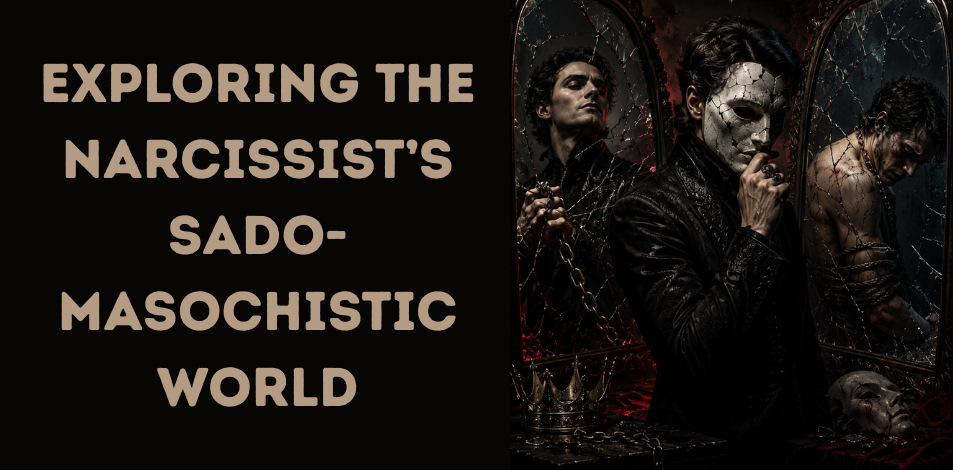
A narcissistic relationship begins in an idealized state of euphoria and bliss, before descending into a hell of humiliation, rejection, and abuse. As the months pass, the narcissist’s cruelty intensifies, their comments become more biting, and their abuse more painful. Even intimacy can become increasingly violent and brutal.
As the victim’s self-esteem plummets due to the mistreatment, the narcissist escalates their abuse to the point of sadism, further eroding the victim’s self-confidence and deepening the vicious cycle.
This begs the question: If someone treats you with such cruelty and disrespect, why not simply leave?
Those familiar with the meaning of “painful attachment” understand why victims endure abuse. Those who understand the sunk costs fallacy know that the more a victim invests, the more likely they are to stay, hoping for a return in the end. The victim’s (magical) logic is that the more love they show the narcissist, the sooner they will both heal and their relationship will have a happy ending. But to an outside observer, the victim appears to be a masochist inviting pain. And in some ways, they might be right.
Welcome to the world of the narcissistic sadist-masochist.
Adventure In The Dark
So, what’s the reason? Why does the narcissist descend into emotional, sexual, and physical sadism? What fuels this monstrous behavior? And long before the victim invests their mind, body, soul, and money in the relationship, long before the bond of trauma is formed, why does the victim accept the punishment inflicted by the narcissist?
The answer lies in two places: the unconscious of the narcissist and the unconscious of the victim. Deep within both lies a mysterious entity, moving from the shadows, influencing every decision made by both the narcissist and the victim, thus reinforcing the cycle of sadism and masochism that descends into a raging storm of confusion, humiliation, and pain.
In every narcissistic relationship, there is a “good” person and a “bad” person. The narcissist knows exactly who they are and ensures their “good” side by provoking the victim’s “bad” side through defamation, criticism, ridicule, belittling, and attack.
The victim, on the other hand, contributes to their own “badness” or “deficiency” by submitting to the narcissist. They see no problem in allowing the narcissist to control their life, impose their will on them in bed, and judge everything they do. The victim, by nature, believes they are less competent and intelligent than the narcissist. They fall into the trap of idealism, seeing the narcissist as the perfect solution for all the “evil” within them, even if they don’t realize it.
Related : The Narcissist’s Twilight Years
Popular psychology often speaks of the “critical voice” in people’s heads. This tormenting voice constantly questions every decision you make, judges every aspect of your personality, and reminds you, with stark clarity, of your inferiority, inadequacy, and awfulness.
Thoughts are tangible in the light of consciousness. In mindfulness practice, where one directs their focus inward, thought is usually the first layer to surface in consciousness. This explains the heightened focus on the critical voice.
Some people grew up with highly critical parents. As a result, they constantly hear rebukes like, “You stupid child!”, “You’ll never amount to anything!”, and “You’re pathetic!”
For others, however, the negativity emanating from within doesn’t manifest so sharply. These individuals rarely hear a critical voice. Instead, they may experience a painful unease; a vague sense of being “bad,” flawed, or inferior. This might manifest as a heaviness in their chest, a clenched jaw, persistent anxiety, an overwhelming need for validation, or a tendency toward isolation.
To further complicate matters, behaviors rooted in their self-perception of inadequacy, incompetence, and “bad” may emerge. These individuals strive to please others, placing themselves last and assuming a subordinate position in all interactions. Other ways they may express this inferiority complex include self-deprecation, feigning excessive affection, avoiding eye contact, and refusing to help others.
Whether through their mind, body, or behavior, this persistent sense of inadequacy stems from a single, often unconscious source: the “rebel child” within them.
How We Become “Bad”
In Melanie Klein’s psychoanalytic theory, “badness” is defined as an internalized self-representation, acquired at an early age, perceived as possessing negative qualities.
Who judges “good” and “evil” in this world? Anti-heroes like Tony Soprano, Don Draper, and Harley Quinn are among the most beloved characters in film and television, despite their monstrosity. What one person considers immoral, another considers powerful. In a world where we can’t help but be captivated by the audacity of narcissistic and psychopathic behavior, the concepts of good and evil remain elusive.
But in the world of a child, good and evil are easily measured: the parent is the judge, the jury, and the executioner, without exception.
Due to their fragile state of helplessness, the child remains on the precipice of terror and death. The child’s survival depends on the whims of their parents. To cope with this precarious situation, the child divides their reality into a binary: absolute good and absolute evil. Everything that fulfills our needs for food, love, attention, and care is considered good, while everything else is repulsive and must be rejected. This manifests in a child who is quick to anger but quickly calms down once they get what they want.
In childhood, parents are the only way to meet our needs. Therefore, in this state of mental distraction, we see them as paragons of absolute goodness, even ideals. Parents never make mistakes. We view them this way because if they could, our sole source of survival would be threatened. It’s a terrifying reality.
However, parents are not infallible. They can get angry and frustrated, and they may not understand our needs and feelings. They can ignore us, humiliate us, insult us, take revenge on us, and deprive us of our freedom.
Parents may suffer from complex psychological traumas and personality disorders such as narcissism, psychopathy, borderline personality disorder, and paranoia. This may lead them to exploit their children to maintain their own psychological balance. Parents with complex trauma often experience profound pain, which they then alleviate by transferring it to their children, resulting in systematic humiliation and horrific abuse.
This mistreatment is enough to make a child feel bad about themselves. But there’s something far more dangerous: it makes the child feel fundamentally inadequate, poisoning their very existence.
Unwanted Baby
A question to ask all parents: When you first learned you were pregnant, how did you feel?
Most parents will express feelings of pleasant shock, overwhelming joy, or immense happiness upon hearing the news. But how many will admit to feeling fear and dread? How many will reveal their intense anger and resentment?
No one dares question a parent’s true feelings toward their child, let alone the parents themselves. It’s considered taboo, shameful, and utterly wrong. What parent would admit to their child, or even to themselves, that they resent their existence? No one, because the parents know that their position holds within it the seeds of their child’s destiny, whether it be prosperity or downfall.
Unwanted pregnancies are extremely common. This is understandable when you consider how difficult parenthood can be, even for the most capable individuals. Unintended pregnancies can occur at a young age, when the parents are not yet fully prepared. Some may have personal ambitions that are thwarted by pregnancy. Others may be in unhappy and abusive relationships, and pregnancy only exacerbates the situation, leaving the new parent in a state of misery. Finally, some people simply do not want to become parents at all.
Despite all this, society is intolerant of any discussion against having children. Pregnancy is always considered a good thing, and anyone who says otherwise is seen as a bad person. One only needs to look at Roe v. Wade between liberals and conservatives in the United States to see how sensitive this issue is. The concept of “the right to life” is inherently intolerant of the right to choose one’s attitude toward that life. In traditional and ethnic cultures, abortion is viewed as a grave sin. Caught between these two conflicting realities, parents facing an unwanted pregnancy often find themselves forced to suppress their emotions and move on.
But when negative feelings are suppressed, they don’t disappear; instead, they permeate every aspect of the parent-child relationship. This can manifest as resentment and contempt. The parent’s gaze, conversations, and behavior toward the child are affected. The parent’s energy and attitude toward the child become toxic. This suppressed resentment seeps in constantly. Although it’s never explicitly stated, the child senses the truth subconsciously. Deep down, the child knows they are unwanted. The child’s very existence is an insult, a constant reminder of how the parent’s life has been ruined.
Instead of experiencing warmth, love, and joy from the parent, the child encounters only coldness. Unwanted children rarely receive genuine support. The parents show little curiosity about the child, find little pleasure in their presence, and make little effort to truly get to know them.
At best, parents reluctantly fulfill their role in raising a child, providing food, clothing, and the basic necessities of life. However, this soulless routine lacks the essence of proper upbringing. The relationship is always tainted by the fact that the parent never truly wanted the child, instilling in the child a deep sense of inadequacy, unworthiness of love, and a feeling of worthlessness.
Unholy Rebirth
Objectively speaking, a cold, hateful, or neglectful parent is bad. Any reasonable person would agree. And how do we deal with bad people? We get angry at them, we defend ourselves, and in extreme cases, we distance ourselves from them.
But this is impossible in a child’s life and mind. The parent must be perfect, ultimately. In a child’s dualistic world, there is no good without evil. Moreover, to cope with the shame, pain, and anger caused by an abusive and rejecting parent, catharsis becomes necessary. But the child cannot “distance themselves.” They cannot defend themselves. They cannot even understand what is happening. So, the child resorts to a clever solution: creating an outlet for this negative energy. An entity. Someone else to bear the trauma, someone the child labels as evil.
To achieve this almost invisible, almost magical accomplishment, the child delves deep into their own psyche. As the pressure from the torrent of terror and abuse intensifies, their true self fragments. From this state of flux, the child conjures up a “bad child” to direct their pain and anger. Every time the parent ignores, rejects, attacks, looks down upon, or humiliates the child, the child points the finger at this “bad child,” directing their shame, anger, and terror at them. They say, “You’re bad,” but not to themselves. The bad child is the one to blame. This phrase is like a magic spell. If repeated often enough, it becomes so powerful that it summons a malevolent being from within, emerging from the darkness of the soul to help the child through their ordeal. The more neglect, humiliation, and abuse a child is subjected to, the stronger the spell becomes, and the larger this evil creature grows.
All of this is pre-consciousness. Consciousness and the ego emerge gradually over years of life. The “prodigal child” is formed before time, like a god from Greek mythology. It exists in the realm of energy, not in the realm of thought and manifested consciousness.
As the child gradually grows into a toddler and beyond, and begins to form conscious memories, its true timeline begins. Its world takes shape, and the light of consciousness shines like the sunrise. Meanwhile, the “prodigal child” remains in the shadow of the unconscious, far from the light—as is the case with all prodigal children. It lurks in the depths of the child’s being like a sea monster, behind the veil of consciousness like a phantom.
With consciousness and the ego, new forms of power come to the child, and the lid closes on the “prodigal child,” casting it into a labyrinth of shadows. There it remains, drowning in a torrent of repressed shame, fear, anger, sorrow, and trauma, which pulls the child with an irresistible force, threatening to drag it into its terrifying heart. From this prison, a voice whispers to the child: You are hopeless. Immature. Deficient. Inferior. Ugly. Weak. You don’t deserve happiness. Why would anyone love you? A loser.
There remains the bad child. To avoid confronting this dark reality, all one has to do is stay on the surface—never venturing into that dark place within.
A truly difficult task.
EvilIn Broad Day
The “bad child” doesn’t disappear when sidelined. It remains ever-present as we move forward in life. However, the mind possesses countless strategies to suppress the painful feelings of the bad child:
Denial and Grandeur: Whenever the child feels shame or guilt, it convinces itself that it’s okay. Good, even excellent! Wonderful. Grandeur becomes the culmination of denial. You’ll never feel bad about yourself if you convince yourself that you’re immune to feelings of inadequacy and immorality. Grandeur deludes you into thinking that you (and your life) are perfect, or will be in the very near future.
…No matter how kind you are, it will never be enough. In the end, you’ll still be bad. So, when people don’t accept you, you double your efforts and feign even greater kindness until all boundaries blur, leaving you feeling empty, bitter, and exploited.
Blaming Others/Playing the Victim: A clever trick to cope with feeling bad is to deny it and blame the bad people around you. You say, “I’m not bad, everyone is!” Others are responsible for everything that goes wrong in your life, not you. This is accompanied by playing the victim, convincing those around you that you’re constantly plagued by bad luck and powerless to stop it.
Avoidance: Humans have a way of making us feel inferior and revealing our flaws. When the world overwhelms us and our negative side threatens to take over, we withdraw and isolate ourselves. This allows us to avoid responsibility or being around people who are “better” than us, which might make us feel inadequate compared to them. Even when we’re forced to be around others, we resort to isolation and coldness, closing our hearts to avoid feeling vulnerable.
Addiction: Addiction is perhaps the most common “treatment” for those with problematic personality disorder. They may engage in casual sex, overindulgence, overeating, overworking, drug or alcohol abuse, or any other activity or substance that triggers dopamine release.
Related : Why A Narcissistic Relationship Is So Devastating
All of these are attempts to regulate mood and deny reality. Those with problematic personality disorder are constantly at risk of confronting repressed feelings of shame, anger, and trauma. As a result, they tend to turn to fantasy as a coping mechanism, using their minds as a kind of virtual or augmented reality that shields them from the harshness of life. These individuals with neuroticism can only connect with other neurotic individuals who are willing to participate in creating a fantasy world that allows them to transcend their feelings of inadequacy and worthlessness.
The_Sadomasochistic_Dance
Two people with a “bad child” are doomed to a painful relationship. Not only do they have to deal with their own “bad child” and the accompanying coping mechanisms, but they also have to deal with the other’s. Neither can relax and enjoy the relationship; they remain constantly on edge, fearing the exposure of their flaws.
This dangerous situation usually leads to the relationship ending before it even begins. However, the trauma of the “bad child” fuels the imagination, allowing each to idealize the other. Together, the couple creates a dopamine-fueled fantasy world where no one is wrong. For a while, the “bad child” problem seems solved. How can one be bad when they’ve found someone who loves them unconditionally?
The problem is that neither person is acting authentically. Using a combination of denial, detachment from reality, and ego, the couple rides the wave of fantasy without needing to reveal their true selves to the other, at least initially.
Moreover, any union requires polarity. This is what drives one partner to play the role of the “submissive,” while the other plays the role of the “superior.” And no one is better suited to this latter role than the narcissist.
In role-playing within the world of sadomasochism, the dominant partner controls the submissive partner. The dominant makes the decisions, and the submissive carries them out. The dominant provides pleasure and pain, and the submissive endures them. The idea is to create tension and polarization for the pleasure of both partners. In role-playing within the world of sadomasochism, one partner is “bad” or “naughty,” and the other is tasked with “punishing” them to bring them back to their senses. Sexual liberation aims to balance the shame associated with sexual orientation and bring the partners closer together.
Perhaps the most interesting aspect of the power dynamics in the world of sadomasochism is the submissive’s control over their own submissiveness and “evil.” By enticing them into submission and sin, the submissive grants the dominant a dose of power through a license to punish and dominate. The submissive becomes irresistible to the dominant, drawing them into the depths of their infinite world of possibilities. The longer this situation persists, the more the dominant clings to the submissive, seeking a sense of power. It is only a matter of time before the dominant falls victim to the submissive’s “tyranny from below.” Power turns to pain, and pleasure to despair, as the dominant realizes they have been lured into the submissive’s trap. The dominant’s “power” was merely an illusion all along.
In a narcissistic relationship, the narcissist believes they are in control, capable of distributing pain and pleasure at will, while in reality, they are simply a victim of the collective masochism that governs their relationship. A closer look reveals why.
The rebellious child must be kept safe at all costs, just as asbestos must be kept inside a building. Exposing oneself to one’s wayward child releases the toxins of shame, anger, and trauma stemming from childhood abuse. When one is in a relationship, one’s vulnerability before others exposes one’s soul to the light. For the disobedient child, it’s like peeling away the plaster from a wall and exposing the asbestos underneath. To rebuild the wall, one needs to reinforce the disobedient child through abuse. Thus, sadism and masochism become fertile ground in the narcissistic relationship.
Through narcissistic abuse of their victim, the narcissist reinforces their false sense of “superiority” by attacking the victim’s self-confidence. In other words, they can only be “good” if the other person is “bad.”
In addition, bad child behaviors in the relationship are reinforced through the following key mechanisms:
Approach/Avoidance: We all crave love, especially if we believe we are bad. Feeling cared for and accepted alleviates the pain of the bad child. However, this requires closeness, which means the bad child is exposed. To cope with this dilemma, the bad child uses a push-and-pull tactic. Initially, they seek love and closeness. Once they receive it, they become fearful and cold, pushing the other person away. Then, when the coldness in the relationship becomes too painful, they return to seeking renewed closeness.
Rejection of Love: A person with a bad child will not allow you to care for, praise, or support them. Kind treatment threatens the bad child and awakens their repressed feelings. Therefore, the bad child will do their best to resist love. They may argue against your kind words, fall silent when you encourage them, or become tense and withdrawn when you touch or hug them.
Projective identification: The rebellious child seeks to remain unscathed. This is achieved by subtly provoking the other person into a negative reaction. This type of abuse is known as “reactive abuse,” which destabilizes and provokes the other person, causing anger, frustration, and resentment. Over time, this leads the other person to abuse, humiliate, and betray the rebellious child, thus perpetuating their own “badness.”
Both the narcissist and the victim may employ the aforementioned tactics, with the ultimate goal being pain, not love. This dichotomy between good and evil keeps the relationship intact while maintaining the rebellious child within each partner.
In the midst of the narcissistic relationship’s frenzy, the distinction between sadism and masochism becomes blurred. Each partner’s refusal to accept love inflicts masochistic pain upon themselves, while simultaneously harming the other in a sadistic manner. This is evident in couples who ignore and cut each other off. These individuals associate love with conditions, frustration, rejection, and pain. They tend to block out partners, preferring narcissistic and abusive relationships because they reinforce their feelings of inadequacy. This may sound shocking to anyone who has experienced a narcissistic relationship, but it’s helpful to consider why we seek love where it is entirely absent.
A person with this behavior chooses a partner who will torment, reject, and betray them, just like all narcissists. They crave love more than anything to alleviate their pain, yet simultaneously fear it intensely. Consequently, this behavior leads them to deny themselves love. This sadomasochistic approach to love is like walking a tightrope, where the contradiction between good and evil acts as the glue that holds the relationship together, without relying on genuine love for connection. Love weakens their defenses, making them unbearable.
If you love someone with a troubled child, they will punish you for it to punish themselves. They destroy intimacy at every turn. Unwanted, unloved, and invisible in their childhood, they internalize a destiny of rejection and pain. Their primary goal is to live in a perpetual state of misery—never allowing themselves to be truly loved, accepted, or appreciated.
Inevitable Betrayal
The inevitable end for anyone with a bad child is abandonment. The bad child expects nothing but abuse and betrayal; it’s all they believe they deserve. They actively seek this outcome, even while searching for love. The pursuit of life is always met with the bad child’s attraction to death.
The bad child not only anticipates the worst, but also relies on it. Hurt, betrayal, and rejection are inevitable even before the relationship begins. What could be better than facing the reality of their own badness? Who wants to confront the bitter truth of being unlovable, beyond redemption, and inadequate? The bad child’s “fate” must be fulfilled, and they shape their world accordingly. They sabotage relationships with the good people in their life while inviting the wrong people into it, including narcissists.
For their part, the narcissist denies their inner flaws, clinging to an inflated and arrogant false self. However, their behavior toward their victim is self-sabotaging. The narcissist secretly hates themselves, believing they deserve the worst in life, even if their ego suggests otherwise. The victim also suffers from self-loathing, even if they dream of unconditional love. The narcissist’s sadistic abuse ensures that love never crosses their boundaries, while the victim is gradually eroded. It’s only a matter of time before the relationship ends, either with the victim’s collapse and departure or the narcissist’s abandonment. Ultimately, the narcissist and their victim share a common fate: betrayal and abandonment.
No matter how hard the victim struggles to love the narcissist, the narcissist will fight even harder to hurt them. This is what makes the narcissist both sadistic and masochistic. Their abuse of the victim also harms them. At the same time, the victim acts masochistically, inviting the narcissist’s abuse through their unconditional, self-serving support and lack of boundaries. Both parties ultimately destroy the relationship. Both participate in creating the sadomasochistic “love” that they believe they deserve.