
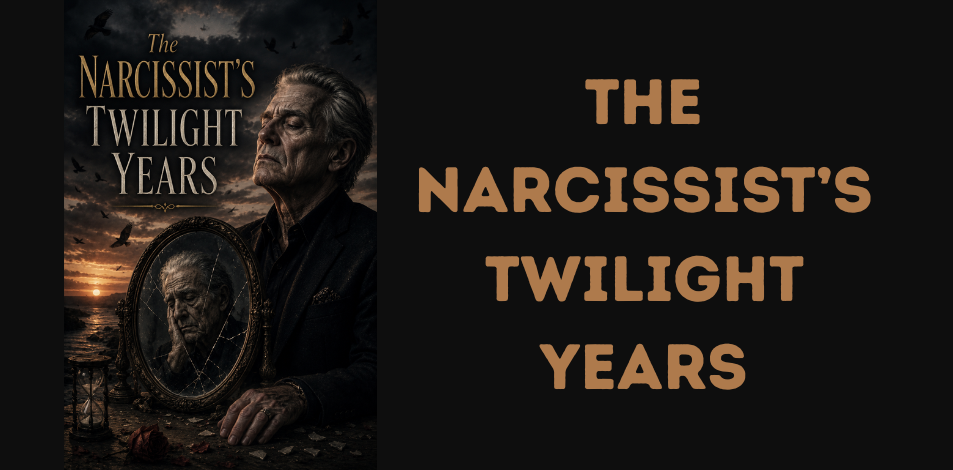
The narcissist’s true Achilles’ heel is time.
Those who derive their greatness from their appearance are terrified, as each passing year seems to diminish their youth. Some narcissists become obsessed with their health, consuming enormous quantities of vitamins and constantly seeking out the latest health trends.
You might hear a narcissist say, “I’ll live to be 100!” This mindset is accompanied by various forms of denial. An aging narcissist might try to jump and leap like a child, risking injury. You might occasionally encounter an elderly narcissist frequenting nightclubs or bars, trying to maintain their connection with younger people. A narcissist might also dress decades younger than their actual age. A tight leather skirt, bright pink hair, or a baggy sweatshirt on someone with gray hair are all telltale signs.
These absurd attempts to postpone death don’t necessarily indicate narcissistic personality disorder. The person may have experienced stunted growth in childhood and remain detached from reality, behaving like a teenager.
Perhaps the fear of death is the reason. Many of us haven’t yet grasped the reality of our mortality. The mere thought of death sends shivers down our spines.
For narcissists, however, the passage of time holds particular significance, accompanied by a kind of dread.
The Beauty Of Death Before Death
For the spiritual explorer, the death of the ego is a magnificent gift from the universe. During a magical period of time, your mind ceases to function. Your identity fades into nothingness. Your past and future. Your reputation and career. All the worldly things that constitute your identity: vanish. Everything. What remains?
This is the magnificence of the death of the ego. Without the ability to “conceive” of the self, everything you are dies. Instead, pure consciousness emerges. You perceive only yourself. That is, you become one with your eternal self, which lies beyond your mind and body; your divine self.
Those who experience the death of the ego return with a profound sense of serenity, tranquility, and inner peace. They also return with their fear of physical death greatly diminished. Why? Because they glimpsed the other world, and it wasn’t as bad as they thought. It was wonderful. Now they know the truth.
Related : Why A Narcissistic Relationship Is So Devastating
The death of the ego comes in many forms. It might begin with crises or severe nervous breakdowns, or with the use of hallucinogenic drugs, and of course, with the approach of physical death. Steve Jobs, the CEO of Apple, uttered his last words as he breathed his last:
“Wow, wow, wow.”
That sums it up perfectly.
An Eternal Battle with the Ego’s Demise
What about the narcissist? Can they benefit from the demise of the ego?
Perhaps. But the narcissist doesn’t view the demise of the ego the way a psychoanalyst would—they do their utmost to avoid it. The narcissist’s inflated false self, which has become an integral part of them, is a product of the ego. If the narcissist were to lose their ego, they would lose their false self. And without their false self, the narcissist would face the fundamental trauma they left behind decades ago.
Without protection, there would be nothing but a desolate emptiness, a mixture of trauma and shame. It’s no wonder that the narcissist spends most of their waking hours seeking narcissistic gratification. As long as their false self is fed, they remain protected from what lies beyond.
Of course, securing the narcissist’s sustenance requires effort. It’s a youthful game. And to secure their nourishment, the narcissist needs to socialize or enter the dating world. If he is successful in life, or possesses an attractive appearance, luring naive people becomes much easier. Fueled by youthful exuberance, the narcissist seduces and charms others to satisfy his addiction. When the narcissist reaches the peak of his life, he feels euphoric, even immortal.
But nothing lasts forever. The narcissist learns this lesson the hard way. Eventually, things begin to unravel. Those around him gradually discover his deception and distance themselves from him one by one. The older the narcissist gets, the smaller his circle of acquaintances becomes.
The wise narcissist thinks about the future and marries. Most importantly, he has children. This guarantees them a private kingdom where they occupy a prestigious and important position. The narcissist’s children, deeply attached to him and overflowing with vitality and love, provide him with seemingly inexhaustible nourishment for his false self.
Until time speaks the final word.
A Bitter End Approaches
Due to their psychological disturbance, everything the narcissist touches dies. Meanwhile, time marches on relentlessly, gradually eroding the narcissist’s fantasy world and simultaneously revealing the harshness of reality. The narcissist’s impulsiveness, vanity, and self-sabotage hinder any progress they might make. Friendships fade, businesses wither or collapse, and fortunes are squandered on extravagant displays. Even the narcissist’s spouse is worn down by abuse. Draining her energy is like extracting blood from a rock. As the children grow older, their awareness increases. They begin to distance themselves from their narcissistic parent, resentful of being exploited, manipulated, and hurt.
For his part, the narcissist fights fiercely to keep the children under control. Guilt-mongering, psychological manipulation, and cruel attempts at control form the core of the power struggle between the narcissist and their child. When the children reach adulthood and marry, they use their family obligations as an excuse to leave.
With the unhappy son, the narcissist succeeds in crushing his spirit. The unhappy son suffers psychological trauma, brainwashing, and a painful emotional attachment, dying a slow and agonizing spiritual death, sacrificed on the altar of the narcissist’s false self. The son remains there, orbiting his parents until the narcissist dies.
However, whether married or not, with or without children, every narcissist faces the terrifying prospect of diminishing attractiveness. Unable to achieve the success they enjoyed in their youth, they isolate themselves at home to avoid humiliation. In a state of dissociation, the narcissist convinces themselves that the world is stupid, corrupt, and unworthy of them. Despairing of a discouraging world, they find refuge in their own private world.
If the narcissist ends up alone, they are likely to alleviate their pain with alcohol and drugs, or distract themselves with television and other media. And if emptiness overwhelms him, he might venture into a world he has long since left behind, seeking solace in a superficial, awkward relationship with a salesman or a stranger.
The narcissist who maintains his allies well into old age also retreats into his own private world, where a cold atmosphere prevails—much like his tormented soul. There, at least, he finds companionship in his fading world of the past, healing himself and reliving memories of his glory, while draining the last vestiges of his former companions.
As for the narcissist’s inevitable fate, who knows? Perhaps in paradise they will find what they yearned for all their lives, but were too proud to seek: the most sacred form of narcissistic gratification, the restoration of their soul and self.