
The concept of the “false self” is central to the discourse of narcissism, yet it is rarely explored in depth. In some ways, it is as elusive and difficult to define as the true self.
I have pondered the concept of the false self for years, both as an idea and as a potential existence within myself, which often evokes feelings of resistance. This internal resistance provides the first clue to the false self: it does not wish to be exposed.
So, what does the false self conceal?
To Know The False Reveal The Truth
Let’s begin by considering the true self and the ego.
The true self is your inner blueprint. It is your innate, universal potential, compelled to contribute to the course of evolution by expressing its energy in the world. The true self contains your emotions, instincts, nature, drives, and archetypes—the warrior, the diplomat, the sage, the lover. Your true essence enables you to express your energy in the world in wonderful ways, from asserting your power and leading others to finding clever solutions to problems. However, your true essence lacks intellect and sight, and therefore requires the ego.
The ego is your representative in the world. It analyzes, evaluates, and makes decisions that are in your best interest. The ego determines the actions that will keep you safe, nurtured, and prosperous in life. It also alters how you interact with others, adapting your personality in different contexts to better meet your needs. You might be compliant and agreeable, seeking to win others over and gain their support. Or you might be harsh and aggressive, hoping to compel cooperation. If you judge someone as “inferior” to you or detrimental to your social standing, you may become resentful and withdrawn, seeking to avoid being negatively affected by them.
When the ego is isolated, it appears as a cold, greedy instrument of manipulation, and that’s precisely what it is. The ego is a mental tool that evolved to fulfill needs. But a world driven by “machines” leads to exploitation and ruin. Humans are motivated by something far greater than their basic needs: purpose, beauty, meaning, love, belonging, connection, and the joy of existence. These are some of the authentic qualities that transcend the ego. To fulfill our roles in a way that benefits humanity, we need a healthy ego that is aligned with our true selves.
Inner_and_Outer_Harmony
A healthy ego strives to accurately understand our inner reality—the hidden designs of our true selves—and align it with outer reality, that is, what the world demands of us.
The true self is a mysterious, metaphysical entity, as each person seems to possess a unique nature from birth. A person’s temperament is greatly influenced by their true self, along with what they are attracted to and what resonates with them. Some people are natural warriors, yearning to challenge and conquer the world, shaping it according to a higher design. Others are thinkers and philosophers, capable of accessing hidden realms and sharing their discoveries for the benefit of humanity. Some are naturally sharp-tongued, while others are healers.
Related : The Causes And Symptoms Of Borderline Personality Disorder
When a person has a well-organized nervous system, successfully harmonizes with their true self, and understands how reality and the world work, their true self can manifest more fully. Such a person knows and fully accepts their nature. With self-confidence, they strive to find their place in the world.
Unless they suffer from complex psychological trauma, their path will be radically different.
Wounded Self Confidence
Building self-confidence capable of guiding the true self toward self-actualization is a delicate process that requires wise and effective parenting.
A child begins life with innocence and spontaneity, with a nascent self eager for knowledge. Besides explaining how the world works and how to interact with it, a healthy parent works to empower the child’s true self in various ways.
A healthy parent is keen to see and accept the child as they are, not as they wish them to be. They express joy at the child’s existence, respect them, give them space for their feelings, and help them regulate their emotions. They ensure the child feels supported, tell the truth, keep their promises, and guarantee the child feels safe and not overwhelmed. Proper parenting enables a child to flourish in life.
Of course, no one is infallible. Some parents act in ways that harm the child and cause psychological trauma. Life can be chaotic and destructive. Wars, economic hardship, tragedies, conflicts, and other misfortunes can befall a child at any time. Some people are forced into parenthood before they are ready. All of this breeds aggression, anger, bitterness, and destructive behavior, negatively impacting how parents treat their children.
A parent may show disgust and aversion toward their child. They may reject the child’s genuine feelings, desires, and needs, and force them to meet rigid expectations. An unhealthy parent may repeatedly humiliate and disrespect their child. They may lie to them or rarely keep their promises. When a child feels troubled, the unhealthy parent may neglect and reject them, leaving them burdened with their inner turmoil and alone. A child of an unhealthy parent often suffers from betrayal and terror.
This type of abuse causes psychological trauma to the child and distorts their true self. Their nervous system becomes hypersensitive, and their body hardens, resistant to emotions. The child becomes detached from their inner world, barely aware of their body, let alone their true self. When it comes to ego development, the child becomes confused and disoriented, unable to understand anything, neither within themselves nor in the world around them.
Paranoia takes hold of the traumatized child. They never feel safe and constantly expect the worst. The world becomes a miserable hell. Ultimately, the child loses touch with their true self and falls into a detached, false reality. Instead of living a meaningful and purposeful life through their authentic self, the traumatized child is forced to completely abandon their authenticity.
The child suffers complex trauma, deeply wounded by the aforementioned forms of humiliation, betrayal, abuse, and neglect. Once a deep wound forms, it remains there, aching and searching for a solution that doesn’t exist.
Yet, life must go on. Meanwhile, the child’s deep wounds remain suppressed by denial, muscle tension, and detachment from reality. To survive in their hostile environment and resolve an unbearable situation, the child conjures a new self from nothing. This new “self” is a product of the child’s primitive ego. Its purpose is to numb the child’s pain, meet their neglected needs, and reconstruct their shattered self. However, this false self barely perceives the child’s inner truth. Instead, it carefully observes the outside world through a paranoid lens, searching for ways to manipulate reality, hoping to create a semblance of normalcy.
Rather than addressing genuine needs, the false self aims to soothe its deep wounds—bottomless wells of desperate longing left by chronic abuse. Above all, the false self is a tool for achieving justice, seeking to erase the effects of trauma and compensate for what the affected child lacks.
Faces_of_the_False_Self
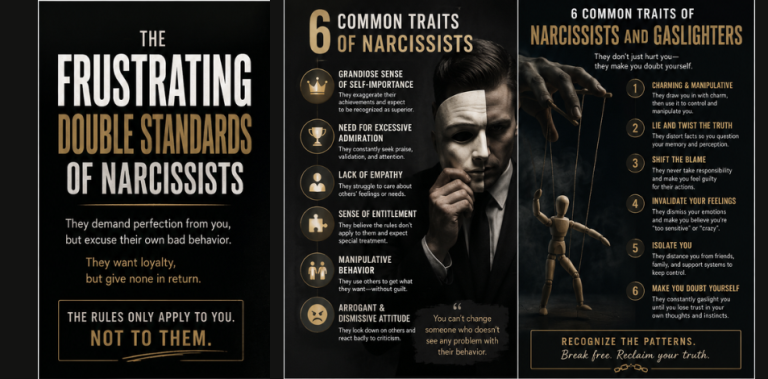
Because the narcissist is completely detached from their true self, they experience an inner death. In childhood, they were stripped of their humanity and left marginalized, never acknowledged for who they truly are. As a result, the child creates a false self that aims to drain the energy of others (narcissistic sustenance), and which must be more distinguished and superior to others (grandioseness).
This is well-known, of course. Grandioseness and addiction to narcissistic sustenance are the two fundamental pillars of the narcissistic false self. However, a sense of being alive and being recognized are only two of the many genuine human needs. To better understand the false self, we need to examine all its potential deep wounds and the resulting compensation strategies.
Using the A and B personality disorder maps, we can illustrate the various forms a false self can take:
Hysterical: Feeling rejected, the hysterical person seeks to be desired by everyone at all times, behaving in seductive and sexualized ways to gain their favor.
Psychopathic: Feeling constantly humiliated and disrespected, the psychopath aims to regain control and develop a quasi-divine status. They achieve this by manipulating and punishing others to subdue them, no matter the cost.
Borderline: Drowning in a sea of emotional turmoil without support, the borderline person feigns innocence and a need for help, searching for a savior, emotional support, or a “close friend.”
Paranoic: Having experienced constant betrayal and deception, the paranoid person remains in a state of extreme alert, never trusting the world and constantly monitoring it for threats in the hope of feeling safe.
Schizophrenic: Schizophrenic disorder results from exposure to intimidation and exhaustion. When negative emotions destabilize a child to the point of collapse, they disconnect from the world and cease to interact with it mentally. A person with schizophrenia then sees the world through a “psychological window.” It’s a sense of security akin to “burying an ostrich in the sand.”
The Hijacked Ego
At its core, the false self is a desperate last-ditch effort to bolster the fractured true self. By hijacking and replacing the ego, the false self deceives the world to satisfy its illicit and insatiable needs. The false self is detached from reality while wearing a mask of normalcy. It is often the only safeguard preventing a person from succumbing to madness and self-destruction.
If someone chronically feels unlovable, they may never seek love or connection. A torrent of betrayal and humiliation can drown them in soul-crushing shame. Emotional turmoil clouds your mind and plunges you into a psychological spiral and madness. Losing control over your sense of security is unacceptable, even terrifying. When your nervous system is exhausted, the inability to disconnect from reality is a death sentence. The false self is the simplest form of survival in such stressful situations.
Therefore, instead of associating the false self solely with narcissists, we should view it as a more complex entity with complex capabilities. Confusing the false self with the authentic self is like questioning what is real and what is not—the line between them is often blurred.
Imagine the authentic self as a flower in its advanced stages of bloom. When it is broken and traumatized, its natural flowering process is disrupted. Its leaves and roots wither and scatter. Choose not to accept this fate, and imagine this flower still trying to bloom. The result is a tangled web of leaves, roots, stems, and flowers, radically different from the “normal” entity.
This is the meaning of the false self. A person suffering from psychological trauma—whether narcissistic, hysterical, psychopathic, borderline personality disorder, schizophrenic, paranoid, or a combination thereof—is like a withered flower that nevertheless dares to bloom again—often in defiance of reality. This person takes shortcuts toward “normality,” leaving behind a trail of manipulation, confusion, and pain.
The fundamental difference from the plant analogy is that the false self often appears fully formed and “normal.” It achieves this feat through imagination. When you meet someone with a false self, you sense that something is amiss. Many notice the inconsistencies and move on. Others are drawn into the false self’s imaginary “world,” captivated by the illusion.
The deeper you get to know someone, the more their false self is revealed. Little by little, you uncover more evidence of how this person defies reality in every aspect of their life. This is true of all forms of false self. While the needs, wounds, and manipulations vary, they are all rooted in trauma. After being deceived by such a distortion of reality, you are left in a state of inner turmoil and distress. It takes many months to get back on track and for your inner self to bloom again.