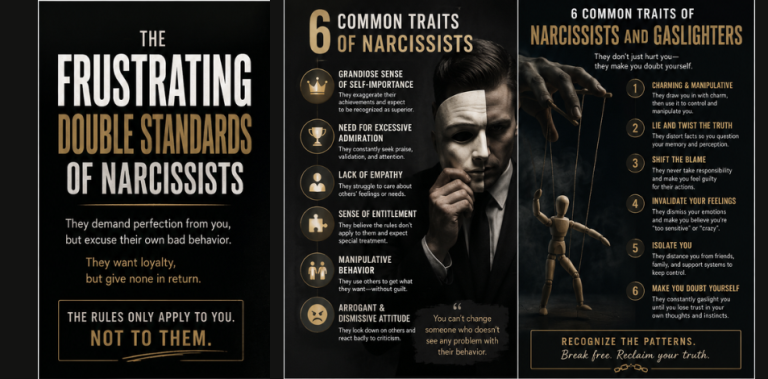

The narcissist primes their victim to admit weakness. They pounce on any admission of inadequacy, stammering, or even waking up later than them. Conversely, when the victim boasts or achieves something significant, the narcissist belittles it. And when the victim feels ashamed and acknowledges their weakness, the narcissist revels in and reinforces it.
This is how the narcissist manipulates the concept of shame/grandeur, a concept akin to a psychological lens that influences our perception of the world.
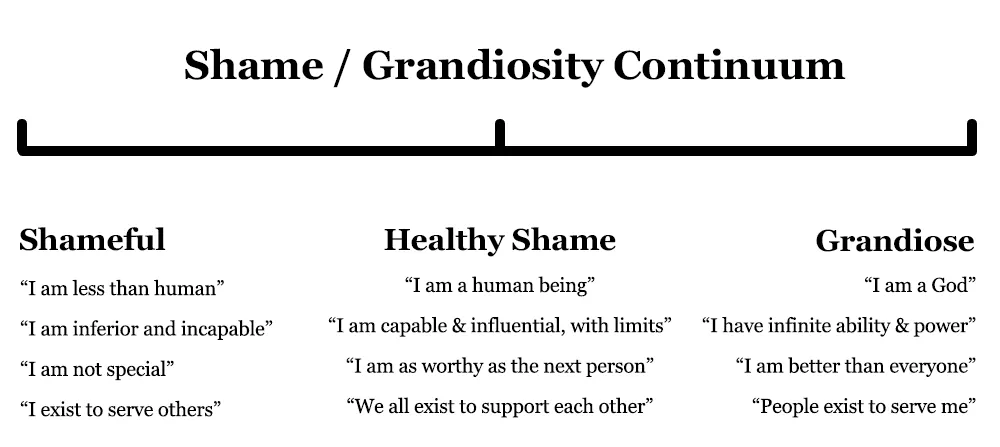
When we meet someone, they may exhibit a range of behaviors that suggest high status, such as posture, clothing, profession, self-control, or the way they treat us. Someone else might tell us that this person is famous or talented in a particular field. As a result, we may categorize them as “better” than us. This is commonly referred to as the “halo effect.”
If someone belittles themselves in our presence or clearly appears insecure, we may begin to see ourselves as “better” than them. This is a fundamental function of the ego, used to help the mind determine who is of higher status and, consequently, how beneficial or detrimental they are to our survival or reputation.
A narcissist places undue importance on this metric. They categorize everyone they meet based on two criteria:
- Are they of higher or lower status?
- Can they offer me something?
A narcissist’s treatment of others depends entirely on how they perceive the person, based on the criteria mentioned above:
Lower status, offering something: The narcissist strives to keep this person as low as possible, drawing their narcissistic energy from them. When the lower status person cuts off their supply, the narcissist uses anger, charm, complete silence, guilt, or shame to re-engage.
Related : How Narcissists Always Manage To Land On Their Feet
Lower status, offering nothing: This is obvious. The narcissist will ignore or abandon this person immediately. The lower status person may fluctuate between being useful and useless, especially if they are merely an acquaintance, knowing that important partners are not immune to being abandoned either.
Higher status, offering something: This may be useful. The narcissist may try to belittle the other person by humiliating them, but if this person has strong personal boundaries and cannot be manipulated, the narcissist will try to appease and gain their favor in the hope of gaining status, attention, or resources. This is often observed in corporations, where a malicious, manipulative, and narcissistic manager suddenly transforms into a calm and cooperative individual in the presence of a higher-ranking executive.
Higher status offers nothing: this is the worst possible scenario. The narcissist will feel envy and contempt for this person from afar.
Anyone who unconsciously adopts this pattern in their life is susceptible to becoming a victim of narcissism or capable of perpetrating narcissistic abuse—including narcissists themselves. This “better than”/”less than” logic is an unconscious ego trap that we can all fall into.
When we perceive someone as superior and believe they have something to offer us, we fall prey to their whims and become vulnerable to their manipulation. Similarly, if we encounter someone we perceive as inferior, we may unconsciously mimic the behavior of other narcissists, shamelessly belittling or attempting to control them, simply to bolster our own ego.
Viewing others as superior or inferior is a recipe for failure. We cannot shut down our ego functions, but we can control our actions. We should never sacrifice our dignity to please someone we perceive as superior. It is equally important not to humiliate those who perceive themselves as inferior.
In any relationship, the key lies in a shared sense of humility—finding common ground to reflect on the same situation on the spectrum of humility and superiority. This allows us to connect with others based on shared experiences and mutual growth, which is far more meaningful and fulfilling than the narcissistic approach.