Dealing with toxic or narcissistic people can slowly drain your confidence, energy, and sense of peace. Sometimes the hardest part isn’t recognizing that someone’s behavior is unhealthy, it’s learning how to protect yourself without constantly feeling guilty for doing so.
The good news is that protecting yourself doesn’t require becoming cold or cruel. It means learning where your responsibility ends and someone else’s begins.
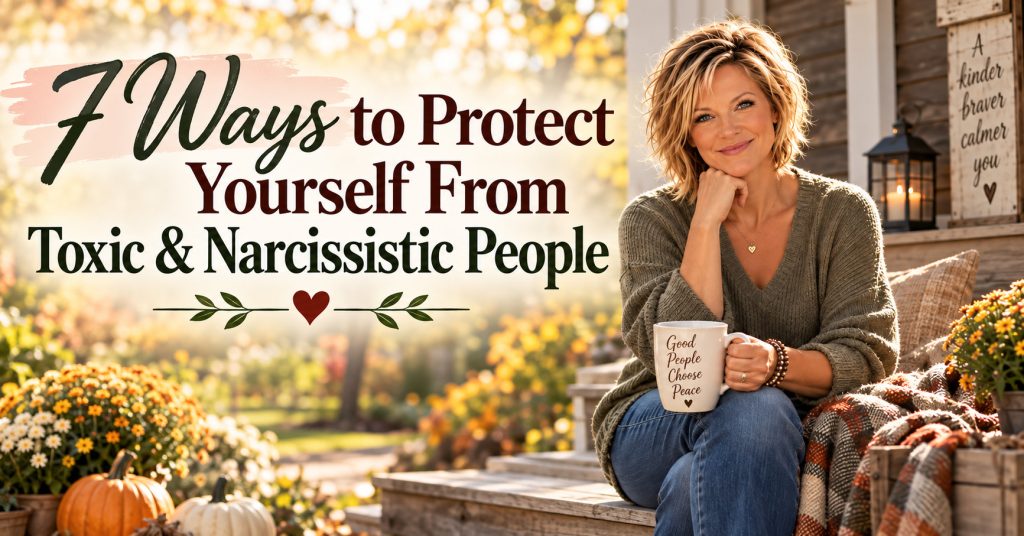
Here are 7 practical ways to protect yourself from toxic and narcissistic people.
1. Set Firm Boundaries
Boundaries are not punishments. They are limits that communicate what you will and won’t accept.
If someone repeatedly insults you, invades your privacy, manipulates you, or ignores your needs, you have the right to establish a boundary.
For example:
“I’m willing to discuss this, but I’m not going to continue the conversation if you insult me.”
The important part is following through. A boundary without action often becomes just a request that the other person can continue ignoring.
Related : Why Narcissists Target Kind-Hearted People
2. Build a Strong Support System
Toxic relationships can become isolating. Over time, you may start questioning your own memories, feelings, and judgment.
That’s why having trusted people around you matters.
Stay connected with friends, family members, support groups, or a qualified therapist who can provide a healthy outside perspective. You don’t have to explain everything perfectly. Sometimes simply having someone who listens without judging can make a huge difference.
3. Don’t Take the Bait
Some unhealthy interactions are designed to pull you into endless arguments.
A provocative comment can make you feel like you have to defend yourself. Then the conversation turns into accusations, blame, and another exhausting conflict.
You don’t have to respond to every accusation.
Sometimes the most powerful response is a calm:
“I’m not going to argue about this.”
Protecting your peace means recognizing when a conversation isn’t actually a conversation.
4. Remember That Their Behavior Isn’t Your Responsibility
Someone else’s anger, criticism, jealousy, or need for control doesn’t automatically mean you did something wrong.
People may blame you for things you didn’t cause or expect you to constantly prove your loyalty.
Take a step back and ask yourself:
“What am I actually responsible for here?”
You are responsible for your choices, your words, and your actions. You are not responsible for managing another adult’s emotions every minute of the day.
Related : Narcissistic Blame-Shifting: Why Everything Becomes Your Fault
5. Trust Yourself
One of the most damaging effects of manipulation is beginning to doubt your own perception.
You may find yourself thinking:
“Maybe I’m overreacting.”
“Maybe it really was my fault.”
“Maybe I’m remembering it incorrectly.”
When this happens repeatedly, it can become difficult to trust your own judgment.
Keep track of important conversations or events if that helps you maintain clarity. More importantly, pay attention to patterns rather than isolated moments.
Your feelings deserve to be taken seriously.
6. Use Your Voice
You have the right to express discomfort, ask questions, say no, and expect basic respect.
Speaking up doesn’t mean starting a fight.
It can be as simple as:
“That doesn’t work for me.”
“I don’t appreciate being spoken to that way.”
“I need some space right now.”
Healthy relationships should leave room for both people to communicate their needs.
7. Limit or Remove Access When Necessary
Sometimes boundaries aren’t enough because the same behavior continues without accountability.
In those situations, creating distance may be necessary.
That could mean reducing contact, limiting what personal information you share, changing how you communicate, or, when appropriate and safe, ending the relationship altogether.
Distance isn’t always revenge.
Sometimes distance is the boundary.
Protecting Your Peace Isn’t Cruel
One of the biggest lessons when dealing with toxic people is that you don’t have to sacrifice your emotional well-being just to prove that you’re a good person.
You can care about someone and still have boundaries.
You can forgive someone and still keep your distance.
You can love someone and recognize that their behavior is unhealthy for you.
And you can choose peace without feeling guilty about it.
Protecting yourself from toxic and narcissistic people isn’t about winning a battle. It’s about refusing to lose yourself in one.