Dealing with difficult people in your daily life isn’t easy. But psychology teaches us how to handle tough individuals.
Let’s face it, there’s no escaping difficult people. They’re everywhere, and they complain about almost everything. And if they’re not complaining, they’re either sulking or withdrawn. I’ve been difficult myself, many times, and others found me hard to deal with. I understand.
How to Deal with Difficult People?
There are many types of difficult people. There’s the complainer, as I mentioned earlier, the one who insists they’re always right, and the gossipmonger.
Related : 7 Signs of Trauma Triggers and How to Deal with Them
But imagine, there are many other types of difficult people too. Do you want to know how to deal with them? Well, we’ll use psychology to help you. You’ll learn effective communication skills, techniques, and methods to reach the difficult people in your life.
- Will They Talk?
Before dealing with difficult people, you first need to determine if they’re willing to talk. It’s best to understand why they’re acting negatively toward you or others.
You might find that some people simply don’t care and want to continue gossiping and mistreating others. But others are acting difficult simply because there’s a problem. So, try to find out if they’re willing to talk first.
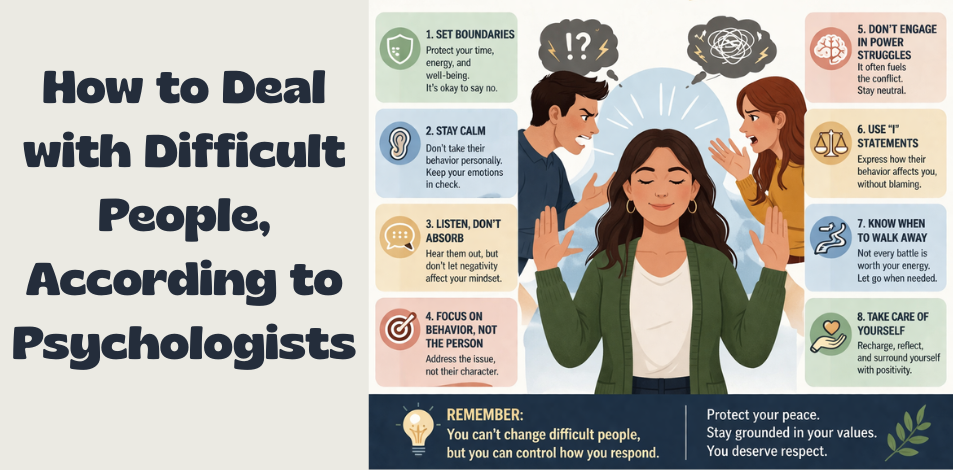
- Try to stay calm.
If someone is difficult, especially with you, it can be hard to stay calm. This person might be trying to make you angry or upset. Don’t react.
According to Dr. Barbara Marcoy, the best approach is to do your best to remain calm, remembering that what’s bothering this person is often not about you personally. Count to ten, take deep breaths, or do whatever helps you stay composed.
- Deal with them privately.
The first thing you should do when dealing with difficult people is to meet with them privately. Trying to discuss the problem in front of others will likely trigger defensive reactions.
However, talking won’t change their thinking; it will only remind them of their actions and reactions. Difficult people need to want to change on their own. This is just the first step.
- Don’t judge.
This difficult person, whoever they may be, might tell you something controversial. Please refrain from judging what they did or saw.
From one perspective, it might be easy to judge a different viewpoint, but neutrality is key. Listen carefully and try to understand what they’re saying.
- Be patient.
The truth is, these people don’t change overnight. Often, difficult people are this way their whole lives.
There are many reasons why they adopt a bitter attitude, and this bitterness is usually deeply rooted. But with patience, you can break down the hard shell that’s blocking them out of the world.
- Connect with them with kindness.
This might sound lenient, but you’re not. Difficult people are overwhelmed by the world and are used to pessimism and negativity.
Related : 10 Subtle Signs Your Mental Health Is Declining – Don’t Ignore Them!
They need kindness to understand that they can take a break from complaining and whining. Be open-minded during the conversation, ask questions to clarify things, and definitely make eye contact so they know you genuinely care.
- Offer help
If someone is clearly distressed by a problem, offer your assistance. As long as the problem isn’t completely ignored, you may be able to understand the root cause of their distress.
When you have the chance to talk to them, ask if they’ve taken any action to resolve their problem. If not, help them develop a plan. Then offer to help them implement it.
- Tackle One Problem at a Time
If you’re learning how to deal with a difficult person, you might feel hesitant. That’s okay. You’ll soon be able to help them after following the other steps.
However, when it comes to solving problems, don’t try to help them with all their problems at once. That’s not in anyone’s best interest. Start with one step at a time with your friend or family member and help them find their own solution to get out of the difficult situation.
- Set Boundaries
This is the part I hate the most. It’s when the difficult person doesn’t even try to change or talk about things. Instead, they continue to speak ill of you and others, and may resort to complete ignoring you.
When this happens, you have no choice but to set clear boundaries. Don’t cut them off completely, but be firm about what you will and will not tolerate. Your mental well-being is paramount.
The best approach to dealing with difficult people
Whatever your decision, make sure it’s the right one. Learning how to deal with difficult people teaches you how to handle many other problems, including friends and family members with personality disorders.
You can handle them too. Just remember to stay calm and do your best. Even if the difficult people are family members, there’s not much you can do.
Good luck.