People who appear overly self-confident or excessively self-absorbed are often called narcissists. Narcissism is a thought and behavior pattern that includes several negative elements, such as:
- Excessive self-confidence
- Self-obsession
- Excessive self-love
- Vanity
- Self-absorption
- Egocentrism
- Arrogance
- Egocentrism
While narcissism is a serious psychological problem in adults, it is perfectly normal in children and is even a necessary part of their development. Narcissistic adults may not seem childish because they are confident, emotionally independent, secure, and self-sufficient. However, the truth is that narcissistic adults are actually “stuck” in a childlike state. Unfortunately, no matter how much psychotherapy a narcissist undergoes, they are unlikely to achieve maturity in their self-esteem using traditional treatment methods.
However, the prognosis for a narcissist is not entirely bleak. In fact, I am here to tell you about a program that can help narcissistic adults overcome their narcissism and become truly mature, emotionally secure, and independent adults.
Throughout my years of study and practice, I’ve encountered many individuals who suffer from precisely this problem. They are trapped in a state of helplessness and paralysis. I say “helplessness” because the narcissist, despite outwardly displaying signs of high self-confidence and competence, is in reality almost incapable of acting like a mature adult. Narcissists are stuck in a childlike state. Imagine a five-year-old. The child may be very confident, but incapable of handling adult responsibilities. The same is true for the narcissist who hasn’t outgrown childhood.
Related : 17 Signs You’re in a Narcissistic Marriage or Relationship
In fact, narcissists live in what I call a “childhood trance.” In other words, they feel and believe they are emotionally like a young child. Imagine being in a hypnotic state where you think and act as if you were five years old. Now imagine that this state never ends, and that you behave this way in your relationships, your work, and even during your leisure time at home or in public. This has serious consequences for your life, as you can imagine.
Through years of experience, I’ve come to the conclusion that narcissists live in a kind of coma, believing they are still five years old. This negatively impacts their lives, as expected. But there’s another crucial implication: all they need to do to break free from this harmful coma is wake up. That’s all!
A narcissist possesses a fully formed, mature, authentic self within them, but it’s detached from their conscious awareness. In other words, the mature “authentic self” is suppressed, while an immature, intrusive self takes over, leaving the person feeling childish and dependent on others.
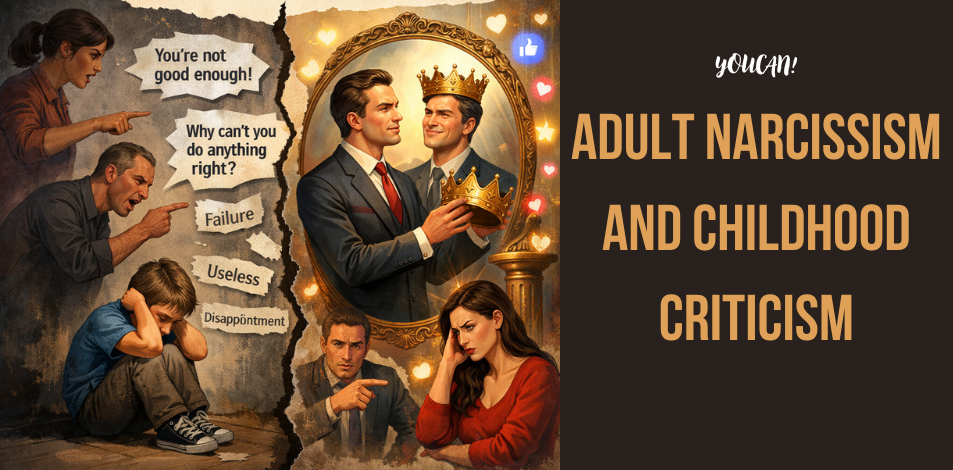
How does this “transformation” occur? At a young age, children are forced to adapt to unfavorable social conditions, often in the form of criticism.
A child who is constantly criticized believes that they are:
Incompetent
Ineffective
Lack of self-confidence
Unable to interact with the world.
These beliefs, in turn, lead the individual to feel:
Inadequate
Deadly loneliness
Incompetence
Worthlessness
Emptiness. These beliefs and feelings are extremely painful and even threatening to the person experiencing them. To cope with these painful feelings, the child develops narcissism as a defense mechanism. The problem is that narcissistic tendencies render the person ineffective and prevent them from developing emotionally beyond the age at which they were hurt.
Related : 7 Vital Tips For Co-parenting With A Narcissist
To awaken a narcissist from their stupor, negative memories must be erased and harmful emotions dispelled. Then, the individual begins to awaken and discover their true self. Even more significantly, they discover that this is the truth they have always been, but were previously unable to see.
After the narcissistic coma fades, the individual begins to feel like a competent and confident adult, possessing the following qualities:
Self-confidence
Security
Perfection
Completion
Peace
Balance
Emotional security
Maturity
Competence
Self-love and love for others
Empathy
Abilities
Strength
Resilience
And genuine self-attraction and appeal to others.