Have you ever been with someone who could make you feel like the most important person in the world one day, then treat you like you meant absolutely nothing the next?
Maybe they were charming, affectionate, and full of promises at the beginning. But over time, something changed. Your feelings were dismissed, your words were twisted, and somehow, every argument became your fault.
If this sounds familiar, you may have experienced some of the behaviors commonly associated with narcissistic traits.
Understanding the narcissist code isn’t about labeling everyone who hurts you as a narcissist. It’s about recognizing unhealthy patterns, understanding how they affect you, and learning how to protect your emotional well-being.
Because sometimes, the most confusing relationships aren’t the ones where someone treats you badly all the time. They’re the ones where someone treats you badly, then becomes so charming that you start questioning whether anything was wrong in the first place.
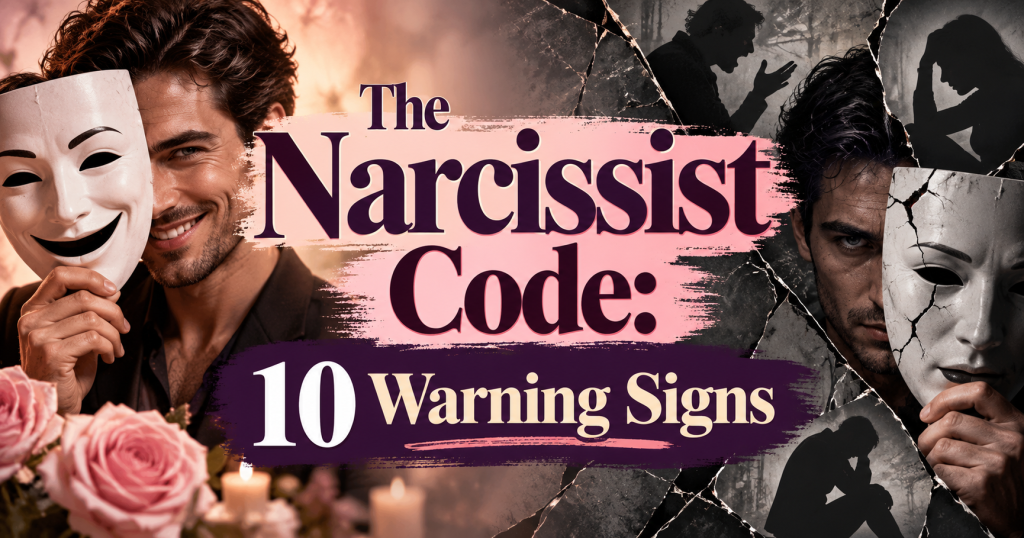
What Is the Narcissist Code?
The narcissist code is an informal way of describing recurring behaviors associated with narcissistic traits, such as entitlement, a strong need for admiration, difficulty accepting criticism, and a lack of consideration for other people’s feelings.
These behaviors can show up in romantic relationships, friendships, family dynamics, and even professional environments.
Related : Narcissists Seem Unshakable, But These 9 Things Terrify Them
However, not everyone who displays one or two of these traits has narcissistic personality disorder (NPD). Only a qualified mental health professional can diagnose that condition.
What matters in your everyday life is the pattern. Does this person repeatedly disrespect your boundaries, refuse to take responsibility, manipulate conversations, or make you feel guilty for having normal emotions?
One bad day doesn’t define a person. A repeated pattern of harmful behavior deserves attention.
1. They Disrespect You, Then Act Like You’re Too Sensitive
You tell them that something they said hurt your feelings. Instead of listening, they laugh, roll their eyes, or tell you that you need to grow thicker skin.
Suddenly, you’re no longer talking about what they did. You’re defending yourself for being hurt.
This is one of the most exhausting dynamics in an unhealthy relationship. Your feelings become a problem to solve rather than something worth understanding.
What healthy behavior looks like: Someone who respects you may disagree with your interpretation, but they can still listen, acknowledge the impact of their words, and try to repair the situation.
You shouldn’t have to prove that your feelings are valid before someone treats you with basic respect.
2. They Struggle to Show Genuine Empathy
Empathy means trying to understand another person’s feelings, even when you don’t completely agree with them.
Someone displaying strong narcissistic traits may struggle to do this consistently. They might expect comfort and support whenever they are upset, yet become impatient when you need the same care.
For example, when they’re having a bad day, you are expected to listen for hours. When you’re struggling, they check their phone, change the subject, or remind you that their problems are worse.
Over time, this imbalance can leave you feeling emotionally lonely even when you’re in a relationship.
A healthy relationship doesn’t require perfect empathy every second. It does require a willingness to listen, care, and make an effort to understand each other.
3. They Use Gaslighting to Make You Doubt Yourself
Gaslighting is a form of psychological manipulation that can make someone question their memory, perception, or understanding of events.
Imagine confronting your partner about a hurtful comment they made. They insist it never happened, accuse you of inventing things, or repeatedly tell you that you’re imagining the problem.
When this happens over and over, you may start wondering whether you can trust your own judgment.
You might even begin collecting screenshots, replaying conversations, or asking other people whether you’re remembering things correctly.
The important distinction is that ordinary disagreements about memories aren’t automatically gaslighting. The concern is a repeated pattern of denying, distorting, or manipulating events to undermine your confidence in your own reality.
Remember: You don’t need to win every argument about the past to establish a boundary in the present.
4. They Turn Every Conflict Into a Battle for Control
Have you noticed that certain people can never simply disagree?
They must have the final word. They decide what you should wear, who you should see, how you should spend your time, or which opinions you’re allowed to express.
Sometimes the control is obvious. Other times, it appears through guilt, silent treatment, intimidation, or emotional pressure.
You might begin changing your plans just to avoid another argument.
Little by little, your world becomes smaller because keeping the peace feels easier than standing up for yourself.
Related : Why You Should Be Careful Trusting a Narcissist’s Family
A relationship should leave room for two independent people. You can compromise without surrendering your identity, friendships, privacy, or freedom.
5. They Can Be Charming Until They Don’t Get Their Way
This is one of the most confusing aspects of a potentially toxic relationship.
The person who ignored your feelings yesterday may surprise you with affection today. They may become funny, attentive, generous, and incredibly persuasive when they want something from you.
You begin thinking, “Maybe I misunderstood them. Maybe things are finally changing.”
Then you disagree with them, say no, or establish a boundary, and the warmth disappears.
Not every change in mood is manipulation. People have difficult days, and genuine relationships naturally experience ups and downs. The warning sign is when affection and respect repeatedly seem conditional on your compliance.
Pay attention to how someone treats you when you disagree with them, not just how they treat you when everything goes their way.
That is often when the quality of a relationship becomes much clearer.
6. They Refuse to Take Responsibility
In a healthy relationship, both people make mistakes. What matters is whether they can acknowledge those mistakes and make an effort to change.
But someone with strong narcissistic traits may respond to criticism by blaming others, making excuses, denying what happened, or turning themselves into the injured party.
You might hear statements like:
- “You made me do it.”
- “You’re the reason I reacted that way.”
- “You always make me look like the bad person.”
- “What about all the things you’ve done to me?”
Suddenly, the conversation has moved away from their behavior and onto your supposed shortcomings.
This can leave you apologizing just to end the argument, even when you originally raised a legitimate concern.
Remember that an explanation is not the same as accountability. Someone can explain why they were upset without making you responsible for their harmful choices.
7. They Use Anger or Intimidation When They Feel Challenged
Some people respond to criticism with disproportionate anger, hostility, insults, or intimidation.
You may find yourself carefully choosing your words, rehearsing conversations in your head, or avoiding certain subjects because you’re afraid of their reaction.
This is often described as walking on eggshells.
Over time, you may become so focused on preventing their anger that you stop expressing your own needs.
It’s important to understand that anger itself isn’t proof of narcissism. Everyone experiences anger. The issue is how someone handles it and whether they use it to frighten, silence, punish, or control you.
You deserve to raise concerns without fearing retaliation.
If anger escalates into threats, physical intimidation, or violence, prioritize your safety and seek support from someone you trust or a local support service.
8. They Disregard Your Boundaries
You say no, but they keep pushing.
You ask for privacy, but they demand access to your messages. You explain that you need time alone, but they accuse you of being selfish or uncaring.
A boundary is not an attempt to control another person. It is a statement about what you will accept and what you will do to protect your well-being.
For example:
“I’m willing to discuss this, but I won’t continue the conversation while I’m being insulted.”
Someone who respects you may feel disappointed by your boundary, but they should not need to punish you for having one.
And here’s something worth remembering: you don’t need another person’s permission to protect your peace.
9. They Lie, Distort the Truth, or Hide Important Information
Trust is built through honesty, consistency, and accountability.
When someone repeatedly lies, changes their story, conceals important information, or denies things you have clear evidence of, it becomes difficult to feel secure in the relationship.
You may start questioning everything they say. Even simple conversations can become emotionally exhausting because you no longer know which version of the story to believe.
Not every mistake or omission is deliberate manipulation. What matters is whether dishonesty becomes a recurring pattern and whether the person makes a genuine effort to rebuild trust.
Related : Trauma from a Narcissist: Why You Should Stop Blaming Yourself
You cannot create a secure relationship with someone who continually undermines the foundation it depends on.
10. They Leave You Feeling Responsible for Their Emotions
You become their emotional caretaker.
If they’re unhappy, you feel guilty. If they’re angry, you try to fix it. If they withdraw affection, you search for what you did wrong.
Eventually, you may believe that keeping the relationship stable is entirely your responsibility.
But here’s the truth: you can care about someone’s feelings without becoming responsible for managing every emotion they experience.
You can be compassionate without accepting blame for their choices. You can love someone without sacrificing your own emotional health to keep them comfortable.
A relationship requires mutual effort. It cannot depend on one person constantly apologizing, adjusting, and making themselves smaller.
Why Can Narcissistic Behavior Be So Confusing?
One reason these relationships can be difficult to understand is that harmful behavior may exist alongside genuinely enjoyable moments.
The person may be affectionate, funny, generous, or supportive at certain times. Those positive experiences can make it harder to accept that other parts of the relationship are damaging.
In some relationships, periods of hurtful behavior alternate with apologies, affection, or promises to change. This unpredictability can strengthen emotional attachment and make it difficult to step away.
You may find yourself waiting for the loving version of the person to return.
You remember the beautiful beginning and hope it represents who they really are. You focus on their potential rather than the behavior you’re experiencing today.
But a relationship cannot be evaluated by its best moments alone.
Look at the overall pattern. Are your boundaries respected? Can you disagree safely? Do apologies lead to lasting changes? Are both people allowed to have needs?
These questions often tell you more than trying to figure out what someone is thinking.
How to Protect Yourself From Narcissistic Behavior
You don’t have to diagnose someone to decide that their behavior is hurting you.
Here are practical steps that can help you regain clarity and protect your emotional well-being.
1. Trust Patterns More Than Promises
Promises can sound convincing, especially after a painful argument.
Instead of relying only on what someone says, observe what changes over time. Genuine accountability involves consistent effort, not simply saying the right words when a relationship is at risk.
2. Set Clear, Realistic Boundaries
Decide which behaviors you will no longer accept.
Communicate your boundaries calmly when it is safe to do so. You don’t have to explain yourself endlessly or persuade someone that your limits are reasonable.
3. Stop Trying to Win Every Argument
Some conflicts cannot be resolved through better explanations because the other person may not be willing to engage constructively.
You can state your position, end an unproductive conversation, and choose not to participate in endless cycles of blame.
Protecting your energy is not the same as admitting defeat.
4. Reconnect With People You Trust
Unhealthy relationships can leave you isolated and uncertain about your judgment.
Talking with a trusted friend, family member, or qualified therapist can help you gain perspective and feel less alone.
You don’t need to handle everything by yourself.
5. Consider Professional Support
A therapist can help you understand the impact of a difficult relationship, rebuild self-confidence, and develop strategies for healthier boundaries.
If you feel unsafe or controlled, seek support that takes your circumstances seriously and helps you plan for your safety.
Can a Narcissist Change?
People can change harmful behavior, but meaningful change usually requires self-awareness, accountability, sustained effort, and a willingness to seek appropriate help.
You cannot force someone to develop empathy, take responsibility, or respect your boundaries.
You also cannot measure change by a single apology, a few good days, or a sudden burst of affection.
Look for consistent behavior over time. Does the person acknowledge harm without immediately blaming you? Do they respect your boundaries even when they dislike them? Do they make an effort to change without demanding instant forgiveness?
You are allowed to hope someone improves while also protecting yourself from the possibility that they may not.
You do not have to put your life on hold while waiting for another person to change.
Final Thoughts: Understanding the Narcissist Code Starts With You
The most important part of understanding the narcissist code isn’t learning how to spot every possible red flag in another person.
It’s learning to recognize what happens to you when a relationship repeatedly leaves you feeling confused, disrespected, anxious, or emotionally exhausted.
You don’t need to prove that someone is a narcissist before you can decide that a relationship is unhealthy for you.
You don’t need to become more patient, more forgiving, or more understanding to earn basic respect.
And you don’t have to keep explaining your pain to someone who repeatedly refuses to take it seriously.
Healthy love isn’t perfect. People disagree, make mistakes, and sometimes hurt each other unintentionally. But healthy relationships make room for honest conversations, mutual respect, accountability, and repair.
You can love someone and still choose not to accept the way they treat you.
Sometimes healing begins when you stop asking, “How can I make this person understand my worth?” and start asking, “Why am I staying somewhere I constantly have to prove it?”
Your feelings matter. Your boundaries matter. And your peace matters, too.