Have you ever watched someone act like nothing can hurt them? They always have an answer, never admit they’re wrong, and somehow manage to make every situation about themselves. They may appear confident, powerful, and completely untouchable.
But sometimes, what looks like unshakable confidence is actually a carefully protected image.
People with strong narcissistic traits may be especially sensitive to criticism, rejection, losing control, or anything that challenges the way they see themselves. They might hide that discomfort behind anger, arrogance, blame, or silence.
The truth is, you don’t need to defeat someone like this to protect yourself. Understanding what threatens their sense of control can help you recognize unhealthy relationship patterns and stop getting pulled into them.
Related : Why You Should Be Careful Trusting a Narcissist’s Family
Here are nine things that may unsettle a person with strong narcissistic traits more than you realize.
1. Losing Control Over You
One of the biggest challenges for a controlling person is realizing that they can no longer influence your decisions.
Maybe you used to explain yourself every time they became upset. Maybe you changed your plans to avoid an argument or constantly tried to prove that you cared.
Then something changed. You started making decisions without asking for permission. You stopped treating every disagreement like a personal emergency.
For someone who relies on controlling others, that shift can feel deeply threatening.
Your independence is not disrespect. You are allowed to make choices, have boundaries, and live your life without constantly managing another person’s emotions.
2. Being Exposed for Who They Really Are
Some people work extremely hard to maintain an image of being generous, successful, charming, or morally superior. They want others to see the version of themselves they carefully present to the world.
When their private behavior contradicts that image, they may become defensive.
For example, someone who presents themselves as the perfect partner might struggle when their repeated lies, broken promises, or hurtful behavior become visible to others.
They may deny what happened, minimize the damage, blame you, or accuse you of trying to ruin their reputation.
Not every person who fears embarrassment is narcissistic. However, repeatedly avoiding accountability while focusing entirely on their image can be a warning sign.
3. Your Ability to Say No
A simple word can reveal a lot about a relationship.
When you say no, does the other person respect your decision? Or do they punish you with silence, guilt, insults, or endless arguments until you give in?
People with strong narcissistic traits may interpret boundaries as rejection or a challenge to their authority. Instead of accepting your answer, they might try to make you feel selfish for having limits.
But remember this: a boundary is not an attack.
You don’t need to write a five-page explanation for why you cannot do something. A calm, clear answer is enough.
“No, that doesn’t work for me.”
The right to say no belongs to you, even when someone else dislikes hearing it.
4. Your Emotional Independence
Imagine someone who used to be able to ruin your entire day with one insult or one cold message. They knew exactly which words would make you panic, apologize, or chase their approval.
Now imagine that you recognize the pattern. You no longer rush to defend yourself against every accusation. You take time to think before responding, and you stop measuring your worth by their opinion.
That change can disrupt an unhealthy dynamic.
Emotional independence doesn’t mean becoming cold or pretending nothing hurts. It means learning that another person’s mood does not have to control your entire life.
Related : Trauma from a Narcissist: Why You Should Stop Blaming Yourself
You can care about someone without accepting their mistreatment. You can feel hurt without begging them to acknowledge it. And you can love someone while recognizing that the relationship isn’t healthy for you.
5. Being Ignored When They’re Trying to Provoke You
Some unhealthy relationship patterns revolve around provoking a reaction. A person may make insulting comments, start unnecessary arguments, or bring up painful subjects to pull you into an emotional confrontation.
When every provocation leads to a long argument, the cycle can continue indefinitely.
Responding calmly or choosing not to participate may interrupt that pattern.
However, this isn’t about using silence to punish someone or playing psychological games. It’s about refusing to participate in conversations that have become abusive, manipulative, or pointless.
You can say, “I’m willing to discuss this respectfully, but I’m not continuing while we’re insulting each other.”
Then follow through.
If you need to communicate for practical reasons, especially when children or shared responsibilities are involved, brief and factual communication may be more useful than complete silence.
6. Your Success Without Their Approval
Have you ever noticed how some people seem supportive of you until you begin doing well?
Your confidence grows. You make new friends. Your work improves. You start building a life that doesn’t revolve around the relationship.
Instead of celebrating your progress, someone might dismiss your achievements, make sarcastic remarks, change the subject, or find a way to make your success about them.
For a person whose self-worth depends heavily on comparison or superiority, another person’s success may feel uncomfortable.
But don’t shrink yourself to keep someone else comfortable.
You are allowed to succeed. You are allowed to be happy. You are allowed to enjoy your achievements without apologizing for them.
Never make yourself smaller just to preserve someone else’s ego.
7. Losing Access to Your Attention
Attention can become a powerful part of an unhealthy relationship. Some people seek constant reassurance, admiration, or emotional reactions from the people around them.
If you are always available to answer their calls, defend yourself against accusations, or reassure them after every conflict, your attention can become part of the relationship’s power dynamic.
When you start investing in your own interests, friendships, work, and peace of mind, that dynamic may change.
They might suddenly become unusually affectionate, create a crisis, or accuse you of no longer caring. In some relationships, these behaviors can be attempts to pull a partner back into an old pattern.
Of course, wanting attention is not automatically narcissistic. The important question is whether the person respects your needs and independence or repeatedly makes you feel guilty for having a life of your own.
You don’t owe anyone unlimited access to your time and energy.
8. Being Held Accountable
For a healthy relationship to work, both people need to be capable of acknowledging mistakes.
That doesn’t mean agreeing on every detail or accepting every accusation. It means being willing to listen, consider another perspective, and take responsibility for your own behavior.
But someone who relies on always being right may find accountability extremely uncomfortable.
A conversation about their behavior might suddenly become a discussion about your flaws. An apology may turn into a list of things you supposedly did wrong. A straightforward question may lead to denial or an argument about your tone.
This can leave you feeling confused, exhausted, and unsure whether the original problem was ever addressed.
Pay attention to whether the same harmful behavior keeps happening despite repeated promises to change.
Real accountability involves more than saying the right words. It requires consistent changes in behavior.
9. Realizing You Can Walk Away
Perhaps the most significant shift happens when you understand that you do not have to remain in a relationship that repeatedly harms you.
For a controlling partner, the possibility of losing the relationship may feel threatening, especially if they have become accustomed to having influence over your choices.
Some people respond to the possibility of separation with genuine reflection and meaningful change. Others may respond with blame, sudden promises, guilt, anger, or attempts to regain control.
You cannot know someone’s intentions from one reaction alone. Look at the pattern over time.
And remember: leaving isn’t a competition. You don’t have to prove that you’re stronger, happier, or more successful than the person you’re leaving.
You only need to decide what is healthy and safe for you.
If you are dealing with threats, stalking, intimidation, or violence, prioritize your safety and seek support from trusted people or a local professional service before making changes that could increase the danger.
Related : Why Narcissists Try to Destroy You
The Real Power Is No Longer Needing to Win
It’s tempting to spend hours wondering what makes a narcissistic person angry, jealous, insecure, or afraid. When you’ve been hurt by someone, understanding their behavior can feel like a way to regain control.
But there is a point where analyzing them keeps you emotionally tied to the very relationship you’re trying to recover from.
You don’t need to expose them to everyone. You don’t need to make them regret losing you. You don’t need to become better at manipulation than the person who hurt you.
You need to reconnect with yourself.
Build your confidence. Maintain your friendships. Learn to recognize manipulation without doubting every interaction. Set boundaries you can maintain. And pay attention to how people treat you when they don’t get what they want.
The strongest response to an unhealthy relationship isn’t revenge. It’s building a life in which your peace, self-respect, and happiness no longer depend on someone else’s approval.
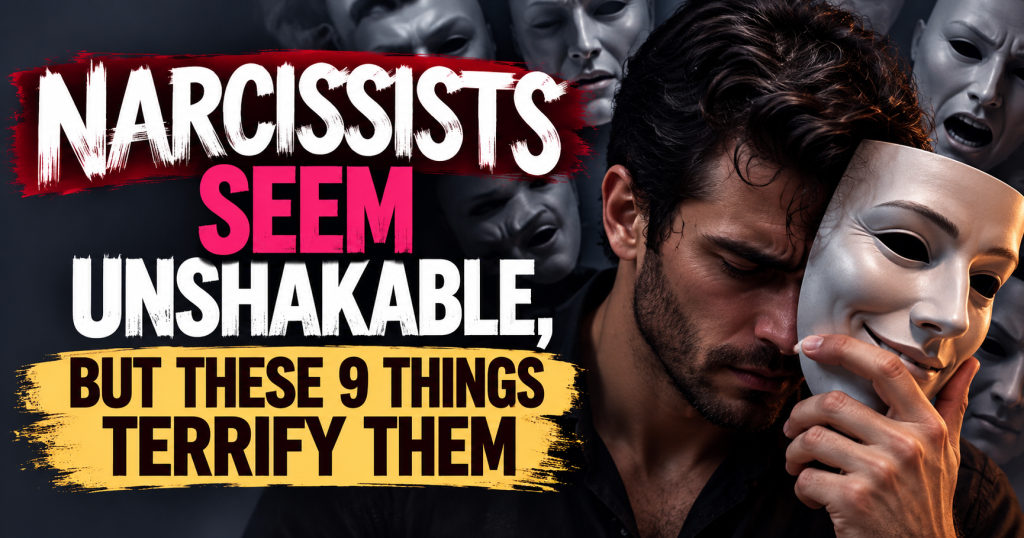
You don’t have to break their mask. You just have to stop letting it define what you believe about yourself.