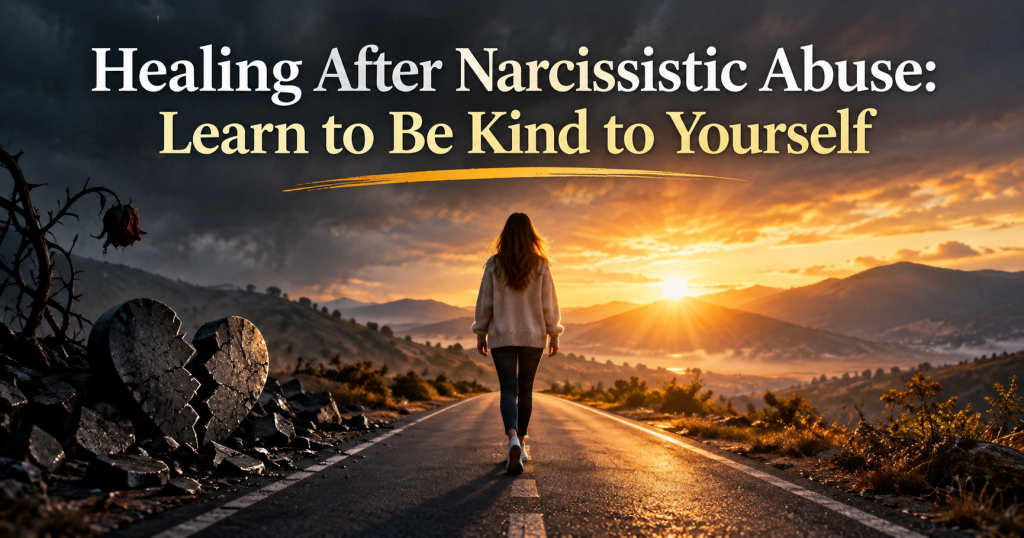
Surviving narcissistic abuse can change the way you see yourself, other people, and even the world around you. You may walk away from the relationship physically, but emotionally, it can take much longer to feel free.
You might question your memories, replay conversations in your head, or wonder why you stayed for so long. Some days, you may feel strong and hopeful. On other days, you might miss the person who hurt you or struggle to understand how things went so wrong.
If this sounds familiar, please remember one thing: you deserve patience, compassion, and time to heal.
The Hidden Pain of Narcissistic Abuse
Narcissistic abuse can involve manipulation, emotional invalidation, gaslighting, blame-shifting, and controlling behavior. Over time, these experiences can make someone doubt their judgment and lose confidence in their own decisions.
Perhaps you spent months or years trying to explain your feelings to someone who constantly dismissed them. Maybe you kept giving second chances because you remembered the good moments and hoped things would change.
Eventually, you may have started blaming yourself for problems you did not create.
The effects can linger even after the relationship ends. You might feel anxious around conflict, struggle to trust new people, or find yourself apologizing for things that are not your fault.
These reactions do not mean you are weak. They can be understandable responses to prolonged emotional stress.
Related : Protect Your Energy: Stop Attracting Emotionally Draining People
Why Healing Takes Time
One of the hardest parts of recovering from narcissistic abuse is accepting that leaving the relationship does not automatically end the emotional pain.
You may still miss the good memories. You may wonder whether the other person ever truly cared. You might even feel tempted to return, hoping that this time things will be different.
Mixed feelings are normal. You can miss someone and still recognize that the relationship was unhealthy. You can love the memories you shared without wanting to experience the same pain again.
Healing is rarely a straight line. Progress may look like setting a boundary you once found impossible, sleeping more peacefully, or finally realizing that you no longer need someone’s approval to feel worthy.
Give yourself permission to heal at your own pace.
Stop Blaming Yourself for What Happened
After emotional abuse, many survivors spend more time criticizing themselves than understanding what they experienced.
You might ask yourself:
- Why didn’t I recognize the warning signs earlier?
- Why did I keep forgiving them?
- Why did I believe their promises?
- Why didn’t I leave sooner?
But hindsight can make everything seem obvious. When you are emotionally invested in someone, you may hold on to their apologies, believe their promises, and hope the loving version of them will return.
That does not make you foolish. It makes you human.
Instead of judging your past self, try to understand the circumstances you were facing. Perhaps you were afraid, emotionally attached, financially dependent, or simply trying to save a relationship that mattered to you.
You made decisions with the understanding and resources you had at that time. You can learn from those experiences without punishing yourself for them.
Rebuild Your Self-Worth One Step at a Time
Narcissistic abuse can leave you feeling as though your needs, opinions, and emotions do not matter. Rebuilding your confidence means learning to trust yourself again.
Start with small, meaningful steps.
Listen to your feelings. You do not have to dismiss your discomfort just because someone else disagrees with you.
Set healthy boundaries. You are allowed to say no, take space, and walk away from conversations that become disrespectful.
Reconnect with yourself. Spend time doing things you enjoy, reconnect with supportive friends, and rediscover the interests you may have neglected.
Stop chasing validation. Your worth does not depend on whether someone understands you, chooses you, or admits they hurt you.
Seek support when needed. A trusted friend, support group, or qualified mental health professional can help you process your experiences and develop healthier coping strategies.
Every small step toward self-respect matters.
Learn to Protect Your Peace
As you recover, you may become more aware of behaviors you once overlooked. You might recognize patterns of manipulation sooner or feel less willing to tolerate disrespect.
This does not mean you need to become cold, suspicious, or emotionally distant from everyone.
It means learning to combine kindness with discernment.
You can be compassionate without accepting mistreatment. You can forgive someone without giving them access to your life again. You can wish someone well while choosing to keep your distance.
Healthy relationships should allow room for honesty, accountability, mutual respect, and emotional safety. You should not have to abandon yourself to keep someone else happy.
Protecting your peace is not selfish. It is part of building a life in which your needs matter, too.
Be Kind to Yourself on the Difficult Days
Some days, healing may feel effortless. On others, a song, a memory, or an unexpected reminder may bring back emotions you thought you had already overcome.
Do not use those moments as proof that you are failing.
Recovery is not about forgetting everything that happened or pretending that the pain never existed. It is about reaching a place where the past no longer controls your choices, your identity, or your sense of worth.
You do not need to have everything figured out today. You do not need to prove your strength to anyone. And you certainly do not need to rush your recovery to make other people comfortable.
Give yourself the same understanding you would offer a friend going through a difficult time.
You have been through something painful, and you are allowed to take the time you need to feel like yourself again.
Related : I’m an Empath, Not an Idiot: Kindness Is Not Weakness
Final Thoughts: Your Past Does Not Define You
If you have survived narcissistic abuse, remember that what happened to you does not determine who you are or what your future relationships must look like.
You can rebuild your confidence. You can learn to trust your judgment again. You can create relationships that feel safe, respectful, and genuine.
Most importantly, you can stop treating yourself as though you were responsible for someone else’s harmful behavior.
You do not have to be strong every moment. You do not have to heal overnight. You only have to keep taking steps toward a healthier, more peaceful life.
Be proud of how far you have come, be patient with where you are, and be kind to the person who had to survive it all: you.