
Being in a relationship with a narcissistic person can slowly change the way you see yourself, your needs, and even your idea of love. From the outside, people may wonder, “Why don’t they just leave?” But emotional relationships are rarely that simple.
People can remain in unhealthy relationships for many different reasons. Sometimes it is fear. Sometimes it is emotional attachment. Sometimes years of manipulation and disrespect have made unhealthy behavior feel normal.
Here are some of the patterns that can make leaving a narcissistic relationship especially difficult.
1. They Keep Abandoning Themselves
Some people become so focused on keeping the relationship alive that they stop asking what they actually need.
They forgive repeatedly, stay quiet to avoid arguments, and constantly adjust themselves to keep the other person happy.
Over time, the relationship becomes more important than their own identity.
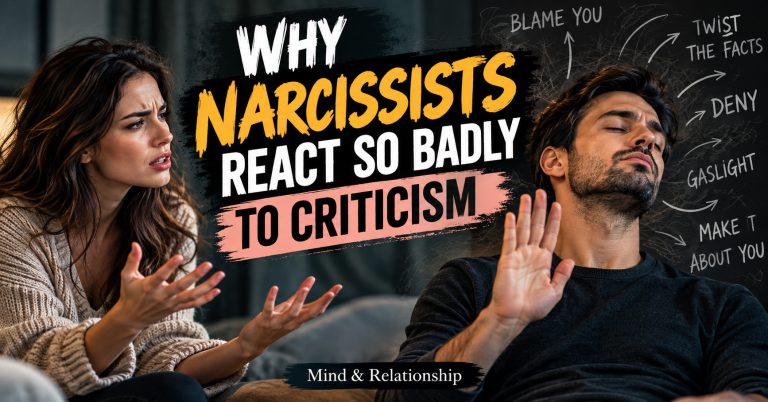
Related :Why Narcissists React So Badly to Criticism
2. They Become Used to Being Treated Poorly
When disrespect happens repeatedly, a person can gradually become desensitized to it.
What once seemed completely unacceptable may eventually become something they simply tolerate.
They may start thinking:
“Maybe I’m being too sensitive.”
“Maybe every relationship is like this.”
“Maybe tomorrow will be different.”
This is one reason unhealthy relationship patterns can be difficult to recognize from inside the relationship.
3. They Are Afraid of Being Alone
Fear of loneliness can keep someone attached to a relationship that is hurting them.
They may believe that being alone would be worse than staying. They may also fear starting over, losing their family structure, disappointing others, or never finding love again.
But being alone and being lonely are not necessarily the same thing.
4. Their Boundaries Have Become Weak
Healthy boundaries communicate what you will and will not accept.
In an unhealthy relationship, those boundaries may gradually disappear.
Someone might initially say, “I won’t accept being spoken to like that.” After repeated arguments, apologies, promises, and pressure, they may eventually stop enforcing the boundary.
The problem isn’t simply that they have “weak boundaries.” Often, their boundaries have been repeatedly challenged.
Related : The Narcissist’s Mindset: Denial, Blame Shifting & Manipulation
5. They Confuse Sacrifice With Love
Love sometimes requires compromise. But constantly sacrificing your dignity, peace, friendships, finances, or identity is not the same thing as having a healthy relationship.
A person may believe:
“If I really love them, I should be more patient.”
“Maybe I need to try harder.”
“I promised I wouldn’t give up.”
There comes a point where sacrifice stops being mutual and becomes self-abandonment.
6. They Become Dependent on Validation
When someone’s confidence has been repeatedly criticized or questioned, external approval can become extremely important.
They may spend enormous amounts of energy trying to prove that they are worthy of love, attention, affection, or respect.
This can create a painful cycle: hurt → reconciliation → temporary affection → another conflict → more attempts to earn approval.
7. They Experience a Strong Emotional Attachment
Some unhealthy relationships involve alternating periods of affection and emotional pain.
One day there may be intense closeness, affection, apologies, or promises. Later, there may be criticism, withdrawal, manipulation, or conflict.
That unpredictability can make the relationship emotionally difficult to walk away from.
This is sometimes described as trauma bonding, although the term is often used too broadly online. Emotional attachment can also exist for many other reasons, including love, shared history, children, financial dependence, and hope for change.
Related : 6 Small Boundaries With a Narcissist That Protect Your Peace
8. They Start Losing Their Identity
Perhaps one of the most damaging effects of a controlling relationship is gradually forgetting who you were before the relationship.
You stop seeing friends.
You stop doing things you enjoy.
You constantly monitor the other person’s mood.
You choose your words carefully.
You make decisions based on avoiding conflict rather than pursuing your own happiness.
Eventually, you may look in the mirror and realize that you have been living around someone else’s needs for years.
The Real Question Isn’t Always “Why Don’t They Leave?”
A more useful question is:
“What has made leaving so difficult for this person?”
Understanding that difference matters.
People don’t remain in unhealthy relationships because they are necessarily weak or unintelligent. Relationships can involve attachment, fear, financial dependence, children, social pressure, isolation, manipulation, hope, and years of shared history.
And not everyone who stays fits the same pattern.
If you’re trying to understand your own relationship, focus less on labels and more on the behavior:
Do you feel respected? Can you express your needs safely? Are your boundaries respected? Can you disagree without being punished? Are you still allowed to be yourself?
Those questions often reveal more than a label ever could.
Final Thought
Leaving an unhealthy relationship isn’t simply a matter of “being strong enough.” Sometimes the first step is remembering that your feelings matter, your boundaries matter, and your identity exists outside the relationship.
You don’t have to disappear to make a relationship work.