
There’s a big difference between silence used as a weapon and silence used as a way to heal.
When someone uses silence to punish, control, or provoke you, the goal often isn’t peace. It can be about making you uncomfortable enough to chase them, explain yourself, apologize, or give them the emotional reaction they want.
But something changes when you stop participating in that cycle.
You learn that silence doesn’t have to mean weakness. Sometimes, silence gives you the space to think clearly, rebuild your confidence, and decide what you actually want.
The Difference Between Punishing Silence and Healing Silence
Not all silence means the same thing.
A person might intentionally ignore their partner to create anxiety or regain control. This is often described as the silent treatment. The emotional impact can be intense because the other person is left wondering:
“What did I do?”
“Should I apologize?”
“Why won’t they talk to me?”
“What can I do to make things normal again?”
That uncertainty can keep someone emotionally trapped in the relationship.
Healing silence is different.
Healing silence sounds more like:
“I don’t need to keep explaining myself.”
“I can step away without chasing an answer.”
“I can use this time to understand what I feel.”
“My peace doesn’t depend on their reaction.”
That kind of silence creates space instead of fear.
Related : When You Realize the Narcissist Was Lying From the Beginning
Why Narcissistic Silence Can Feel So Powerful
In relationships involving narcissistic behaviors, communication can sometimes become a cycle of conflict, withdrawal, reconciliation, and renewed conflict.
When the other person suddenly becomes distant, the temptation can be to chase them for reassurance.
You send another message.
You try to explain your intentions.
You apologize even though you’re not sure what you did wrong.
You keep checking your phone.
And eventually, their silence becomes the center of your emotional world.
The important shift is recognizing that you don’t have to chase someone simply because they stopped communicating.
Healthy communication requires participation from both people.
When You Stop Chasing, You Start Hearing Yourself
One of the hardest parts of recovering from an unhealthy relationship is learning to hear your own thoughts again.
Constant conflict can make you focus so much on another person’s mood that you forget your own needs.
You begin asking:
“Are they angry?”
instead of:
“Am I okay?”
You think about what will keep the peace instead of what brings you peace.
Creating distance can interrupt that pattern.
You may start journaling.
You may spend time with people you trust.
You may rediscover hobbies you abandoned.
You may finally recognize boundaries you didn’t know you were allowed to have.
Silence becomes less about waiting for someone else to speak, and more about giving yourself permission to listen to yourself.
Related : The Narcissistic Mom Loop: Why the Cycle Keeps Repeating
Your Silence Doesn’t Have to Be a Power Game
There is an important distinction here.
Healing doesn’t mean learning how to give someone the silent treatment back.
You don’t need to manipulate someone who manipulated you.
You don’t need to make them jealous.
You don’t need to disappear just to make them wonder where you are.
Real healing isn’t about winning the psychological battle.
It’s about leaving the battle behind.
Your goal isn’t to make them feel what you felt.
Your goal is to stop allowing their behavior to determine how you feel about yourself.
Boundaries Are Stronger Than Arguments
Sometimes people believe they need the perfect explanation before setting a boundary.
They don’t.
A boundary can be simple:
“I won’t continue this conversation while I’m being insulted.”
“I’ll talk when we can communicate respectfully.”
“I’m not going to keep defending myself against accusations.”
A boundary isn’t a punishment. It’s information about what you will and won’t participate in.
And sometimes, the healthiest response isn’t another long explanation.
It’s stepping back.
Silence Can Become a Place to Rebuild
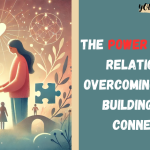
The woman in the image is writing, surrounded by words like peace, boundaries, self-love, and growing stronger.
That captures an important part of healing.
You don’t rebuild yourself overnight.
You rebuild yourself through small decisions.
You stop checking for their reaction.
You stop trying to prove your worth.
You stop confusing emotional chaos with love.
You start protecting your time.
You start trusting your instincts again.
You begin understanding that being alone for a while can be far more peaceful than constantly feeling emotionally unsafe with someone else.
Related : When Setting Boundaries Feels Like Disrespect to a Narcissist
You Don’t Have to Break Someone to Become Strong
Sometimes strength looks surprisingly quiet.
It isn’t always confronting someone.
It isn’t always having the last word.
It isn’t always exposing their behavior to everyone around you.
Sometimes strength is simply saying:
“This isn’t healthy for me anymore.”
And then acting accordingly.
The person who once depended on another person’s approval can eventually learn to validate themselves.
The person who once feared silence can eventually discover peace inside it.
And the person who once spent all their energy trying to be understood can finally spend that energy rebuilding their own life.
Final Thought
If someone uses silence to make you feel small, confused, or desperate for their attention, remember that their silence doesn’t define your worth.
You don’t have to chase every unanswered message.
You don’t have to solve every conflict.
You don’t have to keep proving that you deserve respect.
Sometimes healing begins when you stop asking, “How do I get them to treat me differently?”
and start asking:
“What do I need to do to protect my peace?”
That is when silence stops being something you fear, and becomes space where you can finally hear yourself again.