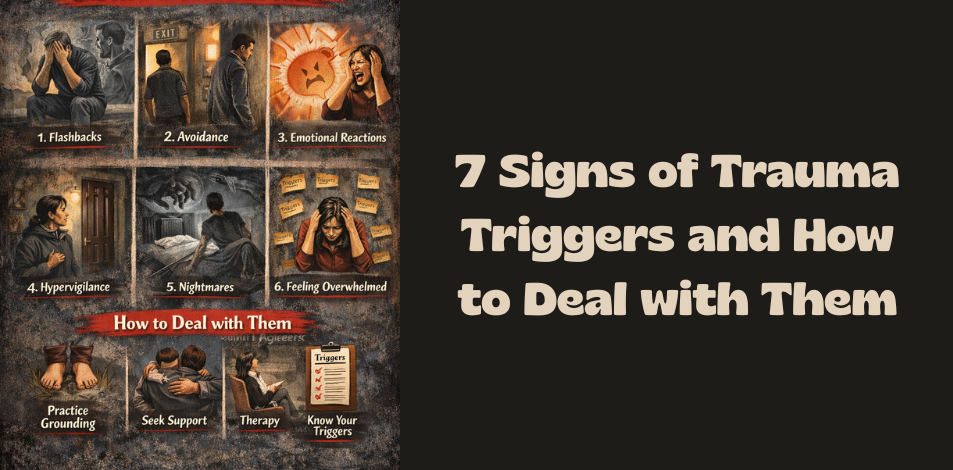
We experience trauma triggers after going through a life-altering event that leaves a deep mark on our minds. These triggers take us back to that moment and evoke negative emotions.
Trauma causes negative feelings and damage in our lives. Yes, we can recover from all kinds of past experiences with the right support and training.
But often, a faint trace remains deep within our minds, buried in our memories. This trace is the trauma trigger, which is activated by a reminder or reference to the painful events we have experienced.
A trauma trigger is a psychological stimulus that causes an immediate recall of a past painful experience.
Signs of Trauma Triggers
Do you experience trauma triggers? Well, there are ways to find out if you actually experience them in your daily life.
Perhaps you haven’t experienced any triggers, or perhaps you don’t understand what they are. In either case, some indicators can reveal the truth.
- Feelings of Anxiety
Anxiety is difficult to define precisely. In other words, there are many types of anxiety. There are severe cases that are classified as anxiety disorders.
Related : How Narcissists Isolate You: 5 Signs and Ways to Escape
But with traumatic triggers, feelings of anxiety may appear suddenly. If you are not usually an anxious person and suddenly start feeling tense and agitated, it could be a sign of a traumatic trigger.
Something is creating an immediately uncomfortable environment.
- Muscle Tension or Pain
If you don’t usually experience pain or muscle tension, the sudden onset of these issues can be perplexing. Negative feelings can sometimes manifest physically when a trigger is nearby. It could be a smell, a sound, or a forgotten memory.
The thing is, your subconscious mind recalls events from your past, and your body can pick up on these subtle cues even before you consciously think about them. Pay attention to your physical sensations.
- Memories
Suddenly, you start thinking about a domestic violence incident from your past. So, where did that memory come from, and why did it surface?
Well, just like with physical cues and feelings of anxiety, memories can resurface suddenly when confronted with a trigger. Perhaps it’s an old letter from your ex, or maybe a photograph.
In any case, it’s likely you’ve come across something from your past that triggered a memory. These negative thoughts might creep in and invade your senses without you even realizing it.
- Disconnection from Reality
Do you suddenly feel disconnected from reality? Do you feel disconnected from your identity or your surroundings? I know this might not be easy for everyone to understand, especially if you’ve never experienced it before.
But disconnection from reality can happen when we’re exposed to a traumatic trigger. We learn to withdraw from our lives when this trigger occurs.
If you feel out of sorts—mental fog, forgetfulness, numbness—you may be experiencing a traumatic trigger and have momentarily disconnected from reality to protect yourself.
- Sudden Anger
Agitation and anger can occur when traumatic triggers are present.
I can attest from personal experience that the smell of whiskey brings back painful memories. When I was in an abusive relationship, arguments often happened after my ex-partner had drunk too much whiskey. Now, when I smell it, I feel angry and agitated.
This trigger makes me pace back and forth in the house until I find the source of the smell. Often, it’s a piece of rotten fruit with a strange, alcoholic odor.
- Depression
If you’re not prone to depression, a sudden loss of motivation, intense sadness, hopelessness, and exhaustion are all symptoms that can be alarming. Anyone can experience signs of depression triggered by a negative stimulus.
Related : 10 Subtle Signs Your Mental Health Is Declining – Don’t Ignore Them!
Triggers not only create an anxious environment but can also create a gloomy one. When these negative thoughts take hold, painful past experiences can resurface like a dark cloud. Pay attention to these sudden shifts in your mood.
- Painful Past Memories
One of the worst signs of a trigger is painful past memories. These memories are different from ordinary ones; they feel like you’re going back in time and reliving the trauma.
Painful past memories can be intense or mild, depending on the strength of the trigger and your previous emotional state.
Pay attention to the power of the images in your mind. Are they memories? Or is your mind trying to drag you back to that moment? One is far worse than the other.
How to Deal with Trauma Triggers
It’s difficult to recover from a traumatic event, but dealing with its triggers can feel like reliving the trauma. So, to deal with these triggers, you need to have a plan of action before they occur. Here are some steps:
- Identify Your Triggers
This may take some time, but identify all the small signs and stimuli that cause disturbances in your life. Here are some examples of trauma triggers:
Places
People
Objects
Smells
Sounds
Skin sensations
Suggestions/Words
One or more of these triggers may be present, and you haven’t identified them yet. Pay close attention to what upsets you, and record this information in a journal. Over time, you will notice patterns and be able to identify the source of the trauma.
- Reacting to the trigger
Sometimes triggers are subtle, and you only notice them after you’ve reacted. If your reaction to the trigger isn’t healthy, it can last longer and negatively affect you in many ways, most notably by hindering your healing process.
If you’re already upset, follow these steps to calm yourself down.
Try to focus on the present.
Remind yourself that your reaction is normal, and you will get through it.
Practice breathing exercises. Take deep, slow breaths to regulate your heart rate.
- Dealing with painful memories
If you’re struggling with painful memories, there’s a system that can help. Follow these steps to stop the negative images and triggers, returning you to a safe and comfortable state of mind. In fact, repeat these phrases aloud to stabilize yourself.
“I know I’m not in shock right now.”
(Check the time and date) “It’s 10:00 AM on July 5, 2022,” not “November 8, 1998.”
“My body is shaking, sweating, and feeling cold.”
“Right now, I’m feeling scared, sad, and anxious.”
“I only have one bad memory of a person, place, or event.”
(Notice 5 things around you) “I see a chair, a table, a cat, a stereo, and a bookshelf.”
“I’m at home,” not “at my parents’ house.”
These steps will vary from person to person, but the basic idea is clear. You need to realize as quickly as possible that you are in the present moment and that you are not being abused right now.