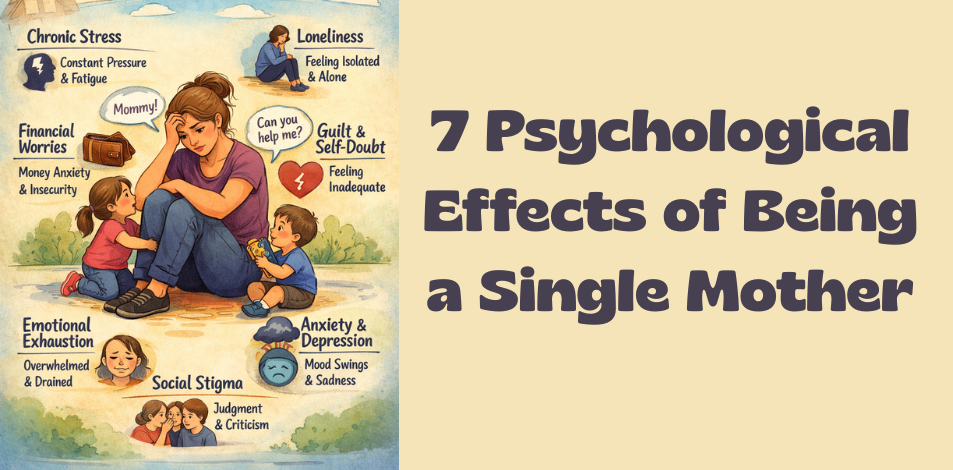
The psychological effects of single motherhood are often overlooked. Not everyone is blessed with a loving and supportive family, and this means that circumstances, both positive and negative, can leave their mark.
Motherhood is a challenging and potentially exhausting task. However, being a single mother brings with it a much greater responsibility. These responsibilities and pressures can affect both the single mother and her children.
Psychological Effects Of Single Motherhood
Since the 1950s, single-parent families have seen a significant rise. What does this mean? Well, firstly, it means that the concept of “family” has changed. Today, the family is composed of multiple dynamics.
Related : 9 Truths about People Who Are Obsessed with Appearance
But these dynamics are not without their challenges. For single mothers, the psychological effects can be positive or negative, leaving a lasting impact for many years. Here are some of the psychological aspects that affect both mother and child:
- Low Self-Esteem
Unfortunately, children and single mothers may suffer from low self-esteem. This occurs for a variety of reasons. The most common reason for identity problems in children of single mothers is a lack of attention and positive support.
This isn’t always attributable to the mother; raising a single mother often means working longer hours. Mothers may also experience self-esteem issues because they sometimes feel abandoned by their former partners.
Low self-esteem can also stem from feeling different from other children who may live with both parents. This feeling of being different often leads to bullying, which exacerbates existing feelings of inadequacy. The instability of family life can also negatively impact the self-esteem and mental health of single mothers.
- Negative Behaviors
Due to financial difficulties and other changes common in single-parent households, spending is often restricted. With less money available for entertainment and leisure, some children may exhibit negative behaviors, either out of boredom or anger.
Children and mothers may experience anxiety, abandonment, sadness, and loneliness. In single-parent households, the financial situation is challenging, which can lead to negative mental and emotional behaviors.
There are other pressures that trigger negative behaviors, and these behaviors can escalate, leading to depression, anxiety disorders, addiction, and other serious problems. Single mothers not only have to deal with their own psychological anxieties but also help their children navigate these difficult emotional circumstances.
- Academic Performance
Single mothers often face financial difficulties, which may force them to work two or even three jobs to make ends meet. This also means missing out on school activities, such as awards ceremonies and sporting events. While earning money isn’t a top priority, missing out on academic events affects both mother and child.
Some might interpret missing these important things as a sign of neglect, but this is a misconception. In any case, for children, feelings of neglect and abandonment can lead to poor academic performance.
Being a single mother raising a family alone means making difficult decisions. And unfortunately, whatever those decisions are, they can have a profound impact.
- Commitment Issues
Single mothers may experience commitment issues after divorce. Children of divorced parents may develop a fear of commitment later in life. The idea of one of the most important relationships in their lives breaking down makes it difficult for them to trust, making future relationships and marriage seem impossible.
Being a single mother means dealing with your own fears about commitment while also teaching your children how to cope with similar fears.
- Strong Bonds
There are also positive psychological effects of being a single mother. In a single-parent household, you can spend time together without interruption from work or school.
Related : 7 Physical Symptoms That Prove Depression Is Not Just ‘In Your Head’
Unlike living with both parents, living with a single mother allows you to build a strong bond with her. Even in shared custody, any time spent with each parent is an opportunity to bond with them. Building this strong bond brings psychological satisfaction.
- Taking on Responsibilities
Children in single-parent families often learn to take on responsibilities at a young age. Seeing a single mother struggling with tasks encourages children to participate and help out.
The psychological impact of this experience contributes to children’s maturity and life experience. Helping a single mother with household chores and running errands fosters trust and builds a healthy mother-child relationship.
- Managing Emotions
Single mothers can teach their children how to manage their emotions, including understanding how to accept disappointments and learning forgiveness. These qualities are demonstrated through the maturity that is passed down from mother to child during difficult times.
The Good, the Bad, and Everything in Between
Single mothers put in a lot of effort to raise kind and caring children who will grow into responsible and mature adults. While there are some psychological effects of growing up in a single-parent family, they are not always negative.
No, raising children alone is not always an easy task. But the truth is, this dynamic has become more common over time, and we’re learning a lot. As single mothers, the psychological effects, both negative and positive, can help us become better people. It all depends on how we view our situation.