One might feel as though they are caught between two worlds due to an invisible illness. Outwardly, they may appear healthy, mobile, and unchanged, but inwardly, their body suffers from persistent fatigue, pain, or other debilitating symptoms.
What is most frustrating for many is that the mind often remains alert and engaged, while the body resists even the simplest tasks. For some, especially those suffering from the effects of a viral infection, this experience is even more pronounced.
Understanding the psychological impact of this contradiction is essential for coping with the daily reality of an invisible illness.
Psychological Challenges Of Invisible Illness
- The Mind-Body Disconnect
One of the most striking features of invisible illnesses is the frustrating discrepancy between mental clarity and physical capacity. Those suffering from conditions like chronic fatigue syndrome, fibromyalgia, and long COVID often describe their minds racing with ideas, goals, and plans, while their bodies struggle to keep up.
This discrepancy can create a feeling of being trapped, as if one is living in a body that refuses to cooperate. The result is not only physical exhaustion but also psychological distress stemming from unmet expectations.
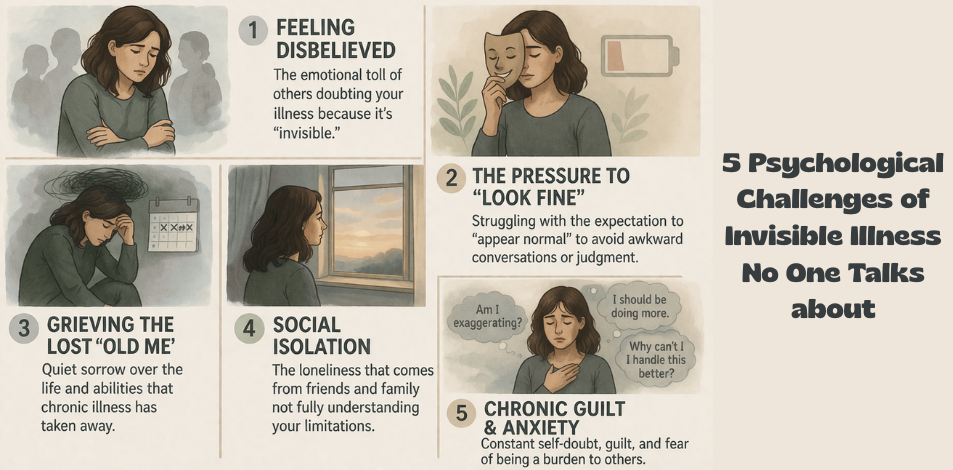
Related : 5 Psychological Challenges of Invisible Illness No One Talks about
This misunderstanding can also lead to cycles of guilt and self-blame. When the mind is pushing forward, individuals often feel pressured to achieve what they logically know they are capable of.
When the body weakens, frustration creeps in, leading to feelings of discouragement and, over time, a loss of confidence in one’s ability to manage daily life. This internal conflict weakens motivation and amplifies stress, which can exacerbate physical symptoms, creating a complex vicious cycle.
- Identity and Self-Esteem in the Face of Limitations
Illness affects not only the body but also reshapes an individual’s self-perception. For those previously known for their high achievements, caring, or active contributions to their communities, the sudden shift to a sense of physical limitations can be devastating.
Individuals often experience a period of mourning, grieving for the lives they have lived or the goals they believe they can no longer achieve. This identity crisis can lead to depression, anxiety, and feelings of hopelessness.
Self-esteem is often linked to productivity. In societies that value efficiency and productivity, the inability to meet these expectations can make individuals feel like failures, even if the challenges they face are beyond their control.
Recognizing that value is not solely based on physical ability becomes crucial. This shift in perspective is complex but vital for long-term psychological resilience.
- The Struggle of Invisibility
Unlike visible illnesses, invisible illnesses often lack outward signs that others can notice. To colleagues, friends, or even family members, a person with a chronic illness may appear perfectly healthy.
This adds the extra burden of explaining, justifying, or even defending the limitations they experience. When others question the validity of their symptoms, individuals often feel unappreciated and misunderstood. This ambiguity exacerbates the psychological burden by fostering isolation.
The constant need to prove that the illness is real can add further emotional strain. Many people struggling with invisible illnesses experience a lack of energy, and having to explain or defend themselves only increases their exhaustion.
For some, dealing with long-term disability due to COVID-19 is part of this reality, as they must contend not only with their symptoms but also with the systemic barriers that prevent them from accessing support. Over time, this lack of external validation can lead to feelings of isolation, as if one’s suffering is being minimized or ignored. For mental health, validation from others is crucial, and its absence can be detrimental.
- Coping with Psychological Burdens
Coping with the psychological challenges of undiagnosed illnesses requires deliberate strategies. Practices such as meditation, journaling, and psychotherapy can help individuals process their emotions, detach their sense of self from their illness, and develop acceptance.
While these methods do not eliminate physical limitations, they provide tools to reduce internal conflict. Psychological resilience becomes a form of empowerment, allowing individuals to regain control in situations where they feel overwhelmed.
Related : Someone Doesn’t Respect You If They Use These 7 Phrases
Equally important is building supportive relationships. Having a few trusted people who understand and acknowledge the reality of the illness significantly reduces feelings of isolation.
Support groups, whether in person or online, provide a sense of belonging to a community that understands the daily challenges. These connections lessen feelings of isolation and create a space for open and honest conversations without judgment.
- Seek Practical Support
In addition to emotional strategies, practical steps are crucial in mitigating the effects of chronic illness. For many, workplace accommodations or disability benefits may be necessary to maintain financial and personal stability.
Pursuing these options can seem overwhelming, especially with limited energy and unpredictable symptoms. However, accessing support systems is a vital step in reducing stress and creating a supportive environment for recovery.
For those experiencing conditions like long COVID, the process of applying for disability benefits can be overwhelming due to the novelty of the illness and the uncertainty surrounding it.
However, professional resources and guidance are available to help individuals understand the required evidence and how to present their case. Taking these steps is not a sign of weakness, but rather an acknowledgment of the seriousness of the situation and the need for a sustainable way forward.
Summary
The challenges of invisible illnesses, such as long COVID, are not limited to the body; they extend to the mind and spirit. The psychological strain of feeling mentally capable but physically limited, feeling ignored by others, and experiencing a loss of identity can be profound. However, with coping strategies, supportive relationships, and practical support, it is possible to overcome these challenges with strength and resilience.