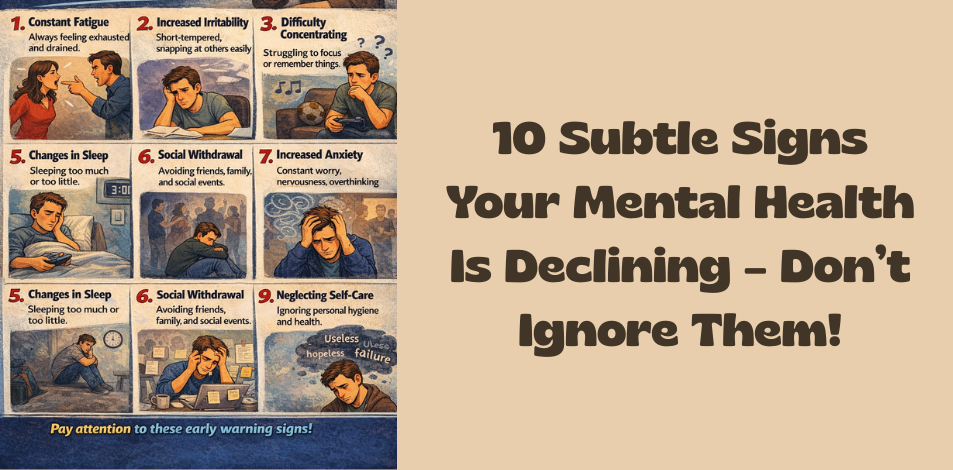
How do you know if your mental health is deteriorating? There may not be obvious signs, but small details can indicate a change. Pay close attention to the subtleties.
Your mental health plays a vital role in your growth, stability, and resilience, just like your physical health. It’s essential to take care of yourself in all aspects.
Therefore, paying attention to the small details of your mental health can alert you to a current or impending decline. If you notice these signs, you can avoid developing more serious symptoms later.
Subtle Signs of Mental Health Decline
Let’s look at some subtle signs that may indicate a decline in your mental health. These indicators may appear gradually over time and may seem like normal actions and reactions.
But if you look closely, you’ll notice that something is wrong.
- Decreased Work Productivity
Whether you work outside the home or have your own business, when your mental health declines, you’ll struggle in this area. If you work for someone else, you may be frequently late, miss deadlines, and even become argumentative.
Related : 7 Painful Psychological Effects of Growing Up Without a Mother
When conditions like depression worsen, completing projects optimally becomes nearly impossible. As for being late, it can be difficult to even get out of bed to get dressed for work.
Have you noticed these habits and inconsistencies? Your health might be the culprit.
- Unexplained Aches and Pains
You might be eating a healthy diet and exercising regularly, but you’re still experiencing pain. Unusual aches and pains aren’t necessarily due to laziness or muscle injuries. Sometimes, physical discomfort stems from a psychological disorder.
Problems like headaches and muscle stiffness can occur during depressive episodes. And sometimes, you might not even realize you’re depressed.
- Increased Panic Attacks
If you’re experiencing more panic attacks than usual, it could be due to a decreased ability to cope with stress. If you’ve been diagnosed with an anxiety disorder, your condition may be worsening.
A decline in mental health, especially with anxiety or post-traumatic stress disorder (PTSD), can lead to more panic attacks, even in the absence of triggers. Have you noticed an increase in the number of attacks recently? Have they become more severe? This could be a sign.
- Increased Risky Behaviors
If you notice a strong urge to engage in risky behaviors or exciting activities, it could be due to a decline in your mental health. Not everyone who seeks excitement has a mental illness, but this urge can occur in those who do.
As depression worsens, your brain may try to counteract this feeling by seeking ways to increase adrenaline or dopamine. This can happen through excitement and fear.
- Feeling Dizzy
As your mental health deteriorates, you may start to feel dizzy. You may develop vertigo, a more severe condition.
Dizziness in some people is a result of deteriorating mental health because anxiety and stress can disrupt blood flow, which in turn reduces the amount of oxygen reaching the brain.
- Increased Substance Use
Have you noticed an increase in alcohol consumption or cravings? If so, you may be experiencing a decline in your mental health.
Alcohol or drugs cause a temporary high, and if you’ve used either before, your brain will remember that high. When your mental health deteriorates, you might experience a sudden urge to return to these habits to prevent further decline.
- Others notice changes in you
Do your family and friends ask you what’s wrong? If so, don’t rush to the defensive. They’re likely noticing something you’re missing.
Related : 7 Psychological Effects of Being a Single Mother
Sometimes people emit negative energy when they’re depressed or anxious. These are feelings that those close to you can recognize.
So, when someone asks you what’s wrong, take some time to reflect. If you allow them to see what’s going on inside you, they might notice the decline and take appropriate steps to address it.
- Worsening insomnia
Have you been having trouble sleeping at night lately? If so, it might be more than just insomnia. You might be having difficulty clearing your mind, and this could be due to anxiety.
If you’re overwhelmed with things, it will be harder to fall asleep at night. You might be staying up most of the night analyzing and solving problems. This is a subtle sign that you need to take a break from stress.
- Frequent Illness
Have you noticed that you catch every cold and virus at the office, at home, or even in public places? Yes, this is exhausting.
Well, mental health can affect your immune system, weakening it and making you more susceptible to germs. If you’re getting sick more often than usual, you might be experiencing physical depression.
- You’re not yourself
You might not be able to pinpoint what’s not normal because you’re the one experiencing it. You feel like your whole being is gone, and you have no motivation or passion for anything.
It’s possible that your mental health is deteriorating, and this decline is so subtle that you haven’t noticed it until you started feeling unwell. Pay attention to your lack of motivation and your tendency to procrastinate. This could be abnormal.
Acknowledge it and take action
I’m not a specialist, but I can tell you that there are ways to improve your mental health immediately. Of course, this varies from person to person. If you think your mental health is declining, talk to your regular doctor first to check for any physical health problems.
If you’re feeling well, take a day off, get some rest, and talk to someone you trust. Spend more time outdoors, decline any engagements you don’t want to attend, and avoid negative situations.
Your top priority is improving your mood and managing your anxiety. It’s okay if others don’t understand; the focus is on your health. When you feel better, you can resume your other priorities. Don’t let anyone criticize you for needing a break. This is how we recharge and protect ourselves.
If you think you might have a mental health condition, please consult a professional. Do not self-diagnose.